


This Crypto AI & Robotics newsletter consists of three parts:
Snippet Partner (GEODNET)
Crypto AI & Robotics Market Overview
Emerging Developments
If you have any questions feel free to reach out to me on X or message my business X account ‘Khala Research’


GEODNET runs the world’s largest decentralized GNSS reference station network, delivering centimeter-level RTK positioning for drones, robots, autonomous vehicles, and precision agriculture
The company has real enterprise revenue across surveying, agriculture, and drone mapping; 80% of data revenue buys back and burns GEOD tokens
This week GEODNET launched GEO-SWARM on Kickstarter: a fully autonomous drone-in-a-box security system built by HYFIX and powered by GEODNET RTK. It deploys, patrols, docks, and recharges on its own:
Sub-250g (lightest regulatory category), live video to mobile, speaker and visual deterrents. Centimeter-accurate positioning from GEODNET keeps flight paths repeatable without manual piloting
Drone-in-a-box has historically been enterprise hardware at tens of thousands of dollars. GEO-SWARM targets consumers at $1,499 on Kickstarter. DePIN reaching end users: decentralized positioning powering consumer autonomy hardware, with token economics that tighten supply as demand grows
Learn more here with Kickstarter: Link
This newsletter goes out weekly to 7k+ subscribers.
Please don’t hesitate to message me directly for sponsorship or partnership enquiries.

THE HEADLINE IS TAO: COVENANT-72B
On March 10, Templar (Bittensor Subnet 3) completed the largest decentralized LLM pre-training run in history: Covenant-72B. 72 billion parameters. ~1.1 trillion tokens. Trained entirely over commodity internet hardware on Bittensor’s permissionless network. Anyone with GPUs could join or leave freely. Performance reportedly competitive with LLaMA-2-70B
This shifts the Bittensor thesis from:
“subnets can exist” to “subnets produce output competitive with centralized alternatives”
A permissionless network of commodity GPUs coordinating at a scale previously associated only with hyperscale cloud providers. Prior to Covenant-72B, decentralized training was a roadmap claim. Now it is a delivered product.
TAO surged 19% in 24h post-announcement, +39.8% on the week, while the Templar post hit 1.7M views on X:


Three ecosystem subnets (SN3 Templar, SN4 Targon, SN39 Basilica) ranked top eight daily gainers on CoinGecko. The structural TAO-to-subnet dynamic compounded buying pressure: investors need TAO to access subnet tokens, so concentrated demand for any single subnet cascades into base asset accumulation
The price action is now anchored to a verifiable technical milestone. Covenant-72B is a trained model. Grayscale’s Bittensor Trust SEC filing (December 2025) pending; xTAO accumulating as largest corporate holder. Institutional access infrastructure building in parallel
We covered Templar as one of the five subnets in our Khala Bittensor report: Link
If you want to have a better understanding of the valuation of subnets then Yuma has published two reports now, latest available here:


A) DeAI Market Cap Analysis
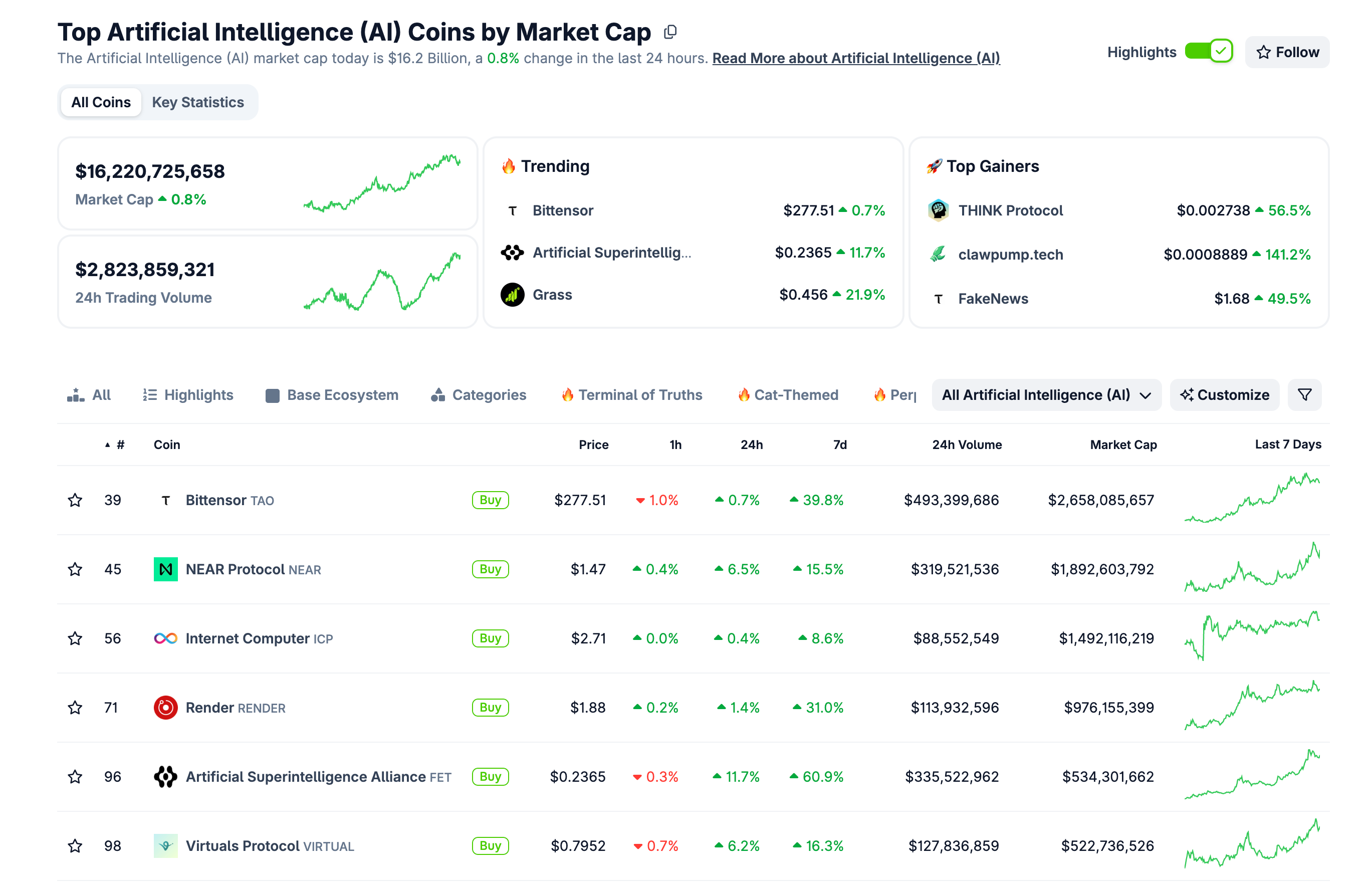
The overall DeAI market cap has increased by $1.9bn (+12%) to $16.2bn this week:
The main news this week is Templar’s Covenant-72B (noted above). The AI sector broadly benefited from the Bittensor catalyst and continued institutional narrative momentum around agentic infrastructure.
TAO (+40% 7d): $277.51, $2.66B mcap. Covered in detail above. Covenant-72B is the catalyst; structural subnet-to-TAO dynamic amplified the move.
FET (+61% 7d): $0.2365, $534M mcap. Strongest weekly mover in top DeAI. Artificial Superintelligence Alliance benefiting from sector rotation as the TAO catalyst pulled capital into AI tokens broadly.
RENDER (+31% 7d): $1.88, $976M mcap. Decentralized compute narrative tailwind from Covenant-72B proving that distributed GPU networks can train competitive models.
NEAR (+16% 7d): $1.47, $1.89B mcap. IronClaw (security-hardened OpenClaw fork in Rust, TEE-deployed) and NEARCON 2026 catalysts from prior weeks continue to carry. NEAR’s positioning as enterprise-grade OpenClaw infrastructure keeps it in the AI bid.
ICP (+9% 7d): $2.71, $1.49B mcap. Caffeine AI, DFINITY’s self-writing apps platform on ICP, continues to attract builders (hundreds of thousands of monthly uniques per Dominic Williams). V3 shipping imminently with Claude Code integration. The “Mission 70” tokenomics proposal targets a 70% cut in annual inflation by end-2026, with Caffeine-driven compute burn as a key mechanism. ICP ranked first in code development activity among AI/big data crypto projects over the past 30 days.
VIRTUAL (-16% 7d): $0.7952, $523M mcap. Retracing after the extended AGDP-driven run. The more interesting VIRTUAL story this week is in the facilitator data below: Virtuals has entered the top three x402 facilitators by dollar volume through ACP
B) Robotics Market Cap Analysis
The robotics market cap increased by $44M (+6%) to $811M this week
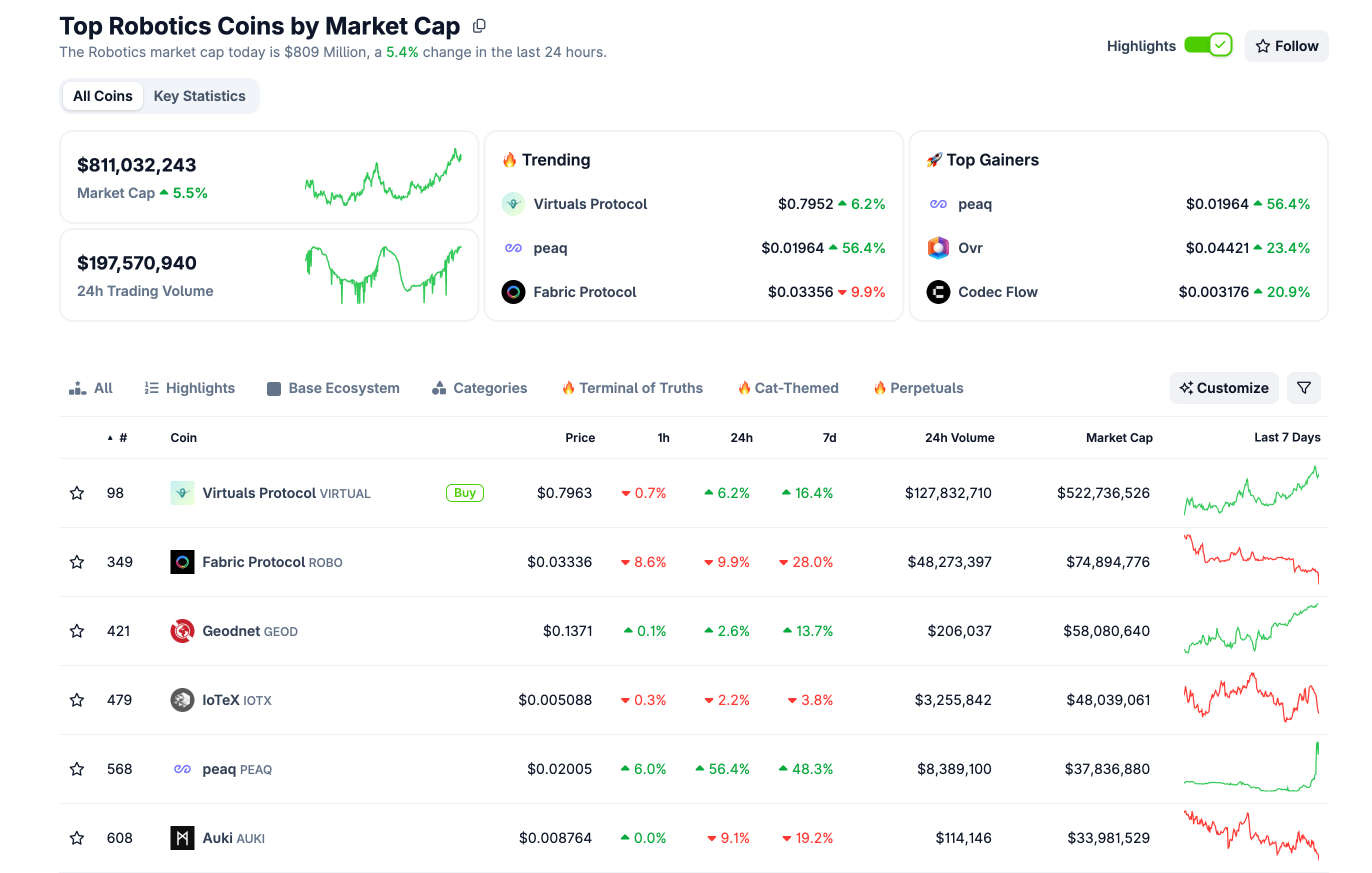
PEAQ (+48% 7d): $0.02005, $37.8M mcap. The standout. peaq published a new video laying out the robotics narrative and its Robotics SDK (ROS 2 compatible, enabling any robot to get a peaq ID, pay/get paid, and verify data on-chain)


Hashkey Capital’s Machine Economy research report highlighted peaq as a foundational L1 for machine identity, payments, and governance. 60+ live DePIN projects across 22 industries; Dubai VARA regulatory sandbox for on-chain robotics
ROBO (-28% 7d): $0.03336, $74.9M mcap. Fabric Protocol (OpenMind/Fabric Foundation) finding its price level after initial listing momentum. Still a relatively new entrant to the Robotics category
GEOD (-14% 7d): $0.1371, $58.1M mcap. Thin volume ($206K 24h) despite the GEO-SWARM Kickstarter launch and Lightspeed institutional coverage addition. Solana/Blockworks’ Lightspeed platform now includes GEOD, which should improve institutional visibility over time


2. Crypto AI Agent
a) Nansen DEX Flows (All Traders, 7D)
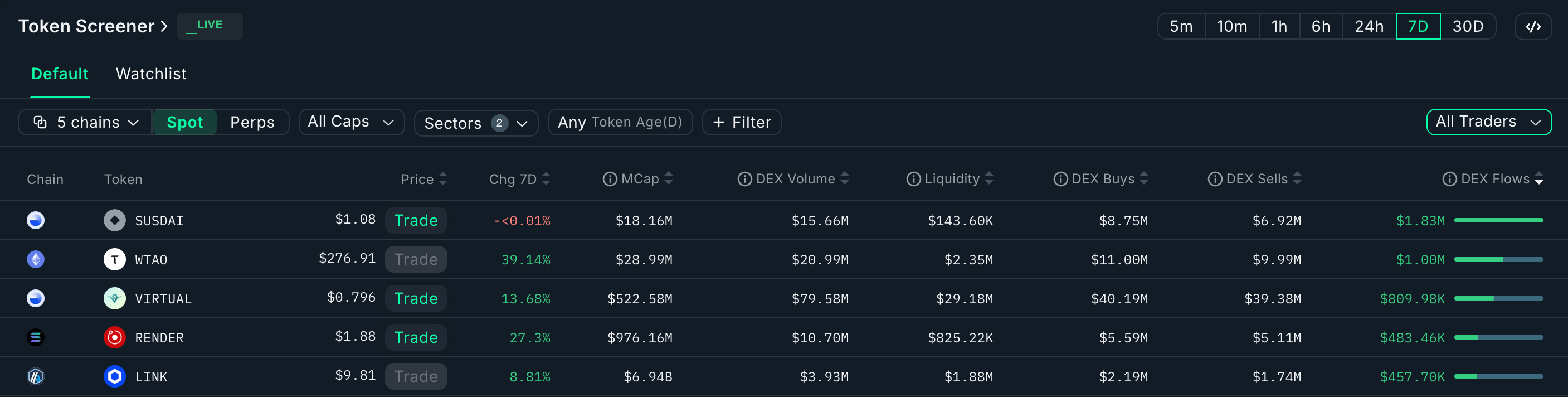
sUSDAI (+$1.83M net): Largest AI sector inflow. Yield-bearing layer of USDai, a GPU-collateralized stablecoin protocol (Permian Labs; Dragonfly, Coinbase Ventures, YZi Labs). Lends against physical GPU infrastructure, returns yield via sUSDAI. PayPal/PYUSD integration; $658M peak TVL. CHIP governance token launched via CoinList late Feb; capital rotating into the yield layer. DeFi capital meeting physical AI infrastructure financing.
WTAO (+$1.00M net): $11M buys vs $10M sells. Confirms Covenant-72B drove genuine DEX accumulation.
VIRTUAL (+$810K net): Net positive despite -16.3% weekly price. $40.19M buys vs $39.38M sells. Smart money buying the dip. Deepest liquidity in the set at $29.18M.
RENDER (+$483K net): Modest positive. Sector tailwind, no specific catalyst. Render Con 2026 approaching.
LINK (+$458K net): Chainlink in AI sector filters is notable. CRE is connective tissue for agentic infrastructure; the AWS blog this week explicitly references CRE integrations.
b) Nansen Public Figure Flows (7D)

DRV (+$264K net, 7 traders): Derive, decentralized derivatives on OP Stack. +48.84% 7D, $111M mcap. Institutional staking launching March 23; 25% of fees go to DRV buybacks
FAI (+$187K net, 4 traders): Freysa AI, sovereign agent stack on Base. $62M mcap. TEEs and zkTLS for agents that hold their own keys. Same category as OpenClaw but from a cryptographic sovereignty angle
WTAO (+$105K net, 3 traders): Confirming the all-traders signal around Covenant-72B
c) x402 Analysis
i) Transaction Count Down, Dollar Volume Up
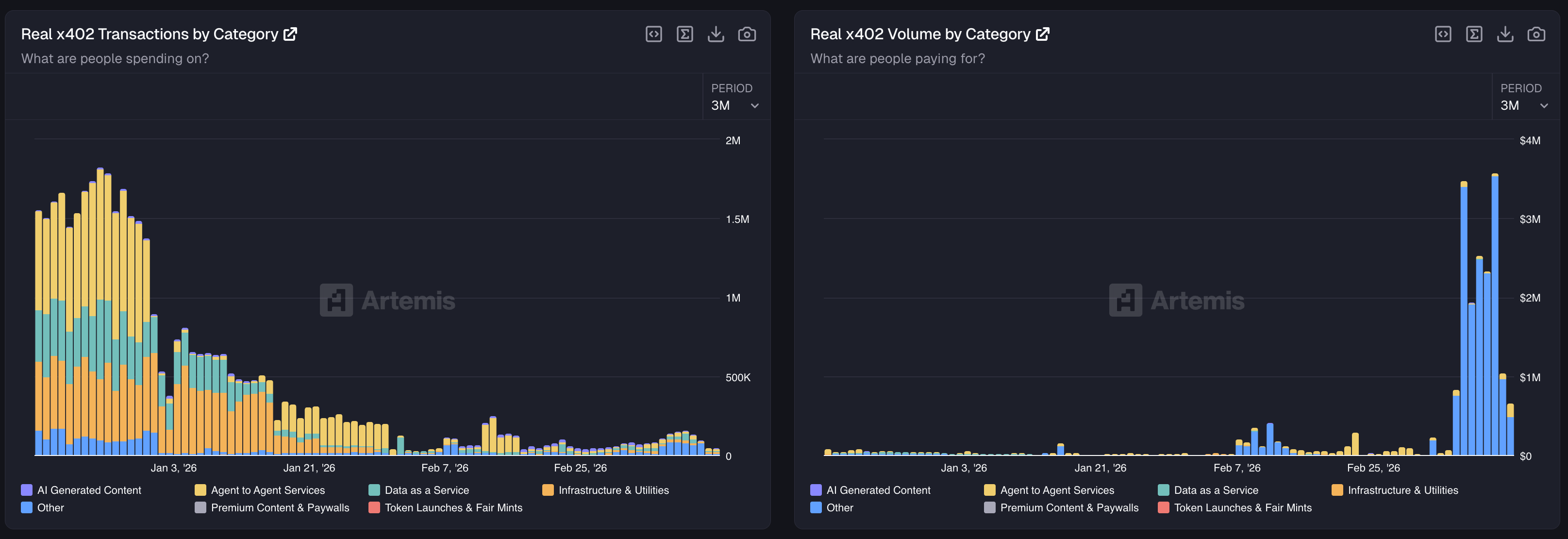
The Artemis data tells two stories:
Transactions (left): Clear decline from December/January peak. Daily transactions that exceeded 1.5-2M have dropped to low hundreds of thousands.
Dollar volume (right): After flat-lining through January/February, volume has spiked sharply, pushing toward $3-4M daily. Concentrated in Infrastructure & Utilities and Data as a Service, with secondary contribution from Agent to Agent Services.
This divergence is the most important x402 signal right now. Transaction count falling while dollar volume rises means average transaction size is increasing. Wash trades flushing out; what remains is fewer, higher-value commercial transactions
Based on the current merchant landscape, the dominant categories likely represent:
agents paying for compute (cloud GPU, inference endpoints, Chutes);
API access to data feeds (Firecrawl, StableEnrich, market intelligence);
browser sessions (Browserbase); and
content generation (Freepik)
Agent to Agent Services is the most structurally interesting: autonomous agents paying other agents for subtasks
AI Generated Content and Token Launches, which dominated early counts, have washed out (excuse the pun)
ii) a16z and the Measurement Gap
a16z partner Noah Levine pointed out “real” transaction volume is far lower than the lofty highs of wash traded fake volume earlier this year: Link
Bloomberg reported $24M in 30-day x402 payments (x402.org data); Allium Labs had ~$3M; Artemis pegged real volume at ~$1.6M after filtering wash trades:
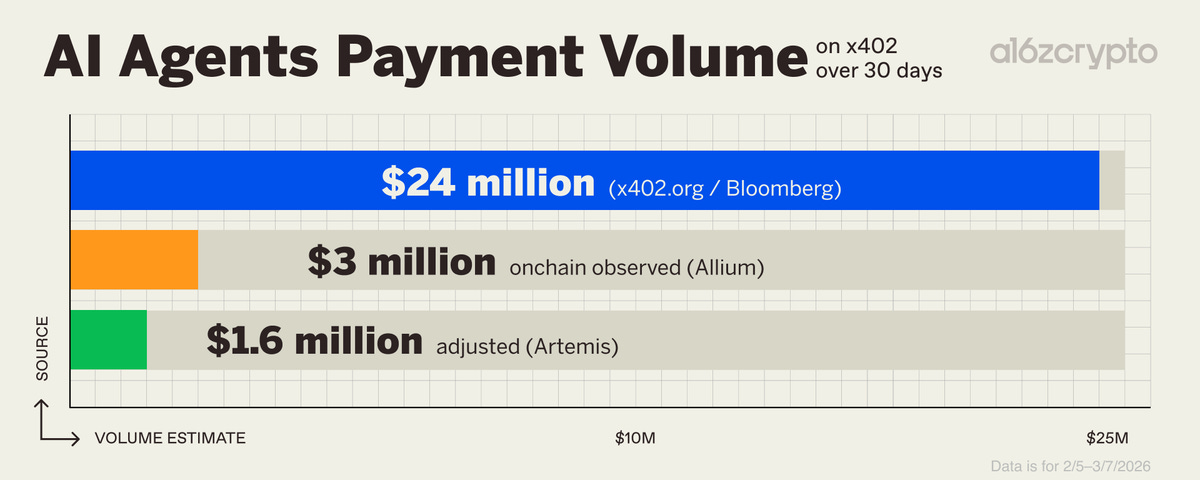
But this gap shows how early the measurement infrastructure is, particularly as more established institutions adopt the open protocol: Stripe, Cloudflare, Vercel, and Google have all integrated x402
None of them are betting on $1.6M a month, moreso on what the number looks like when agents become the default buyer
iii) Facilitator Leaderboard (Past 7 Days)
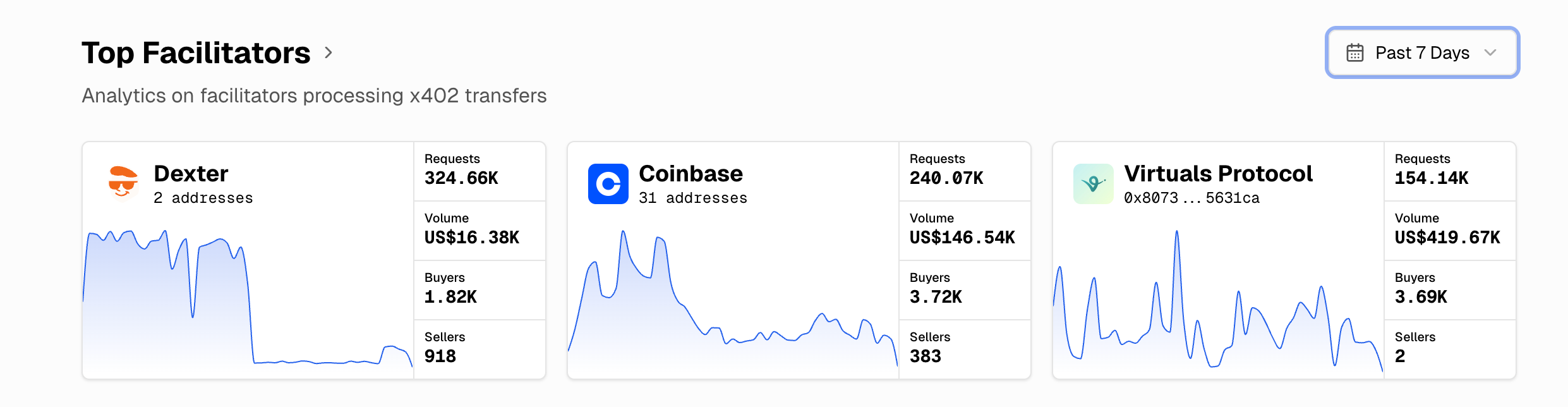
The facilitator leaderboard is bifurcating: high-frequency micro-settlement (Dexter), institutional API access (Coinbase), structured agent commerce (Virtuals/ACP)
Virtuals Protocol (154.14K requests, $419.67K vol): Highest dollar volume despite ranking third by requests. ~$2.72/request avg (5x Coinbase, 54x Dexter). 3.69K buyers against just 2 sellers
This is ACP settling structured agent-to-agent commerce; a small number of service agents fulfilling high-value tasks for thousands of buyers
On March 10, Virtuals and the Ethereum Foundation’s dAI team submitted ERC-8183, formalizing the trustless agent commerce lifecycle alongside x402 (payment) and ERC-8004 (identity/reputation)
iv) AWS Publishes Full x402 Reference Architecture
On March 15, AWS published “x402 and Agentic Commerce: Redefining Autonomous Payments in Financial Services” on their Industries blog. Full technical reference architecture.

When AWS publishes production-grade reference architectures with open-source code for a crypto-native payment standard, the protocol has crossed from narrative into infrastructure
If you want to understand more about the trajectory of x402, follow Khala Research as we will be publishing a full report later this week. Here’s the ecosystem map in the meantime:


3. AI Agents Developments: Innovations and Market Developments
Here is what happened on crypto AI & robotics related developments this week:

If you have an OpenClaw related protocol, get it listed on ClawIndex by submitting on the website: Link
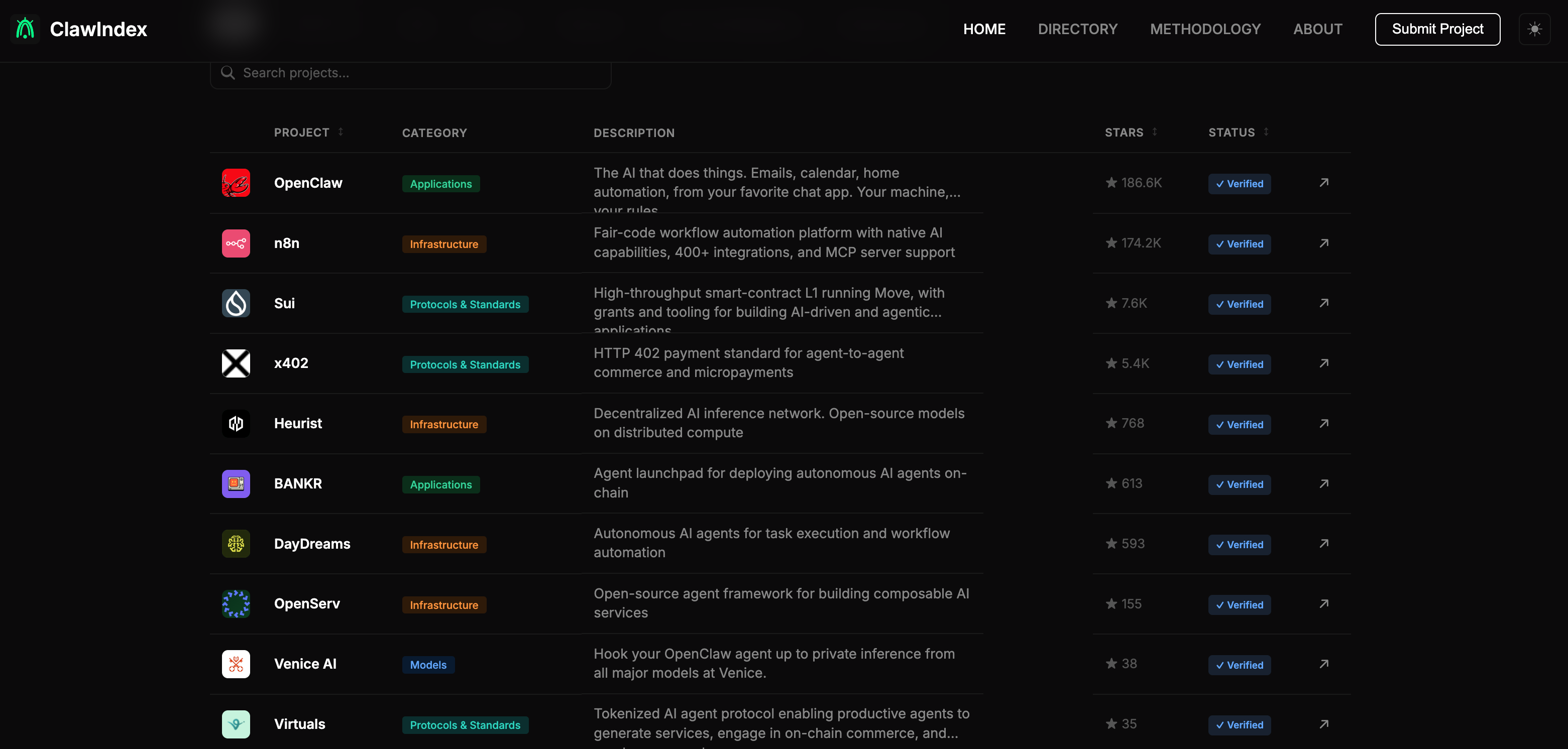
Or if you’d like to track tokenized openClaw projects follow ClawPrice:
That’s a wrap for issue 168 of Sammy’s Snippets. I hope you enjoyed it.
Please leave me any questions or thoughts here - I will respond to everyone!
If you found this interesting, please consider subscribing to this Substack and following me on X for more related insights.
If you are interested in more formal reporting on Crypto AI and Robotics then Khala is my research product.
Disclaimer: The content covered in this newsletter is not to be considered investment or financial advice. It is for informational and educational purposes only.
Disclosure: I hold some of the assets and have partnerships with some of the projects mentioned in this newsletter.