


This Crypto AI & Robotics newsletter consists of four parts:
Snippet Partner (CodecFlow)
The “AI bottleneck Investment Thesis”
Crypto AI & Robotics Market Analysis
Emerging Developments
If you have any questions feel free to reach out to me on X or message my business X account ‘Khala Research’



CodecFlow is building the execution layer that AI agents have been missing. While the rest of the market chases smarter prompts, CodecFlow gives agents hands
As covered in the Khala Research Decentralized Robotics report, CodecFlow acts as the operational layer for embodied AI, bridging the gap between AI models and physical-world execution
The CODEC SDK provides robots with access to vision-language-action (VLA) models via decentralized compute nodes. To date, Codec has served 2.8M+ inference calls across 450+ models and 1,200+ compute suppliers
The platform provides on-demand computing environments where AI agents can see, reason, and act across screens and robotic systems. Traditional automation breaks when software changes; CodecFlow agents adapt visually, like humans do
SimArena is their new simulation arena where agents compete, train, and iterate in controlled environments before deploying to production:
Think of it as the training ground for the next generation of autonomous operators:
Fabric: Multi-cloud execution layer that optimizes workload placement by sampling live capacity and pricing across providers, selecting the lowest-cost node that meets requirements
Operator Kit (optr): Lightweight toolkit for building agents that operate on desktops, browsers, simulations, and robots with composable utilities for managing actions, state, and safety
SimArena: Competitive simulation environment for training and benchmarking agent performance
CodecFlow has active integrations with Chainlink’s Runtime Environment and supports deployment across public clouds, private clusters, and decentralized peers
CODEC is the native token powering the CodecFlow ecosystem on Solana
Learn more: Link
This newsletter goes out weekly to 7.2k+ subscribers.
Please don’t hesitate to message me directly for sponsorship or partnership enquiries.

The “AI Bottleneck” Investment Thesis
Power is the cap on AI scaling. Jensen Huang (NVIDIA CEO) said it directly:
“energy is the bottleneck.”
It’s underpinned by investing in products or infrastructure that alleviates the friction points, or “bottlenecks”, around AI continuing to scale at the current rates of change
This thesis is investable in both crypto & traditional equities and has institutional backing from one of the best-performing AI funds in market
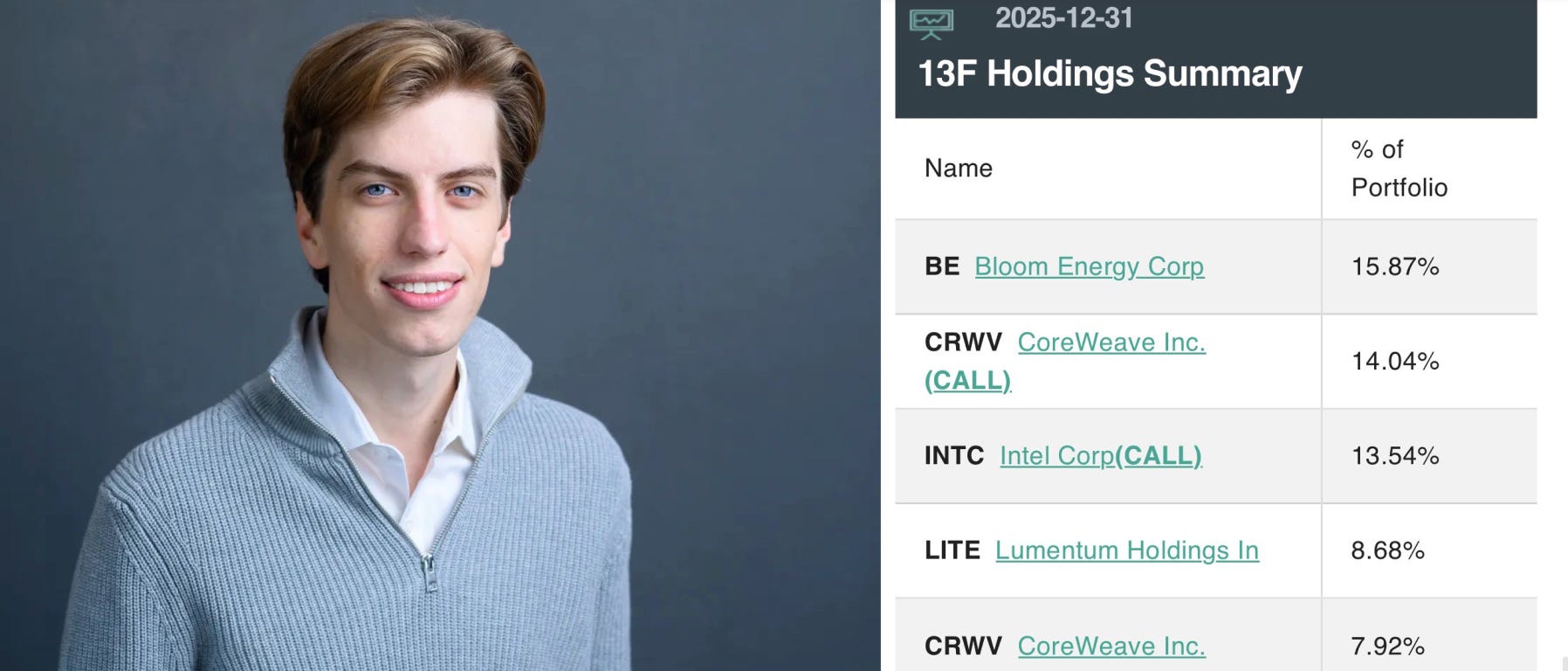
Leopold Aschenbrenner’s Situational Awareness LP grew its disclosed gross exposure from ~$255M in Q4 2024 (first 13F, 6 holdings) to $5.5B by Q1 2026:
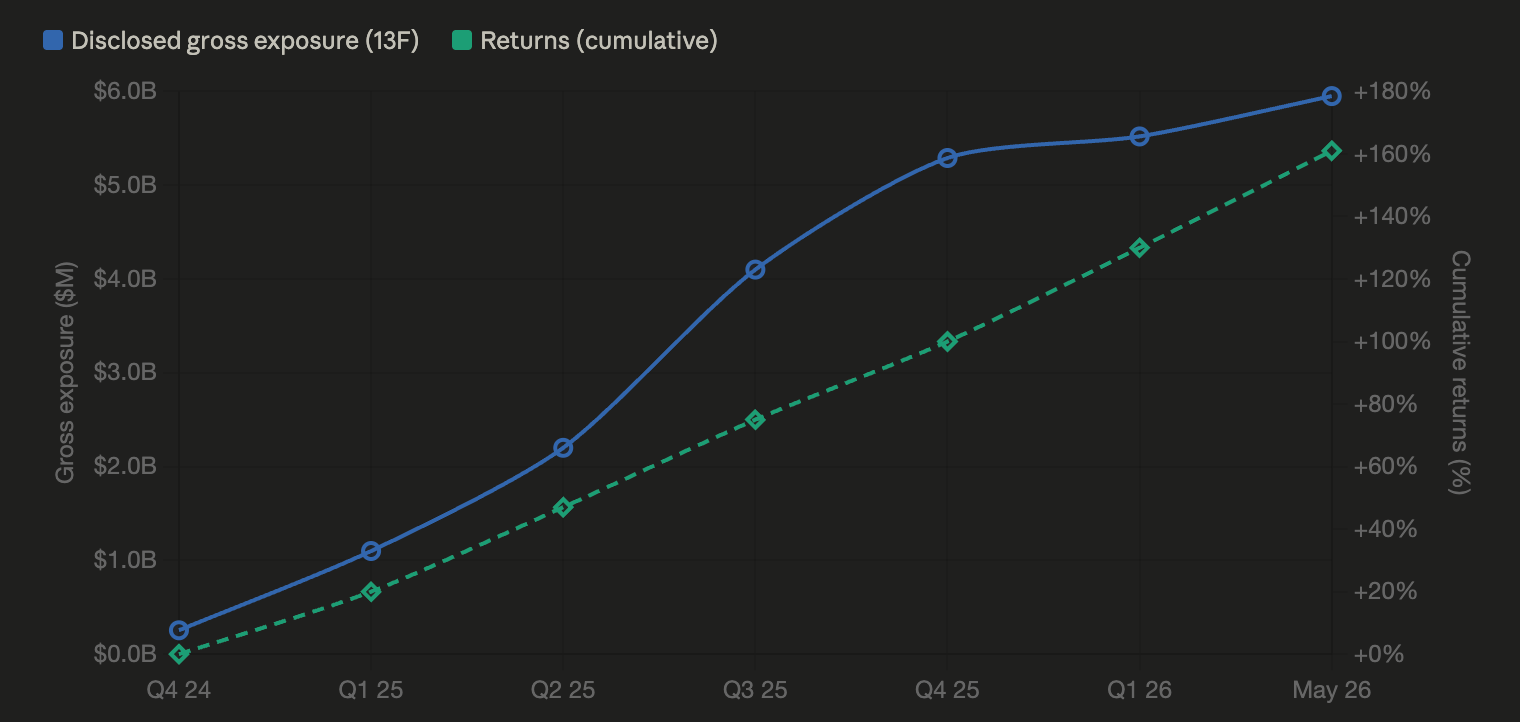
Underlying assets under mgmt. (AUM) is ~$383M per the firm’s ADV: the $5.5B is gross 13F exposure including options notional, so the fund runs significant leverage
Largest disclosed holding: Bloom Energy at 16% of book:
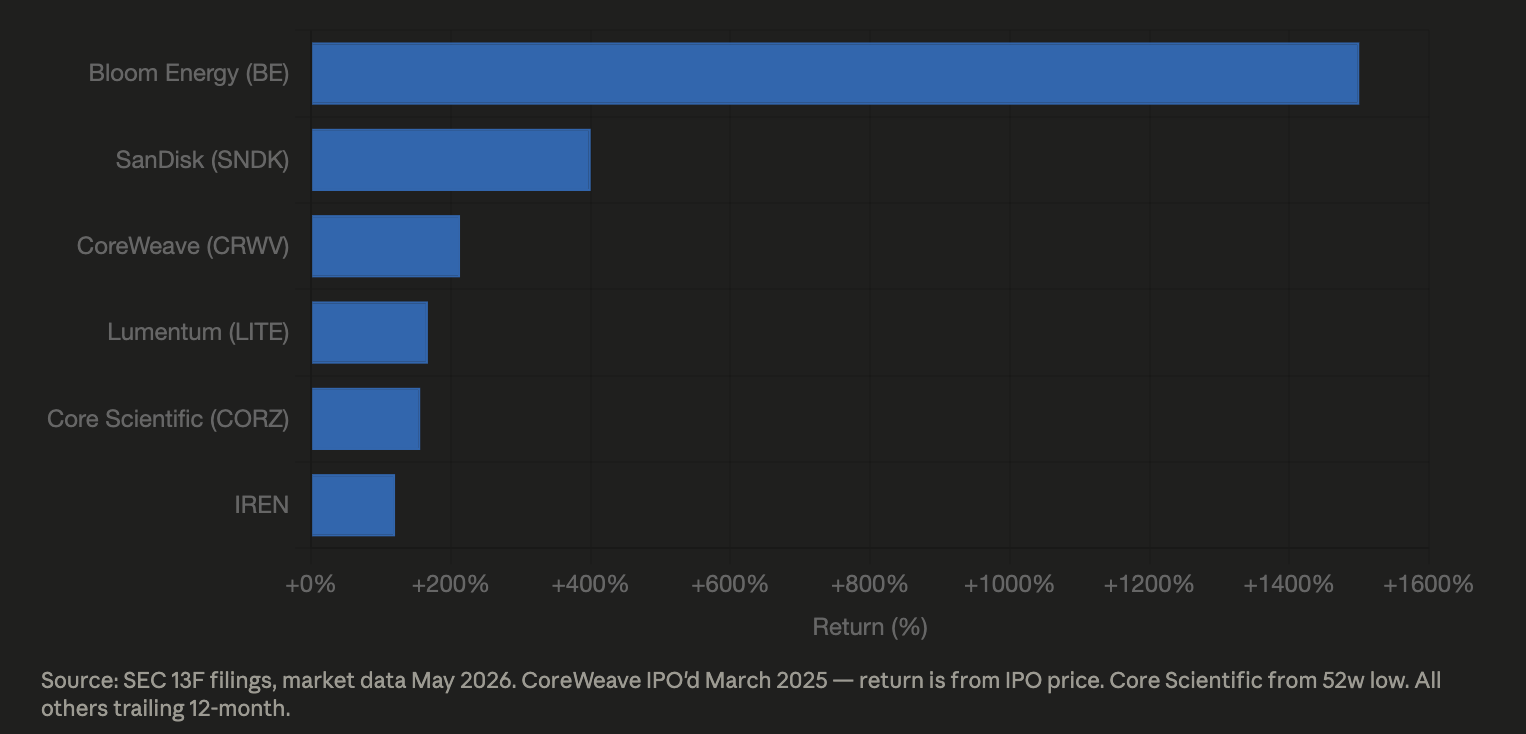
The 2024 Situational Awareness essay is the cleanest articulation: AGI by 2027 demands trillion-dollar compute clusters, with electricity generation and computing capacity as the binding constraints
The investable surface for crypto runs across several distinct layers, mapped against TradFi ‘picks-and-shovels’:
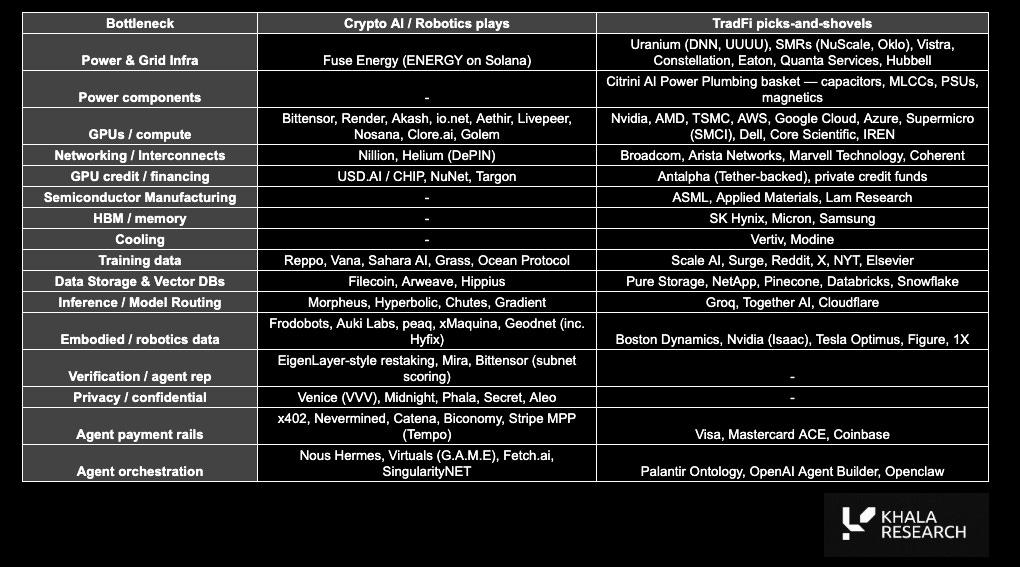
Some segments above lack the opportunity to invest and hence could become a viable opportunity for builders to move into creating crypto enabled solutions; Memory being a prime example
Power is the cap on AI scaling: Uranium onchain
The Power layer is the most binding constraint in the stack, and uranium is the cleanest tradeable proxy for it
A hyperscale AI data centre needs 100-300MW of continuous power. A single AI task uses up to 1,000x the power of a traditional web search
The Big Five hyperscalers will spend $800B+ in 2026, half from balance sheets, half from credit markets absorbing the issuance with appetite:


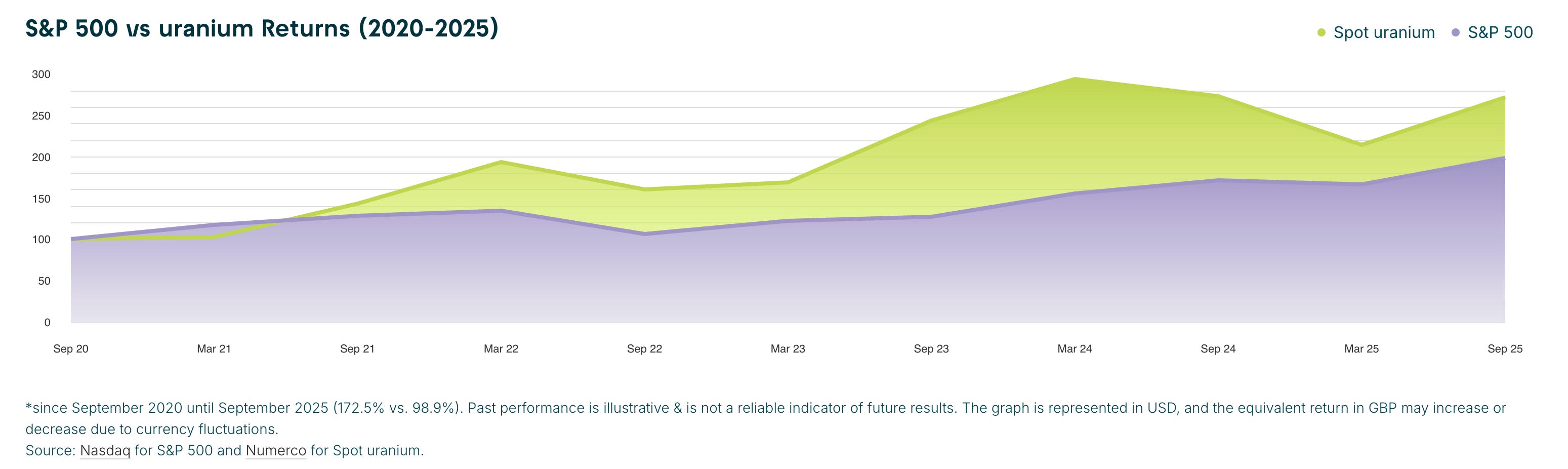
Uranium reflects the repricing:
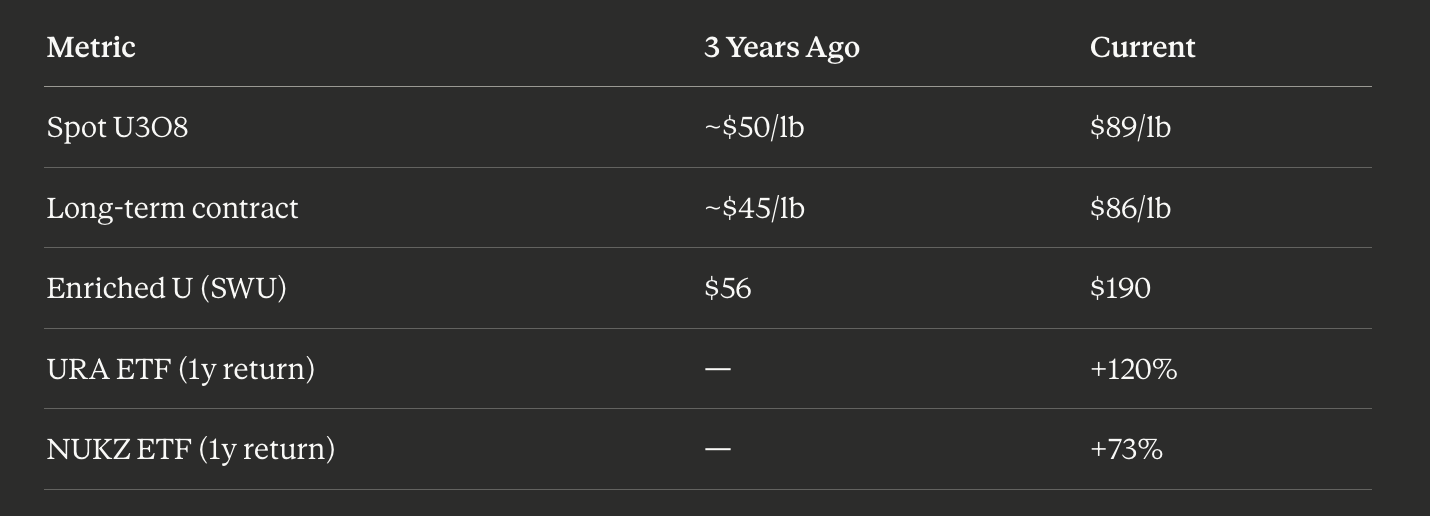
Onchain exposure runs through xU3O8 (Uranium.io): physical U3O8 stored at Cameco, Archax as trustee, Etherlink-based, Morpho collateral:
2) AI Market Cap Analysis
A) DeAI Market Cap
Bittensor outperforming on its own narrative engine; the rest of DeAI riding broader market beta or fighting protocol-specific headwinds:
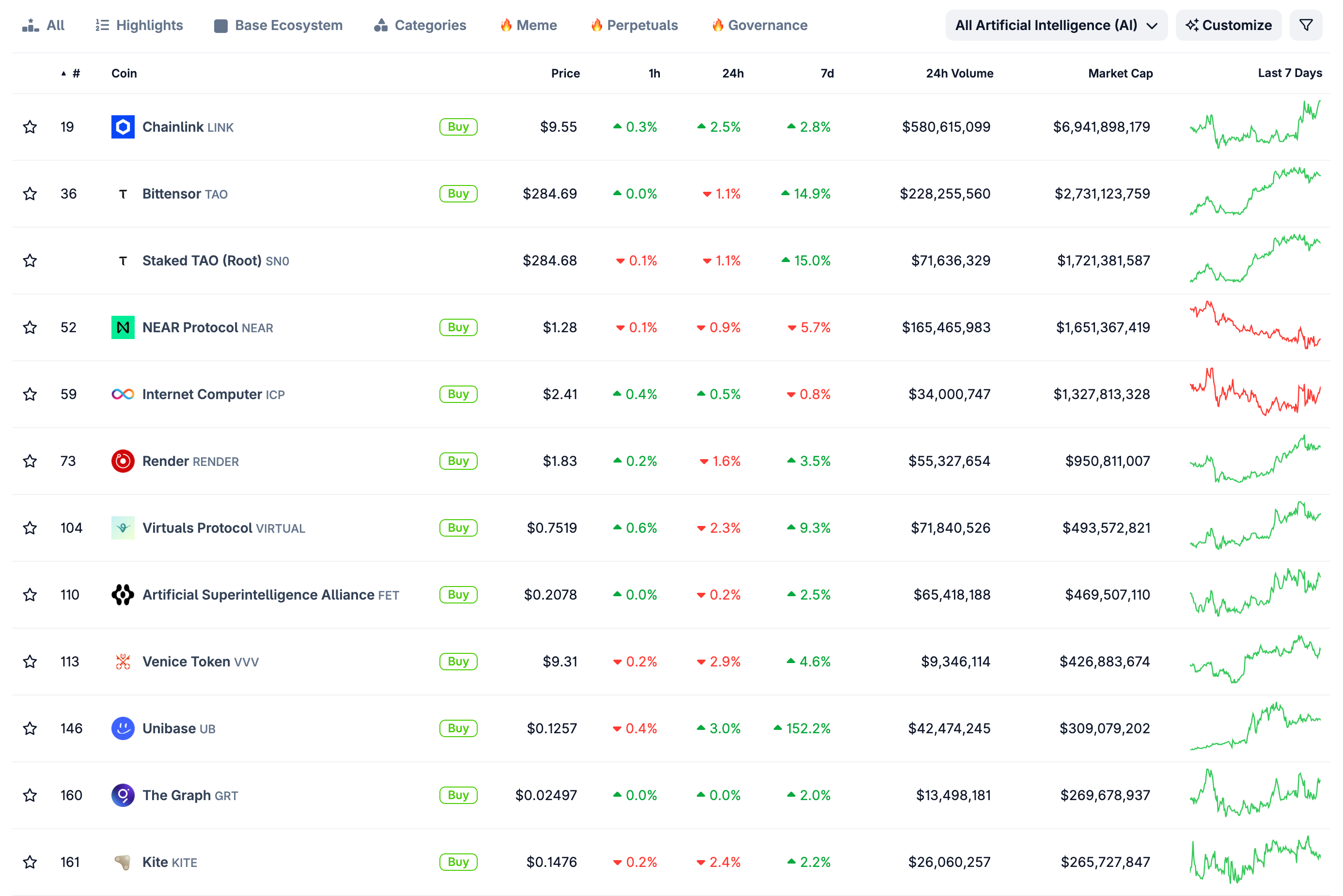
LINK ($9.24, flat 7d): BridgeTower’s $11B Arizona Copper-Gold tokenisation went live in production. Deloitte SOC 2 Type 2 cert clears the natural-resources tokenisation pipeline ($25B+ disclosed). LINK is the picks-and-shovels for any uranium or critical-minerals tokenisation that follows xU3O8 (see pricing oracle linked to above mention on Etherlink)
NEAR ($1.29, -9% 7d): Rhea Finance exploit on April 30 hit NEAR DeFi for $18.4M, the second material exploit this month. Governance controversy around centralisation is dampening institutional interest, with Grayscale and Bitwise spot NEAR ETF filings stuck pending. Despite genuine traction (Intents at $17B+ all-time volume, IronClaw v0.27 shipped, XAU₮ live), price is testing $1.22 support
ICP ($2.36, -2.7% 7d): May 10 “Cloud Engines” demo on the network’s fifth anniversary (sovereign cloud subnets with dedicated GPU AI nodes) is the upcoming catalyst
VIRTUAL ($0.7583, +10.2% 7d): Spot now live on Hyperliquid, Coinbase listing, Korea’s first Base Agent Hackathon ran in Seoul. Q1 numbers hold: $400M+ aGDP, $60M+ protocol revenue (~$300M annualised), 17K+ deployed agents. Leading the Robotics CoinGecko category alongside its DeAI presence, with ACP V2 cross-listings pulling double duty
VVV ($9.38, +109% 7d): May 1 emission cut (6M → 5M annual, with 4M scheduled June, 3M July) plus the buy-and-burn program funded by protocol revenue is the supply-side catalyst. Demand-side: Venice now at 2M+ users with API token usage rocketing:


b) Bittensor Subnet Ecosystem
Almost the entire top 11 closed green on the 7d view, except Ridges (SN62)
Capital is rotating toward subnets shipping verifiable infrastructure (training, inference, compute, real-revenue products), and away from autonomous-agent narratives that face direct competition from centralised tools:
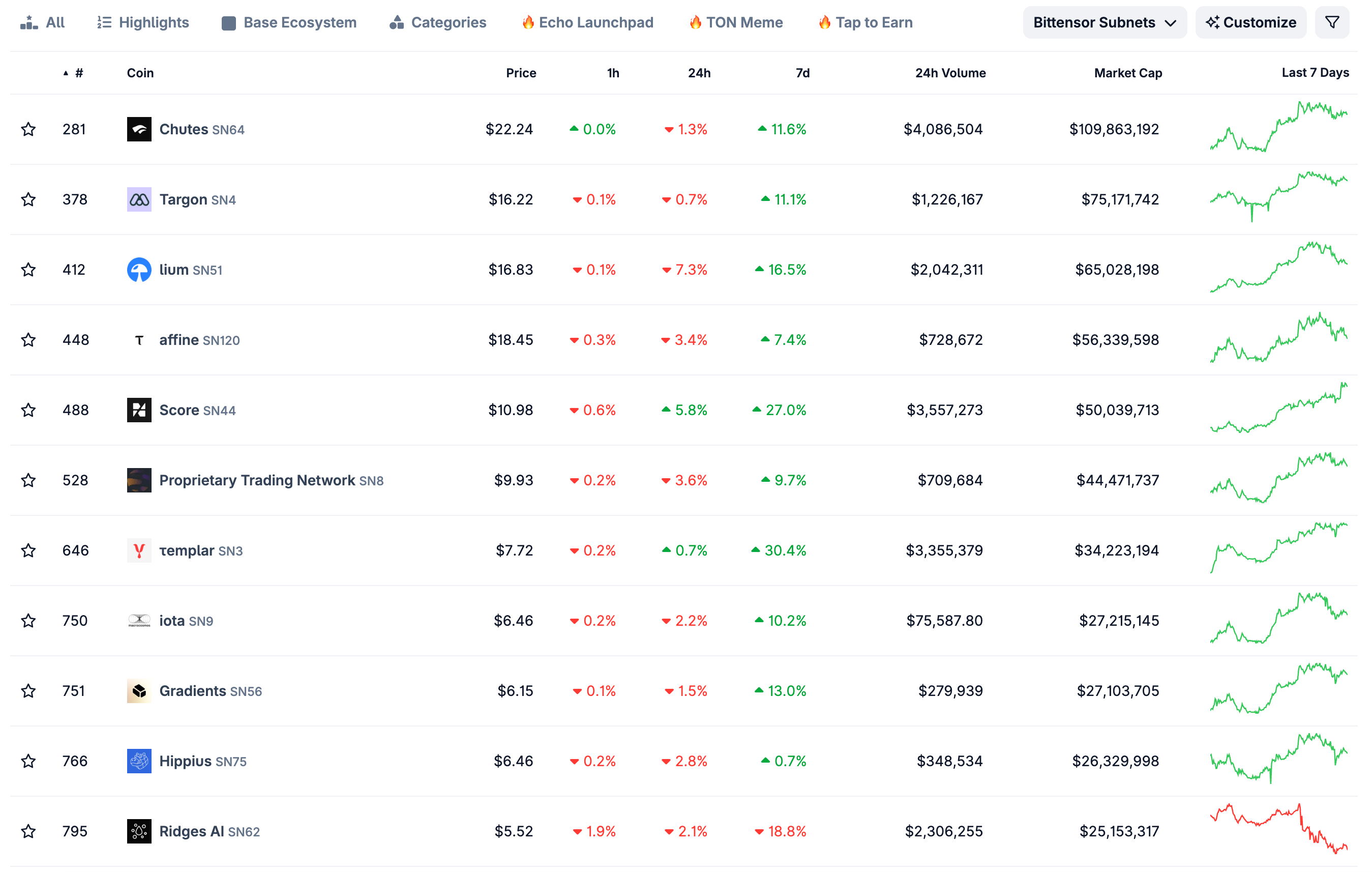
Ridges AI (SN62) ($5.5, -19% 7d, $25M mcap): Autonomous software engineering faces the hardest centralised competition in AI; Cursor, Devin, GitHub Copilot, Claude Code, Cognition all compete directly for the same “AI replaces engineers” market with massive capex behind them


Chutes (SN64) ($22, +12% 7d, $110M mcap): Largest subnet by mcap. Processing 9.1T+ tokens cumulative, daily peaks 50B+, ~4,400 H100-equivalent GPUs, 400K+ users, $1M+ flowed back via auto-staking buybacks
Targon (SN4) ($16, +11% 7d, $75M mcap): $10.4M projected annual revenue, Dippy’s 4M users, Manifold’s $10.5M Series A, NVIDIA Inception backing
Lium (SN51) ($17, +17% 7d, $65M mcap): Datura confirmed revenue +20% from the SN3 (Templar/Teutonic) pretraining relaunch; the top SN3 miner runs Lium GPUs, and most former Templar miners migrated. ~$432K/month rental revenue, ~6.2% of TAO emissions, 60% emissions burn
Score (SN44) ($11, +27% 7d, $50M mcap): 60-day enterprise trial converting at 100%, signed deals with Reading FC and a major European petroleum company for monitoring thousands of automated gas stations. World Cup 2026 fantasy app launching to coincide with the tournament. Computer vision for sports + industrial monitoring
Sector rotation within Bittensor is favouring infrastructure subnets (training, inference, compute) over agent-product subnets
c) Robotics Market Cap Analysis
Robotics mcap $769.5M (+0.5% 24h). Three macro catalysts driving the rotation:
Meta acquired Assured Robot Intelligence (May 4),
NVIDIA shipped Isaac GR00T + Cosmos world models at GTC with Figure 03 demonstrating 24/7 unsupervised operation, and
The Beijing E-Town Half-Marathon was won by Honor’s “Lightning” humanoid in 50:26 (faster than the human world record)
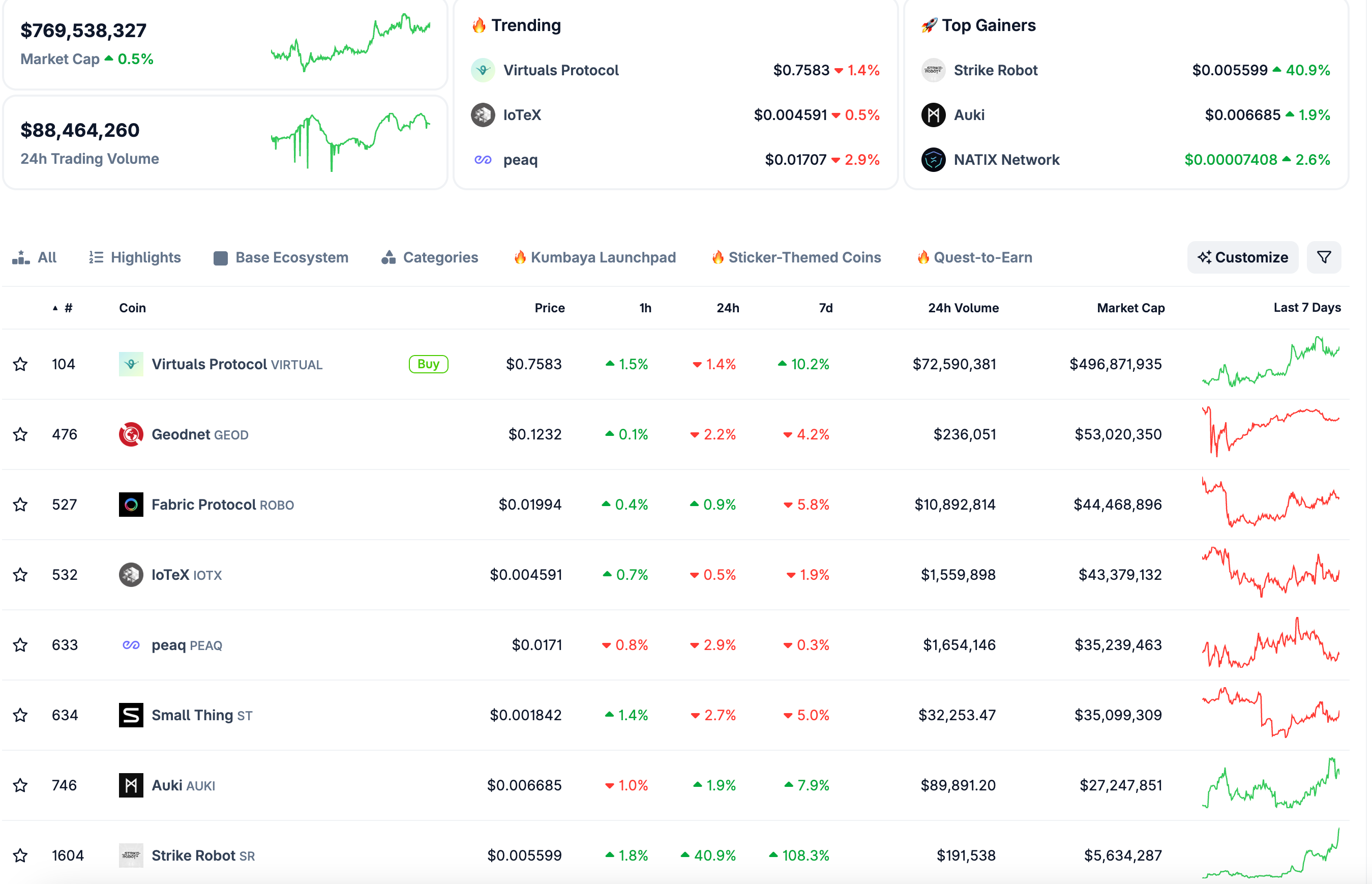
Strike Robot (SR) ($0.0056, +108% 7d / +40.9% 24h, $5.6M mcap): Physical AI BPO for nuclear plants, high-voltage facilities, and active radiation zones. SafeGuard ASF (Autonomous Security Fleet) runs on Unitree G1 hardware. Tiny mcap, illiquid, but the narrative fit lines up with hyperscaler humanoid demand
Auki (AUKI) ($0.0067, +7.9% 7d, $27M mcap): 500 grocery store robots planned, 6,500+ pilot retail locations across enterprise chains. Hardware-agnostic perception layer; Unitree, EngineAI, Padbot, Slamtec integrations live
GEOD ($0.12, -4% 7d): Hyfix Spatial Intelligence’s $15M raise (same founder, US-made autonomous chips) reinforces the robotics chip vertical thesis as their burn rate from revenues generating continues despite slight sell off


$DEUS TGE confirmed for May 27. Next major humanoid robotics token in the agentic stack


3. AI Agents Developments
Here is what happened on crypto AI & robotics related developments this week:


That’s a wrap for issue 175 of Sammy’s Snippets. I hope you enjoyed it.
Please leave me any questions or thoughts here - I will respond to everyone!
If you found this interesting, please consider subscribing to this Substack and following me on X for more related insights.
If you are interested in more formal reporting on Crypto AI and Robotics then Khala is my research product.
Disclaimer: The content of this newsletter is for informational purposes only. Nothing in this newsletter constitutes financial advice or a recommendation to buy or sell any asset. Always do your own research before making any investment decisions.
I hold positions in many of the assets discussed in this newsletter. For a full list of disclosures, please refer to the Khala Research website.
Follow me on X | Khala Research
Aschenbrenner's fund is real, the capex numbers are real, the power constraint is real. No argument there.
But the jump from "AI needs power" to "buy uranium onchain" feels like a narrative stretch. His largest holding is Bloom Energy — fuel cells and distributed generation, not nuclear. That's a bet on getting power to data centers *now*, bypassing grid queues.
Uranium is a nuclear fuel cycle play with a 10-year buildout horizon. These are fundamentally different trades on different timelines under the same broad umbrella.
The honest read: there just aren't many tokenized assets that map to the AI power theme yet. xU3O8 happens to exist, so it gets slotted into the chart. That doesn't make it the crypto equivalent of what Situational Awareness LP is actually doing.
Not a knock on the thesis — more a reminder that "same narrative" ≠ "same trade."