


This Crypto AI & Robotics newsletter consists of three parts:
Snippet Partner (Tria)
Three Interesting Crypto / AI Mechanisms
Other useful resources
If you have any questions feel free to reach out to me on X or message my business X account ‘Khala Research’



This week’s snippet partner is Tria, the self-custodial crypto neobank that enables you to spend crypto directly with a debit card
Tria went live with Season 3 yesterday, layering an activity-based rewards system:



Spending, trading (inc futures), referrals, cashback and onboarding now all feed into a single rewards layer rather than sitting in separate silos
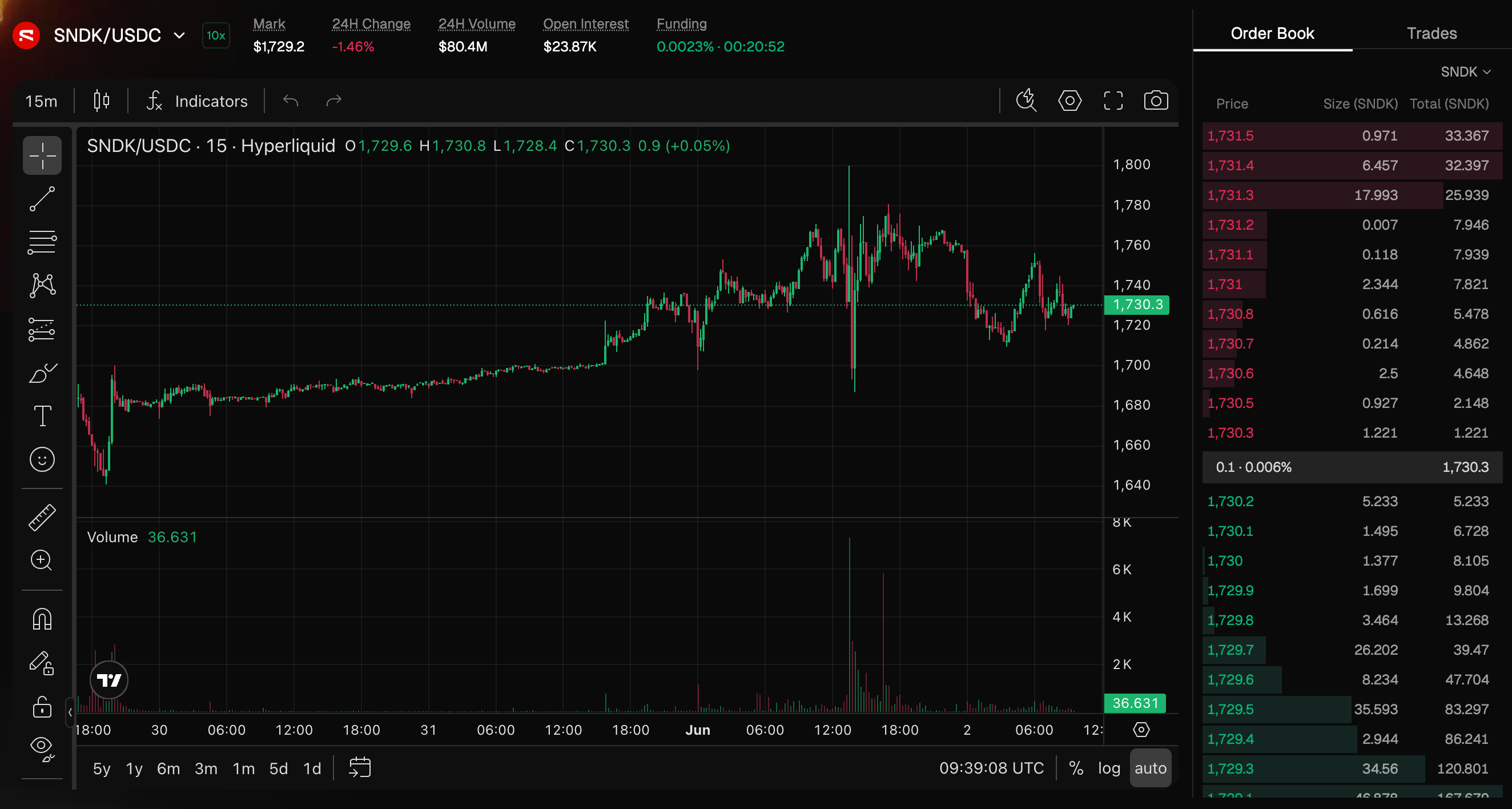
The thesis is simple: Consumer crypto is consolidating away from fragmented wallets, cards and trading apps toward one integrated financial surface, & Tria is building for that endpoint
Self-custody stays intact throughout: Funds remain in a smart account you control, settled across 200+ chains, gasless and seedless
Season 3 introduces TRIA Points, referral progression and expanded trading participation
Check out Season 3 campaign — here
This newsletter goes out weekly to 7.2k+ subscribers.
Please don’t hesitate to message me directly for sponsorship or partnership enquiries.

2. Three Crypto / AI Mechanisms Worth Watching
Most new protocols are a token wrapped around a familiar idea
This is why I specifically seek out novel concepts attempting to drive innovation using crypto rails
Pearl Research, TIG and Prism are three protocols that have caught my attention recently, driving a fresh wave of excitement into the use of the tech that brought many of us here in the first place
Each one ships a consensus, incentive or liquidity mechanism that does not exist anywhere else, or at least not in the same form
1. Pearl: matrix multiplication as the work
Thesis: PRL value should track global AI compute demand, because mining the token is doing real AI training and inference
Pearl Research Labs replaces hashing with the operation that already dominates global compute spend
Bitcoin secures itself by burning energy on SHA-256, a function that produces nothing but a number, yet is fast becoming consensus as a hedge against inflation, albeit with extreme short term volatility
Pearl’s Proof-of-Useful-Work secures the chain by extracting strong cryptographic proofs from the matrix multiplications inside the forward and backward passes of AI training and inference


The work that mines the coin is the same work a GPU was already doing for a model

Pearl partnered with Together AI to launch a discounted inference endpoint for an instruction-tuned model, Gemma-4-31B-it-pearl, priced more than 25% below the usual rate


The discount is funded by the future value of PRL emissions, so the consensus mechanism becomes a subsidy on the AI workload
Compute that secures the network also lowers the cost of running the model
Three things to watch:
Mining is currently Nvidia-only and pool-optimised for H100 and H200, which keeps most of the rush on rented datacenter silicon rather than consumer cards
Block rewards only decline and difficulty is already climbing, so the economics compress continually
The load-bearing claim is that a usable mining proof can be pulled from genuine inference, not from a separate puzzle bolted on
If that claim holds in production it is the cleanest version of useful work anyone has potentially shipped
The main friction point is whether the network gets adopted, an explicit claim in the Pearl whitepaper and a challenge every protocol faces
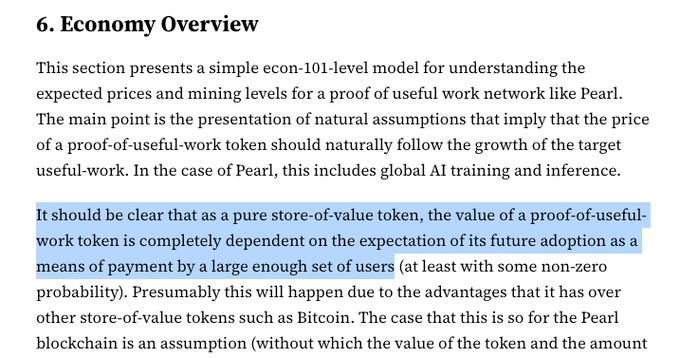
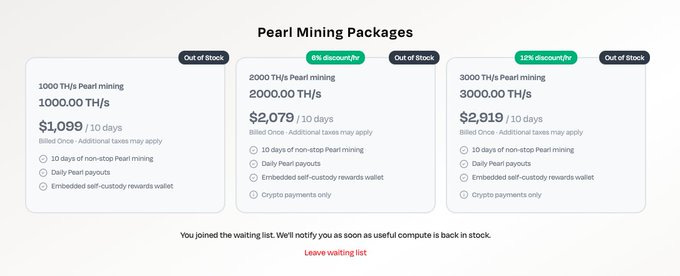
Two ways to get exposure currently exist
Mining is sold out, so you join a waitlist for access
OTC trades let you accumulate PRL at a premium to mining but with less complexity
The spread and liquidity are volatile, but if the network gets adoption then accumulating OTC could be a route to exposure until mining access opens
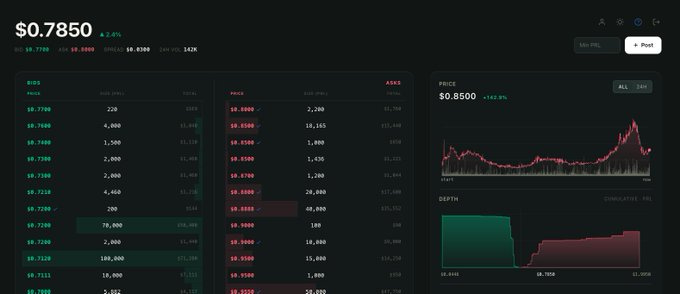
Total circulating supply is 190m tokens and price is $0.79 meaning an overall market cap is currently $150m:
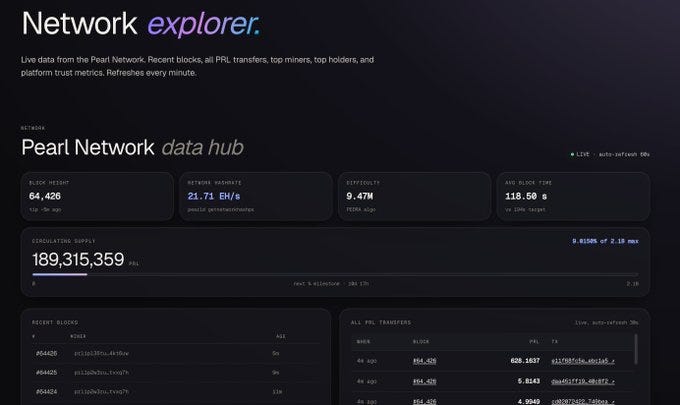
The key metrics to watch are miner emissions compared to network adoption for inference. If demand outpaces supply then we should see positive price performance
This interests me because it has a working PouW mechanism live alongside the token to supply the insatiable appetite for compute that we expect to continue - free API usage for miners:
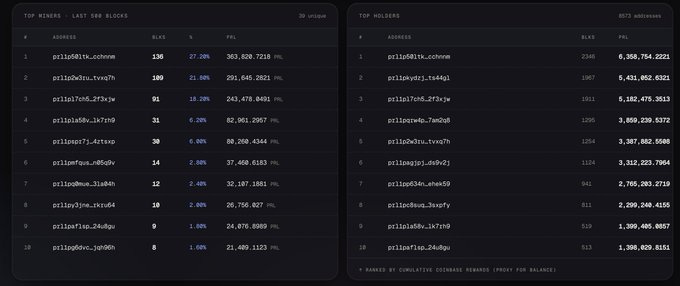
Large miners and holders hold 7 figs so it's worth watching the process of decentralization to assess whether the price sustains as further emissions roll out:
2. TIG: optimising the proof-of-work itself
Thesis: TIG value should track the rate of algorithmic progress, because the token rewards optimising the proof-of-work algorithm itself
TIG foundation attacks a different assumption
In standard PoW miners optimise hardware to win the same fixed puzzle
In Proof-of-Useful-Work miners point compute at a real problem but the algorithm stays fixed
TIG lets the proof-of-work algorithm itself be optimised:
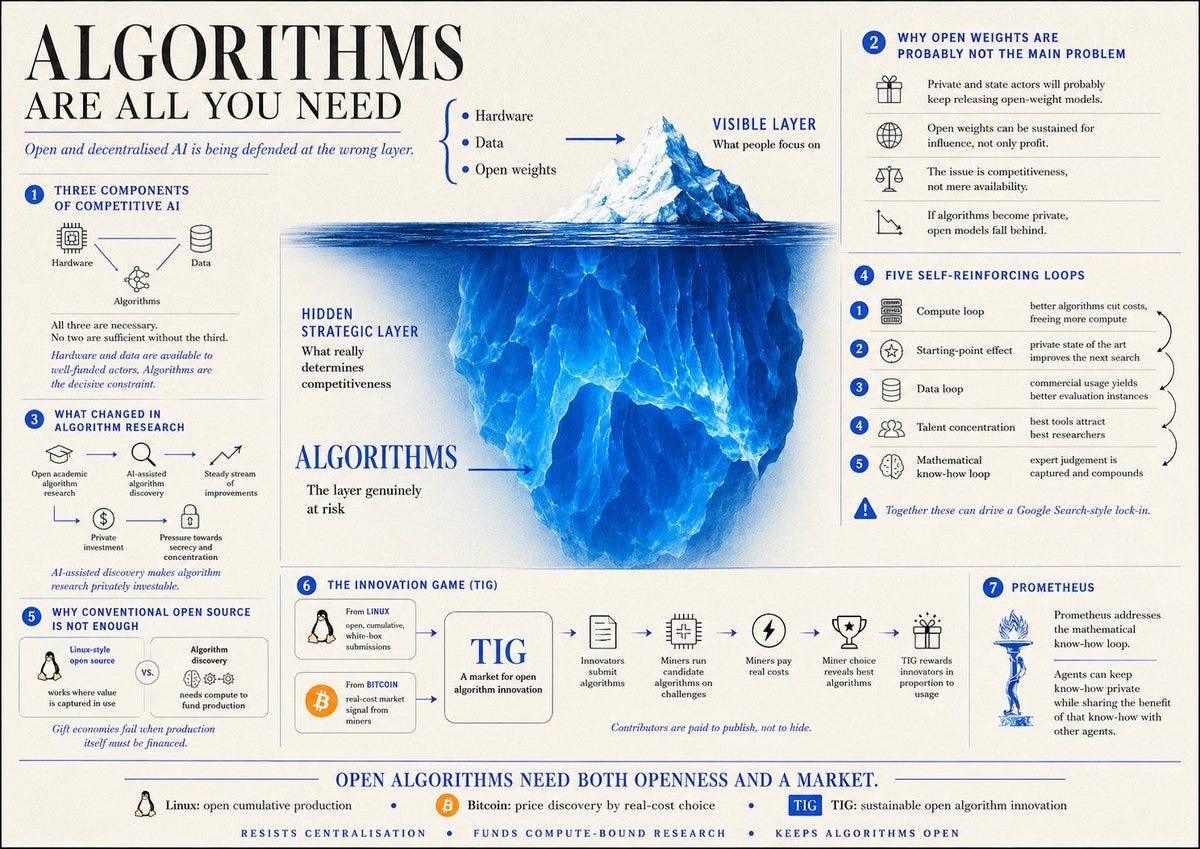

This has been flagged by Jensen Huang and Elon Musk as a research avenue for improving AI models, particularly as gains from improving physical hardware diminish
The TIG thesis is “Algorithms are all you need”
Optimisable Proof-of-Work splits the ecosystem into two roles
Benchmarkers are the miners, competing to run the most efficient known algorithm against a set of computational challenges
Innovators submit and optimise the algorithms, earning rewards based on how widely Benchmarkers adopt their code
A code submission improves an existing method, and an advanced submission is a novel method, often good enough that unoptimised new code beats the most optimised old code
Centralisation has a design problem: Reward whoever finds the single best algorithm and you converge on one winner, then the network collapses to a monopoly
TIG handles this by running multiple distinct challenges per block, requiring them to be asymmetric, and balancing rewards across challenges so no single optimisation captures everything
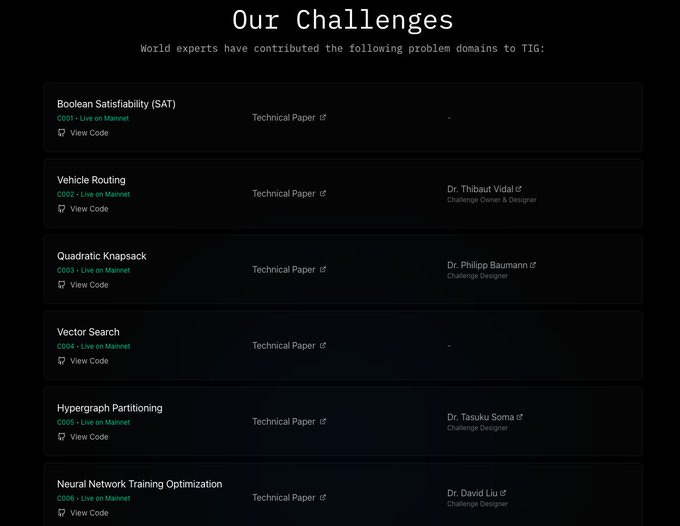
The output is a synthetic market for algorithms, aka Investible Algorithms
Compute does price discovery on which methods work, license payments flow back to contributors, and the open data license forces input data to be shared if outputs are distributed
There are currently just 545 algos contributed
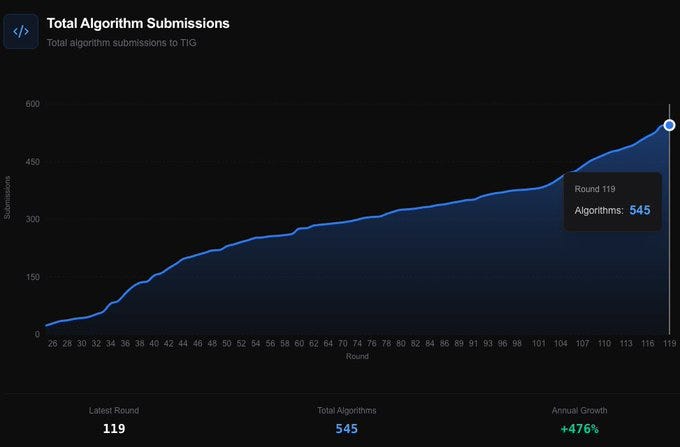
Imagine when this hits 100,000s - Value should accrue to the TIG token, a mechanism designed by four individuals who are no stranger to crypto incentives


John Fletcher has been plugged into the crypto scene way ahead of time


“The only way to really get 10x leaps, 100x leaps is to fundamentally change the algorithm and how it’s computed every single year” - Jensen Huang, NVIDIA CEO
This is all with an emphasis on keeping the competition open source, to compete with the asian open source models - TIG solves for this.
3. Prism: the token is the liquidity position
Thesis: PRISM value should track trading volume, because holding the token is an LP position whose fee share only grows as supply burns down
While not AI focused like the prior two, it shouldn’t be underestimated
The fee mechanism is extremely novel and reminds me of a more effective ERC-404 evolution, the NFT to ERC-20 conversion mechanism, and could create some really innovative use cases
Prism is a Uniswap v4 token where holding it is providing liquidity
Every whole PRISM you hold auto-mints one Prism NFT, and each NFT is a 1/5000 share of the same v4 LP position
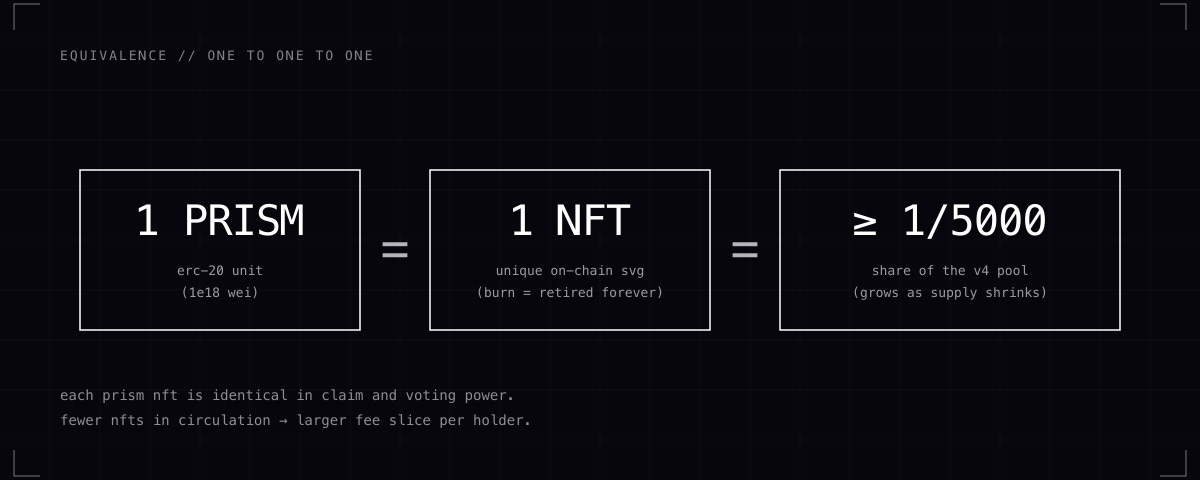

There is no staking, no LP wrapper, no router approval, no second transaction
You hold the PRISM token in your wallet, and if you hold an integer of the token then the NFT created earns fees
The structure is one v4 hook doing three jobs at once
ERC-20
the LP owner
the fee router
There is no wrapper contract and no staking gauge sitting beside it, so the position is native by construction
That matters more as AI gets ever better at surfacing attack vulnerabilities within staking contracts, giving bad actors more opportunity to exploit those loopholes

Fees from every swap accumulate inside the v4 position and accrue pro-rata to the live NFTs
The claim path is permissionless: Anyone can trigger a payout, funds go to the current NFT owner by share, one call and no whitelist
The integer mechanic is what piqued my interest:
Each whole token corresponds to one NFT, and every fractional sell burns the underlying NFT permanently
Fewer NFTs in circulation means a bigger fee slice for everyone still holding a whole unit
Supply only ratchets down, and the per-holder claim only grows
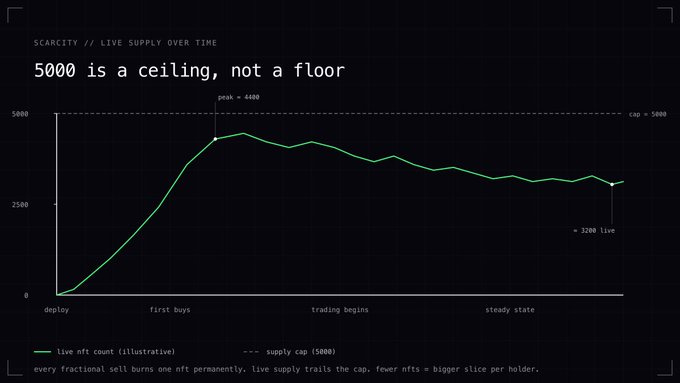
Each Prism NFT is identical in fee claim and voting power, so the segment you hold is an index share of the pool rather than a collectible with traits
Prism isn’t the only interesting mechanism being experimented with by 0xsolazy and endorsed by ColbySaysHi : Spectrum also offers the ability to invest in a basket of onchain tokens as an index

Spectrum is a novel launchpad built on Prism that lets you create an asset index; this is something that Vitalik himself wrote about just yesterday:


The main drawback I currently see is the inability to change the predetermined weightings, but the team may adapt this with feedback over time; apparently this is being remediated in a later version of the tech:


Why these three sit together
Each protocol relocates work, optimisation or ownership:
Pearl puts the securing work inside real AI compute
TIG puts the optimisation target inside the algorithm
Prism puts the LP position, including fee distribution, inside the token itself
Crypto is very good at co-ordinating capital and resources globally with far less friction than traditional finance rails
This will be invaluable for open source progress, which I’m an avid believer will become increasingly competitive
Two of these are enabled by the insatiable appetite for compute or enhanced AI algos, while the third takes ERC-404 one step further with a tangible use case
Disclaimer: These are early stage start-ups and while the mechanisms are novel, the networks still need to be adopted and value still needs to accrue back to the token
Proceed with caution and always DYOR; I’ve personally acquired tokens from these protocols on the open market to properly understand how it all works
3. Additional Reading
Michael Burry (famous for the big short) has doubled down on his short on the “AI Bubble” calling out round trip financing being recognized as revenue. Here’s my take on this, using a decade of audit experience:


Legen continues his copy trading of Nancy Pelosi, interesting performance:


0xJeff provides 6 workflows + setups for Hermes agent:

Machina provides insights into an optimal Hermes agent setup:


Teng provides insights into the AI chip shortage, timely as “AI bottlenecks” become a hot topic:

CyrilXBT provides a guide on how to enhance your agent’s second brain by adding obsidian and Hermes into a single solution

That’s a wrap for issue 178 of Sammy’s Snippets. I hope you enjoyed it.
Please leave me any questions or thoughts here - I will respond to everyone!
If you found this interesting, please consider subscribing to this Substack and following me on X for more related insights.
If you are interested in more formal reporting on Crypto AI and Robotics then Khala is my research product.
Disclaimer: The content of this newsletter is for informational purposes only. Nothing in this newsletter constitutes financial advice or a recommendation to buy or sell any asset. Always do your own research before making any investment decisions.
I hold positions in many of the assets discussed in this newsletter. For a full list of disclosures, please refer to the Khala Research website.
Follow me on X | Khala Research