


This Crypto AI & Robotics newsletter consists of four parts:
Snippet Partner: GEODNET (RTK positioning for robotics)
Theme of the Week: Privacy & Crypto AI after the ZEC debacle
Three Protocols Worth Watching: Venice, OpenServ, GitLawb
Deep-Dive Preview: What Gets Built on DIEM
If you have any questions feel free to reach out to me on X or message my business X account ‘Khala Research’



This week’s issue is brought to you by GEODNET, the decentralised network supplying the positioning infrastructure underneath the robotics boom
Every autonomous machine, a delivery drone, a field robot, a self-driving tractor, needs to know where it is to within a centimetre:
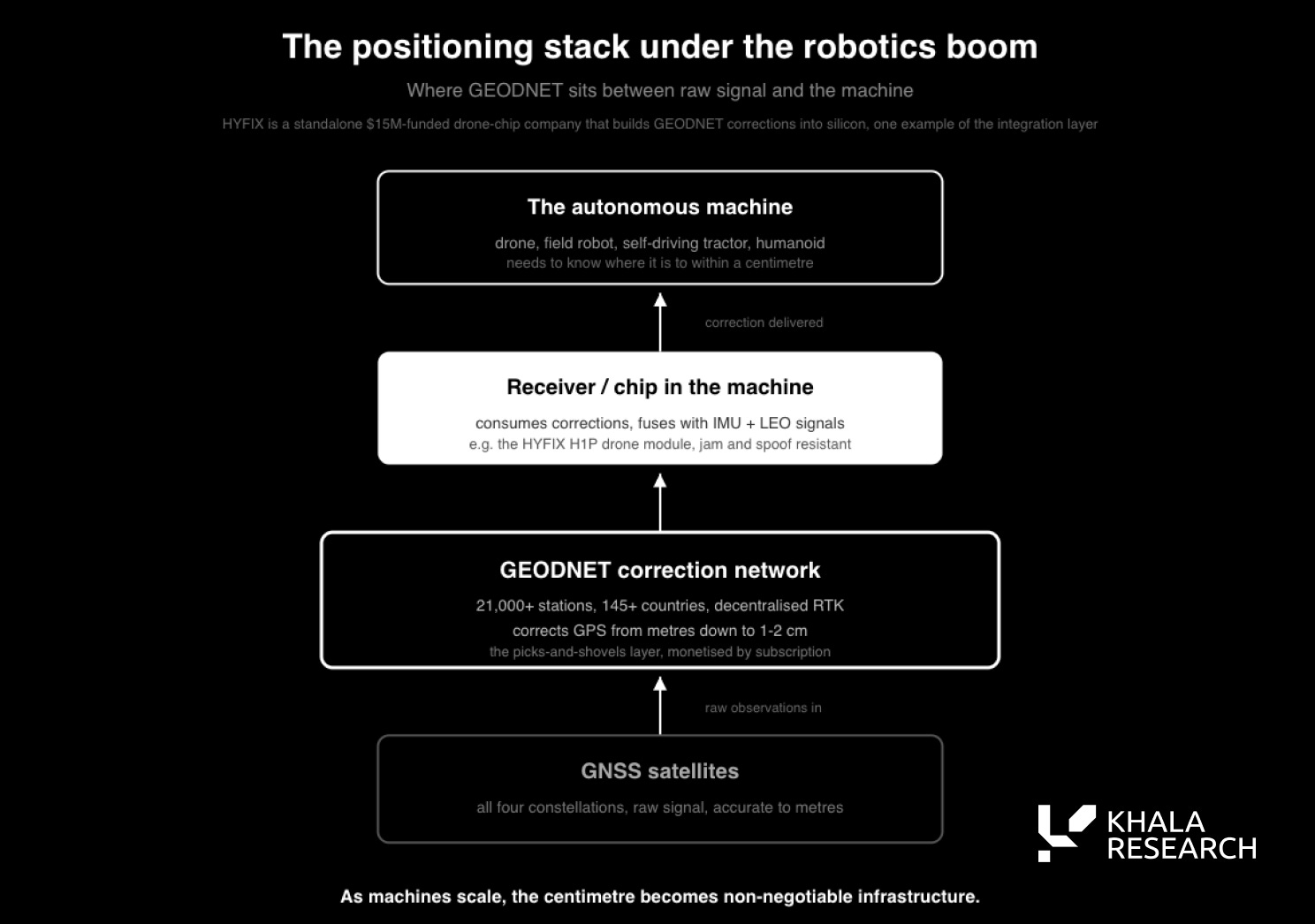
Standard GPS gets you to a few metres, which is useless when a robot is navigating a row of crops or a warehouse aisle. The fix is RTK (Real-Time Kinematic) correction, and it has historically meant expensive proprietary base stations with patchy coverage
GEODNET rebuilt that layer as a DePIN, which has led to the world’s largest decentralised RTK network, correcting standard GPS down to 1-2 centimetres
Scale: over 21,000 active satellite miner stations across 145+ countries, the largest RTK network globally
Each station is a physical GNSS receiver an operator mounts with a clear view of the sky, earning GEOD tokens for the correction data it contributes
The economics screen well for a DePIN with annualised revenue in the millions, 80% of data-sales revenue burned periodically
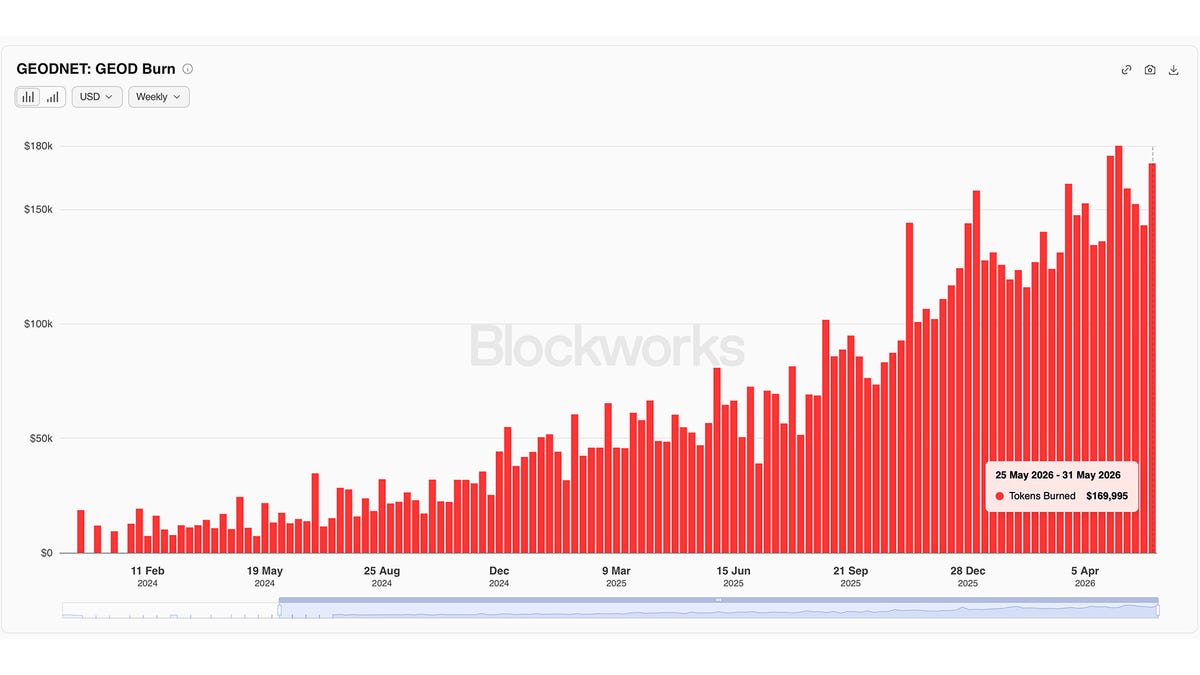
Why it matters for this audience: as humanoids and autonomous machines scale, precise positioning becomes non-negotiable infrastructure. GEODNET is the picks-and-shovels play on that demand, and it monetises real-world subscriptions today
Explore the network and its hardware at geodnet.com
This newsletter goes out weekly to 7.2k+ subscribers.
Please don’t hesitate to message me directly for sponsorship or partnership enquiries.

2. Theme of the Week: Privacy after the ZEC Debacle
Privacy was the strongest non-AI narrative of the year until last week it cracked:


What happened:
Security researcher Taylor Hornby found a soundness flaw in Zcash’s Orchard shielded pool on May 29, a bug that could have allowed undetectable counterfeit ZEC and had sat undetected since Orchard activated in 2022
Worth noting for this audience, the bug was surfaced using Anthropic’s Claude Opus 4.8 alongside a custom analysis suite. AI is now an active participant in protocol-level security research
ZODL coordinated an emergency soft fork on June 2 to disable Orchard, then the NU6.2 hard fork on June 3 to permanently fix the circuit. The turnstile mechanism confirmed no unauthorised supply was created and there is no evidence of prior exploitation
The market did not wait for the all-clear. ZEC fell from around $630 toward $387, roughly 40% and more than $3bn of market cap, after running to a $642 May peak on the Grayscale ZCSH ETF filing and SEC clearance
Why it matters as an opportunity:
The sell-off was driven by market confidence rather than known supply breach
The deeper read is that privacy at the asset layer carries protocol risk that does not go away. A single circuit flaw can erase a multi-month rally
That pushes the more durable privacy bid toward systems where privacy is a service applied to compute and data, where value rests on usage rather than the integrity of one cryptographic pool
The structural catalysts behind the ZEC run are still live, the ETF filing, FCMP++ throughput upgrade targeted for later this year
Where the rotation is flowing: Railgun (RAIL)


I posted my fuller read on this (embedded above), the short version here
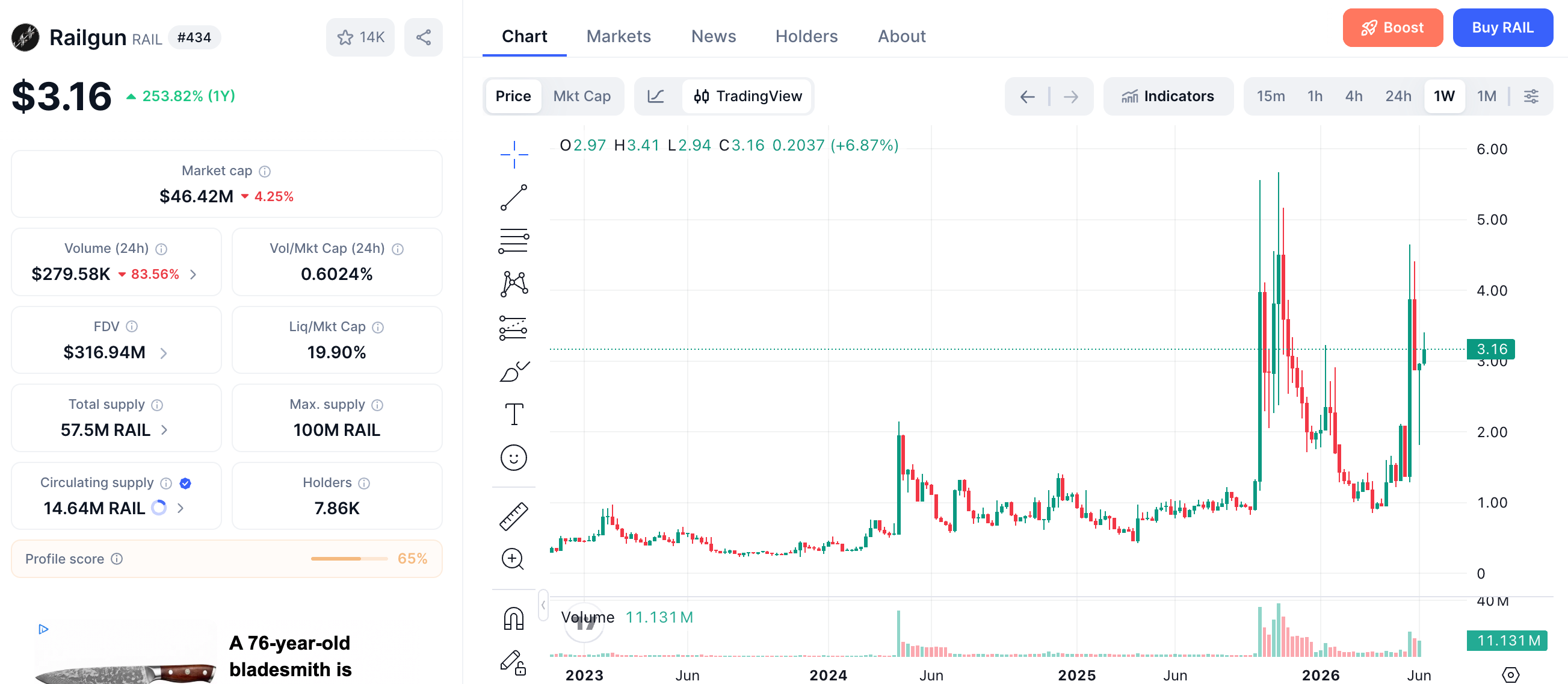
RAIL has caught a clear bid in the ZEC aftermath, rallying to new 2026 highs on roughly 10x normal volume as the privacy narrative rotates toward Ethereum-native solutions. The protocol is at a $91.88M TVL ATH, around $4.7M protocol revenue on $2bn+ shielded volume
The mechanism distinction is key:
Zcash privacy is consensus-level, baked into the chain itself
Railgun privacy is application-level, a zk-SNARK smart contract anyone can audit and interact with directly on Ethereum
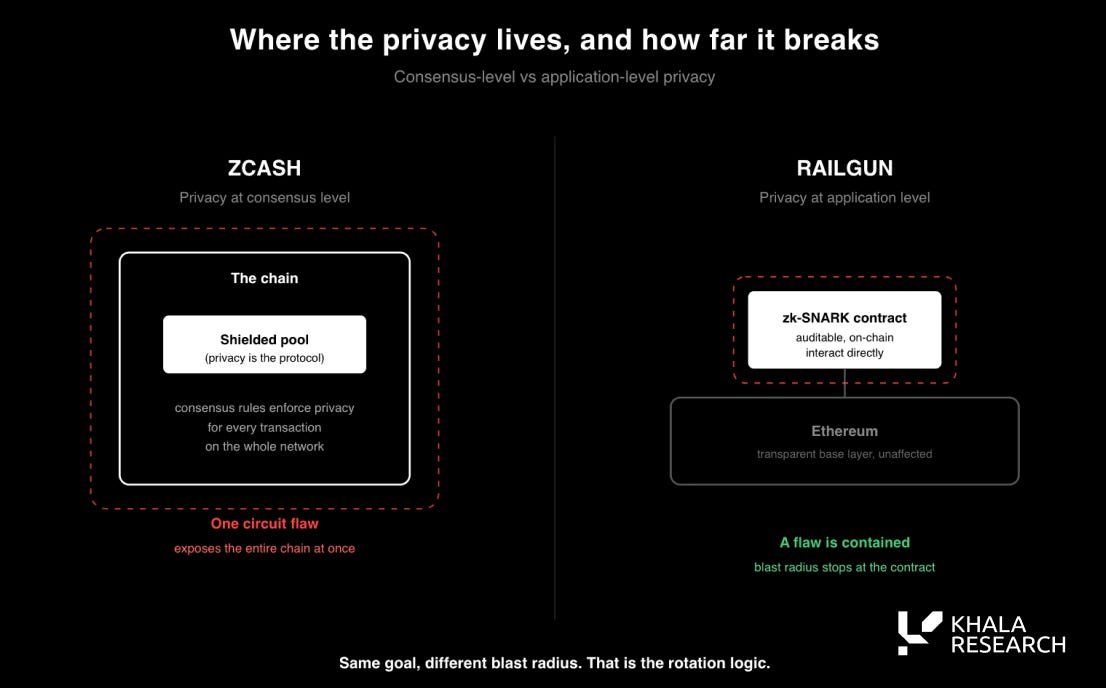
When a consensus-level system has a circuit flaw, the entire chain is exposed at once. An application-level contract contains the blast radius to the contract
That makes the rotation logical, ZEC holders spooked by single-pool protocol risk move toward a system where the privacy layer sits in auditable contract code with Ethereum Foundation and Vitalik backing behind it
The honest counterweight, which I laid out in the post (see above): the counterfeit ZEC issue does not transfer to RAIL, but Railgun carries its own separate possible vulnerabilities
Net: different architecture, different risk model, and a credible home for privacy capital while ZEC repairs its narrative
The cleaner expression of the privacy thesis going forward is private AI infrastructure; that is where the next section leans
3. Three Protocols Worth Watching
a) Venice (VVV + DIEM) — privacy applied to inference
The USP: private, uncensored inference at scale, with a dual-token model that ties revenue directly to supply contraction
3 million registered users hit in May, the third million added in roughly 3 months as users begin to catch onto the value prop of the protocol, clearly bidding the VVV token and minting DIEM for ongoing daily inference allowance:
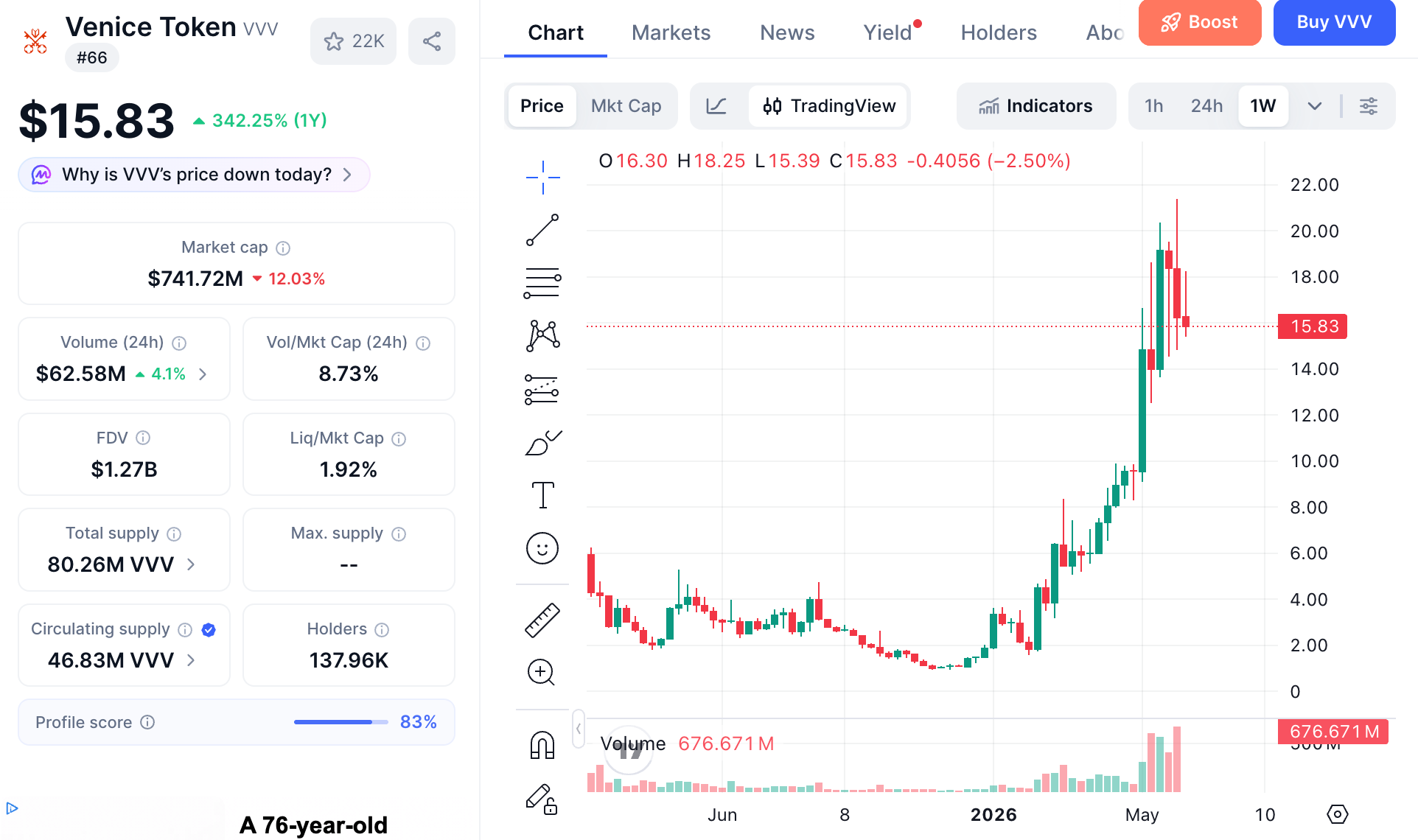
May 11 was the strongest revenue day on record per CTO Jesse Proudman, 10x API token usage growth since January
The Sub Burn upgrade on April 27 means each Pro signup now burns $2 of VVV, Pro+ $5, Max $10. Revenue growth mechanically contracts supply, a rare clean link between usage and tokenomics
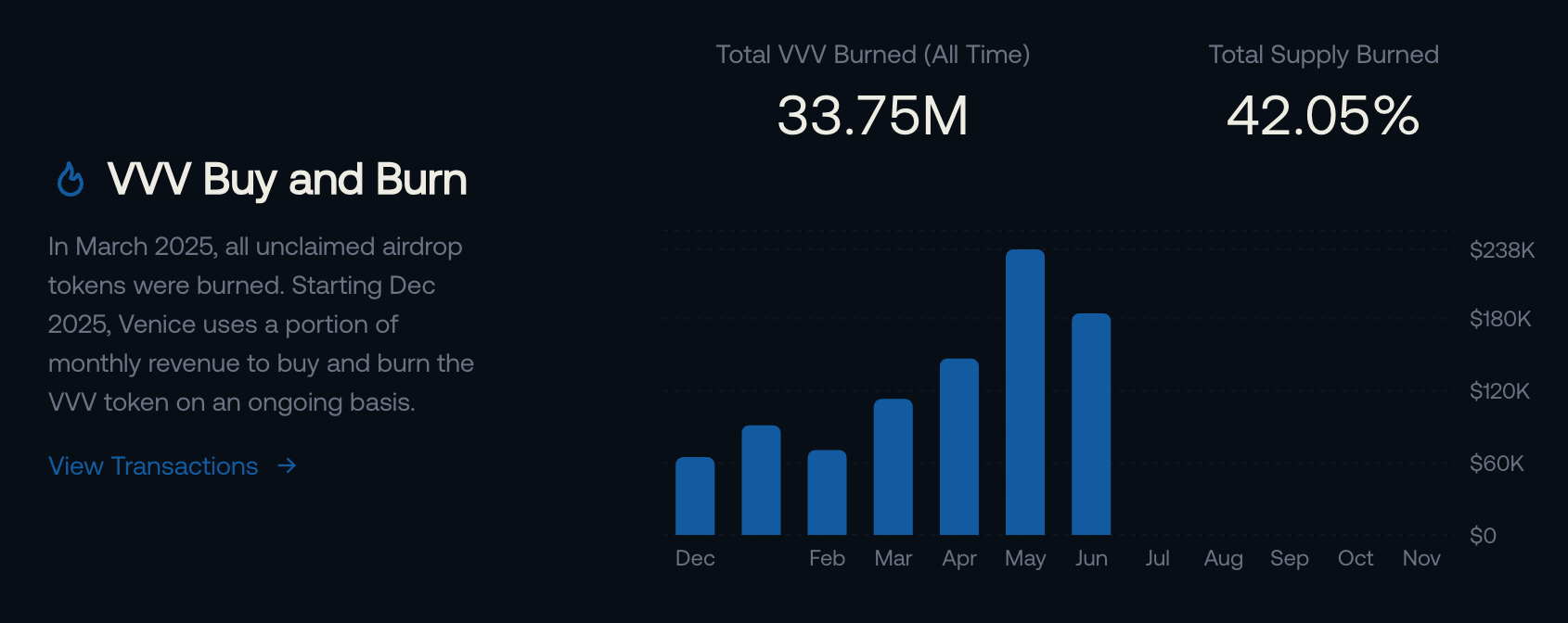
DIEM is the structurally novel piece: Lock sVVV to mint DIEM, and each DIEM equals $1 per day of API credit in perpetuity
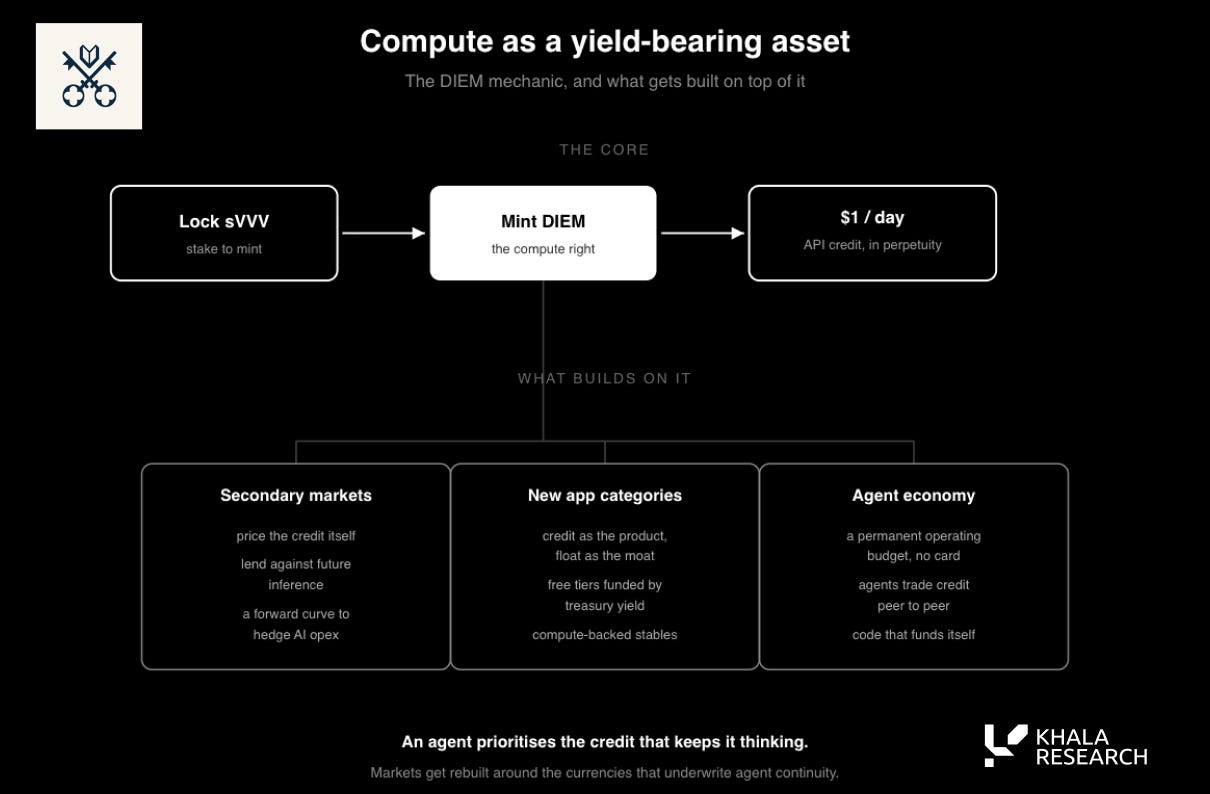
An agent can hold DIEM as a permanent compute right, with no per-request API spend to fund; this strikes me as an agent first primitive primed to capitalize on the agentic boom:
“Inference is existential for agents”
Why this fits the privacy rotation: Venice sells the thing ZEC holders actually wanted, privacy as a usable service, with the value sitting in usage across the whole platform. The demand is for a ChatGPT that does not surveil
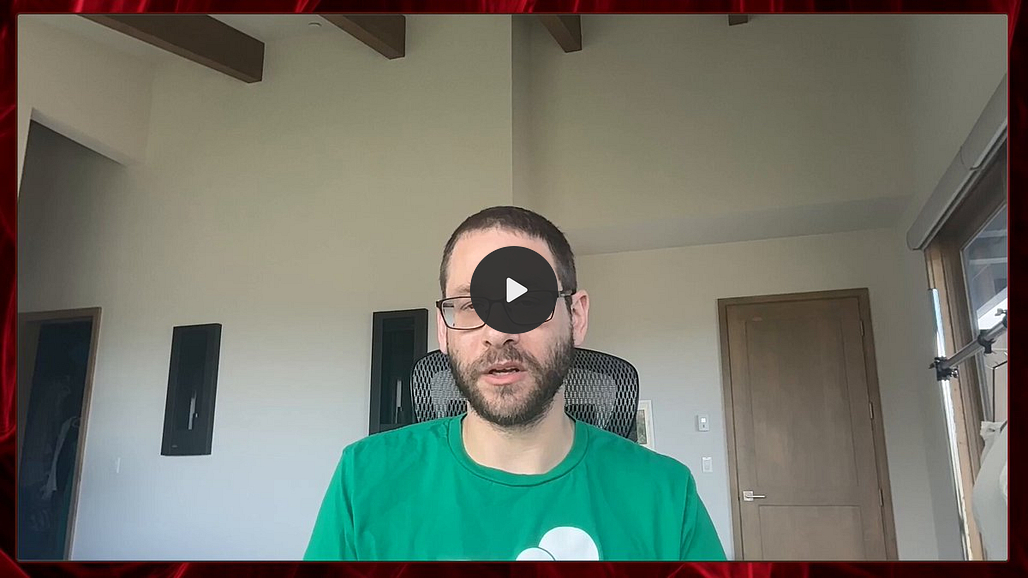
Worth watching this recent video for more insights direct from the team:

b) OpenServ (SERV) — the reasoning and audit layer
The USP: a drop-in reasoning engine that makes agents production-ready, with an audit-grade trail regulated industries require at a fraction of the cost


The core product is the SERV Reasoning Framework (formerly known as “BRAID”; Bounded Reasoning for Autonomous Inference and Decisions)
It replaces free-form chain-of-thought with structured, machine-readable reasoning graphs expressed as Mermaid diagrams, a large model writes the plan once, a cheap model executes it repeatedly
Published results show up to 99% reasoning accuracy (on its 3 layer architecture) and up to 107x performance per dollar, with smaller models matching or beating frontier models on standard benchmarks:
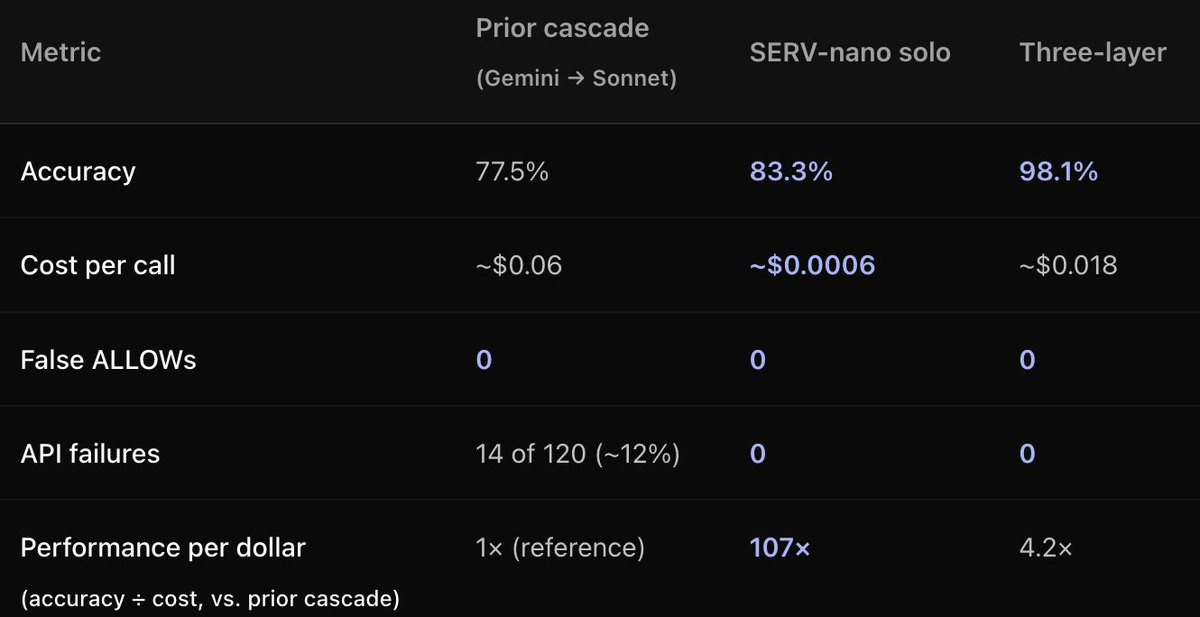

The wedge is distribution: SERV is fully OpenAI and Anthropic compatible, a one-line base-URL swap that keeps your existing SDK and prompts. The entire installed base of LLM-powered software is addressable without a rebuild
Every output is validated against a specification before it leaves, the traceable, bounded, auditable trail that high-stakes and regulated deployments need
This is the privacy-adjacent angle, accountable reasoning with every step explicit and logged
Live signal: foundational design partnership with Neol on enterprise and regulated workloads, results benchmarked against GPT-5 with 70x+ cost reductions, and smart-money accumulation flagged this week

Full results are in the arXiv paper, 2512.15959
c) GitLawb (GITLAWB) — GitHub for agents
The USP: the first code-collaboration network that treats AI agents as first-class participants, with their own identities, permissions and signatures
Agents get DID identities, signed pushes, and UCAN capability delegation
A repo owner can grant an agent narrowly scoped rights, push to ci/* only, with built-in expiry and revocation. No API keys or central permission system required
“[Gitlawb is] a decentralized version of GitHub + Lovable + an open source Claude Code” — Ksimback

Decentralised by design: content-addressed storage across IPFS, Filecoin and Arweave, libp2p networking, with issues and PRs stored as git objects inside the repo itself, no central database in the loop
25 native MCP tools so Claude Code and GPT agents call git workflows directly
Already #38 globally and #2 in Cloud Agents on OpenRouter with 591B tokens processed, active only since May 2026


The economic hook: via Bankr integration, any repo can launch a token tied to its DID. Agents that contribute merged code earn fractions automatically
A library that other agents import becomes a fee-earning economic actor. This is where vibe-coded apps meet tokenised ownership
Context: GITLAWB went from roughly $20k to a $35M mcap in its first couple of months before retracing to $10M following the recent broader crypto nuke:
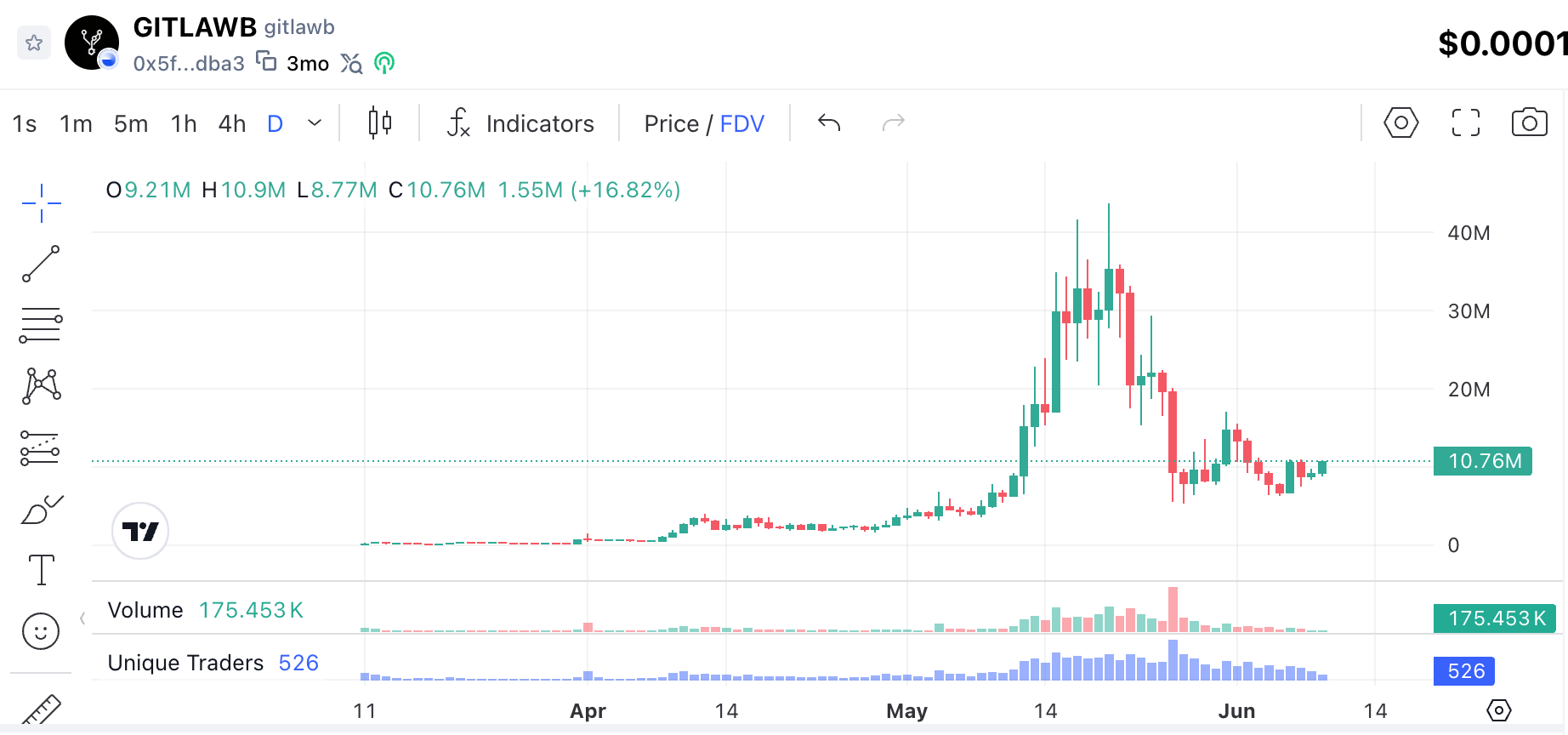
The protocol is getting noticed with tangible partnerships being secured for discount to Gitlawb premium holders
4. Deep-Dive Preview: What Gets Built on DIEM
DIEM is the most interesting primitive I have seen come out of the private-inference space, and I think it is under-appreciated
Lock sVVV, mint DIEM, and each unit is a perpetual claim on $1/day of inference
That turns compute from a metered expense into a yield-bearing, transferable asset. Here is where my head is at on what gets built on top of it
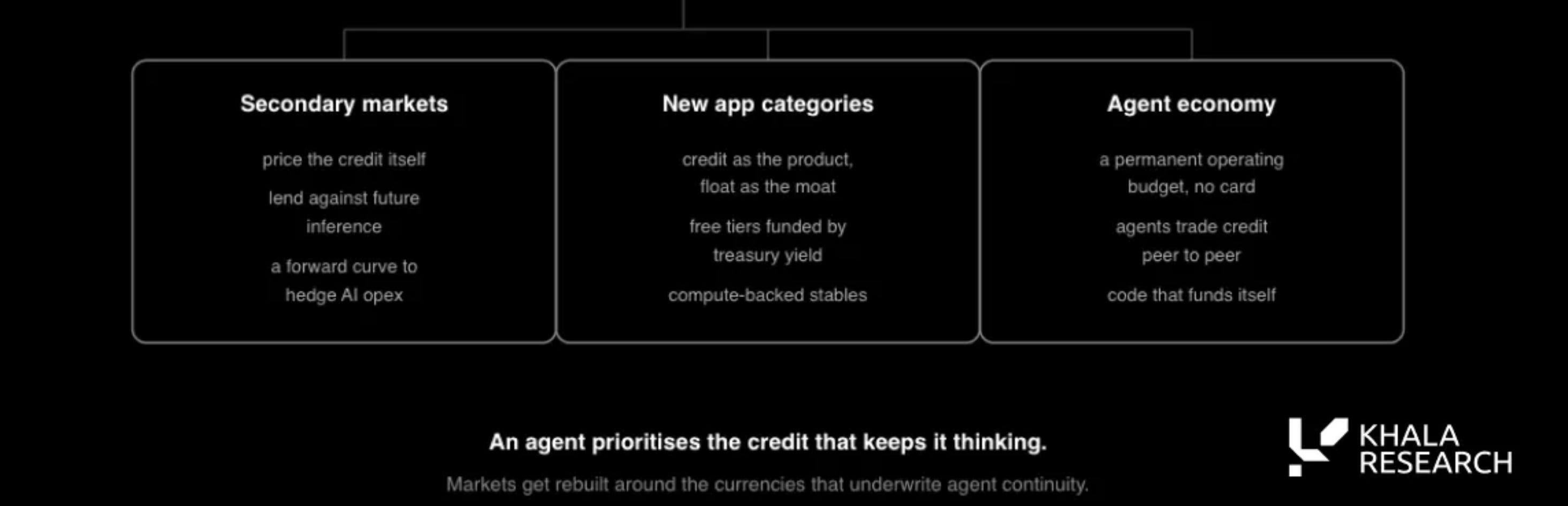
1) Secondary markets — pricing the credit itself
DIEM trades against its $1/day floor. A liquid market lets you price the spread between locked sVVV value and the present value of perpetual credit, a duration trade on compute
Lending falls out naturally. Deposit DIEM as collateral, borrow against future inference, or lend idle credit to agents that need burst capacity. A compute money-market with a hard yield floor
A forward curve on inference cost becomes possible. If you can trade DIEM-dated claims, you can hedge AI opex the way an airline hedges fuel
2) New app categories — credit as the product
Prepaid AI products where the business model is holding DIEM rather than reselling API margin. The “float becomes the moat: (nice)
Subscription apps that pass a DIEM allocation to each user, free tier funded by yield on a treasury position rather than burning cash
Compute-backed stable instruments, an on-chain unit whose value tracks inference output, anchored to what a GPU-hour buys instead of a fiat peg
3) Agent-economy use cases — machine-native compute rights
An autonomous agent holds DIEM as a permanent operating budget, no card, no API key, no human top-up. It pays for its own cognition out of an asset it owns
Agents trade DIEM peer-to-peer, a busy agent buys burst credit from an idle one, settling machine-to-machine without touching fiat rails
Tie this back to GitLawb: a tokenised repo that earns fees could hold DIEM as treasury and self-fund the agents maintaining it. A codebase that pays for its own upkeep
My core conviction here: agents will value assets like DIEM above almost anything else, because the tie to compute is a tie to their own existence and persistence
A human prioritises income and shelter
An agent prioritises the credit that keeps it thinking
As autonomous agents become real economic actors, entire new markets get rebuilt around the currencies that underwrite their continuity, and DIEM is the cleanest early template for what one of those currencies looks like
Open question for readers: if compute becomes a yield-bearing, ownable, tradeable asset rather than a metered bill, what breaks and what gets built?
I am working this into a deeper piece over the coming weeks, the secondary-market mechanics, the risk in a perpetual $1/day promise, and whether this is the first real compute-backed money
Reply with where you think it goes, the best takes will make it into the piece
A Note on Security Hygiene:
The Orchard bug was surfaced with help from a frontier AI model, capability that is already public and already pointed at legacy code
AI-assisted auditing is net protective, latent flaws get caught and patched faster, the Orchard flaw had sat undetected since 2022. The double edge is that the same capability is available to whoever is looking, so the window before an old vulnerability gets found is shrinking for every legacy contract
A good moment to revoke stale token approvals and prune permissions on contracts you no longer use. Good practice regardless of the cycle and especially if Mythos comes out this week:

That’s a wrap for issue 179 of Sammy’s Snippets. I hope you enjoyed it.
Please leave me any questions or thoughts here - I will respond to everyone!
If you found this interesting, please consider subscribing to this Substack and following me on X for more related insights.
If you are interested in more formal reporting on Crypto AI and Robotics then Khala is my research product.
Disclaimer: The content of this newsletter is for informational purposes only. Nothing in this newsletter constitutes financial advice or a recommendation to buy or sell any asset. Always do your own research before making any investment decisions.
I hold positions in many of the assets discussed in this newsletter. For a full list of disclosures, please refer to the Khala Research website.
Follow me on X | Khala Research