


This Crypto AI & Robotics newsletter consists of three key parts:
Snippet Partner: NaoX Protocol
Theme of the Week: The Agent Economy Needs Real Token Ownership
Landscape Analysis: MetaDAO, Umia, MetaLeX and Token Transparency
If you have any questions feel free to reach out to me on X or message my business X account ‘Khala Research’


This week’s issue is brought to you by NaoX, the new identity of Naoris Protocol and a Layer 1 focused on post-quantum blockchain infrastructure
This is a rebrand rather than a network migration. The underlying technology and ecosystem continue unchanged, while the token remains $NAORIS
NaoX is building quantum-resistant cryptography into its architecture from inception, alongside a distributed cybersecurity model where devices validate the security posture of other participants
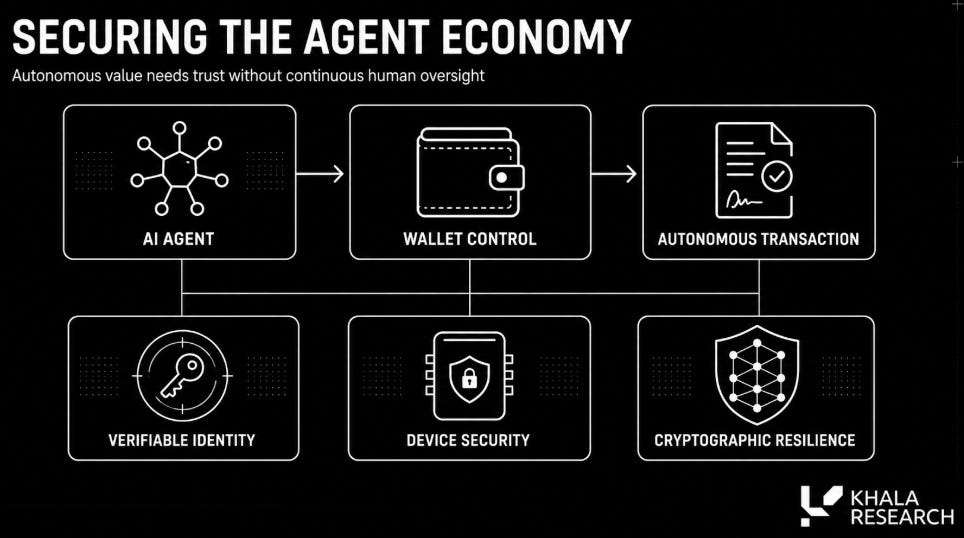
Its relevance to the agent economy is that autonomous systems will increasingly control wallets and transact without continuous human oversight, making long-term identity, device security and cryptographic resilience increasingly important
Adoption will ultimately depend on developer activity, integrations and real network usage rather than the rebrand itself
This newsletter goes out weekly to 7.2k+ subscribers.
Please don’t hesitate to message me directly for sponsorship or partnership enquiries.

The Agent Economy Needs Real Token Ownership
AI agents will allocate capital through permissionless crypto rails. Before trillions of machines arrive, token ownership must become transparent, enforceable and machine-readable
AI agents are about to become the largest class of investors crypto has ever seen.
They can create wallets, analyse thousands of assets and deploy capital in seconds, but most tokens still cannot answer the first question any investor should ask:
“What do I actually own?”
If agents are going to fund projects, manage treasuries and govern protocols at machine speed, crypto cannot continue relying on vague promises that value will eventually accrue. Ownership needs to become transparent, enforceable and readable by machines.
That is the focus of this week’s newsletter, and something I’ve been thinking about more deeply over the past few weeks.
Crypto’s Ownership Problem
Crypto is the natural financial infrastructure for AI agents because it is permissionless, programmable and available globally.
An agent cannot easily open a bank account or wait for a compliance department to approve each transaction. It can create a wallet, receive stablecoins, interact with smart contracts and deploy capital according to a predefined mandate.
The rails are ready, but the assets moving across them are often poorly defined.
A typical project may have a foundation issuing the token, a development company employing the team, a DAO controlling part of the treasury and founders or equity investors owning the intellectual property.
The token trades globally, but holders may have no enforceable claim over the revenue, company or assets responsible for its perceived value.
This becomes dangerous when agents need to determine:
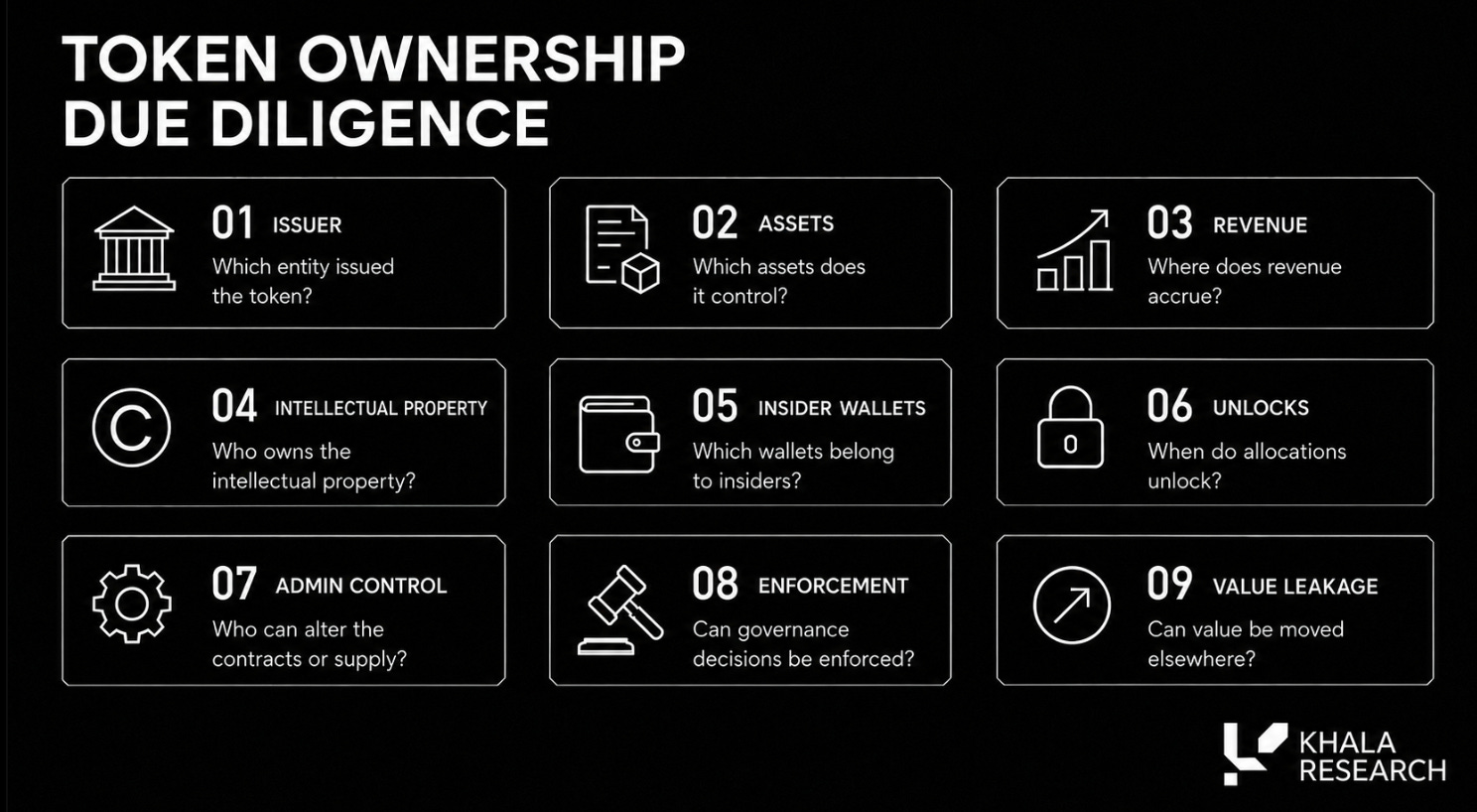
Today, those answers are scattered across legal documents, governance forums, block explorers and founder statements.
A human investor might spend hours reconstructing the structure. An agent analysing thousands of assets cannot rely on social context, reputation or “trust me bro” assurances.
Before I get into the few projects disrupting this segment, there’s some background I need to set and explain why I’m covering this now ($ANSEM + Clarity Act):
The $ANSEM Debate
My recent disagreement with Ansem over the $ANSEM token exposed the same problem:


Ansem’s thesis is that attention, storytelling and collective belief have measurable economic value, while a liquid token can create a real-time market for that value.
I agree with the premise… tokens are incredibly effective proxies for intangible value and can continuously price goodwill, something traditional financial statements struggle to recognise.
“Liquid Brand Equity” is something OSF has attempted to tackle with rekt already:


But the honest framing today is that $ANSEM is a creator-backed memecoin acting as a real-time proxy for Ansem’s goodwill.
That may still be valuable, but it is not ownership.
The token does not currently provide a defined claim over sponsorship revenue, intellectual property, media businesses or future products created under the Ansem brand. The market can price its belief that value will eventually accrue, but belief is not an enforceable right.
Leaving the value-accrual mechanism to be invented after the market has priced the promise creates the exact environment in which holders are most vulnerable to exploitation.
A human buyer may knowingly speculate on the creator’s intentions. An autonomous investment agent needs explicit rights that it can verify.
Regulation Is Catching Up
The US is beginning to address part of this problem through the CLARITY Act.
The House passed its version in July 2025, while the Senate Banking Committee advanced revised legislation by 15–9 in May 2026. It still needs to pass the full Senate, be reconciled with the House version and be signed by the President before becoming law.
Today you will have seen a pump in crypto, which was in response to the approval of the ethics package:


The proposed framework separates digital commodities regulated by the CFTC from investment-contract assets overseen by the SEC, while introducing tailored disclosures for certain token distributions.
This helps clarify how a token is regulated, but it does not completely explain what the token owns.
A digital commodity may still give holders no claim over revenue, intellectual property or the company building the product. Agents will eventually need to understand both the regulatory classification and the economic rights before deploying capital.
Who Is Building the Ownership Layer?
1) Umia
Umia extends this model into a capital formation platform for token-native ventures.
Projects launch inside a segregated legal portfolio containing the operating team, intellectual property and treasury:
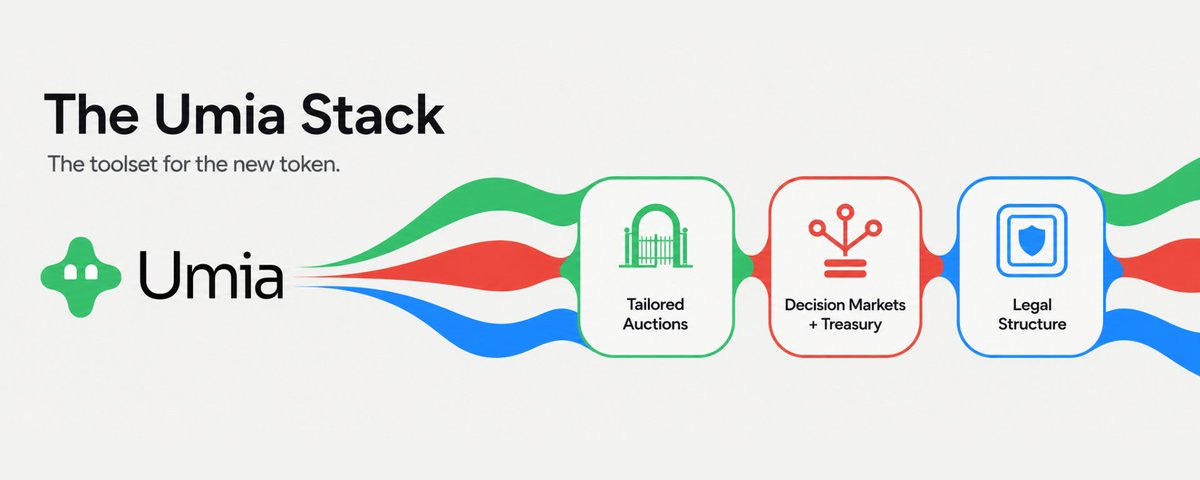

Founders retain authority over normal operations, while tokenholders govern major strategic and capital-allocation decisions through decision markets.
The objective is to avoid the usual foundation, DAO and development-company split where holders control one component while the valuable assets sit elsewhere.
2) MetaDAO
MetaDAO connects a legal entity, onchain treasury and futarchy-based governance.
MetaDAO LLC holds the intellectual property, while major treasury and token decisions flow through conditional markets that estimate whether a proposal will increase or decrease the token’s value.
The token does not necessarily represent conventional equity. Ownership is expressed through enforceable control over the entity and its assets. The protocol providing this ownership rights is expanding rapidly at 29% month on month:


This gives an agent a structure it can inspect: which assets sit inside the entity, which decisions the token controls and whether subsequent actions follow those rules.
The model is now being tested by operating businesses rather than remaining theoretical; here are two of the clearest early examples:
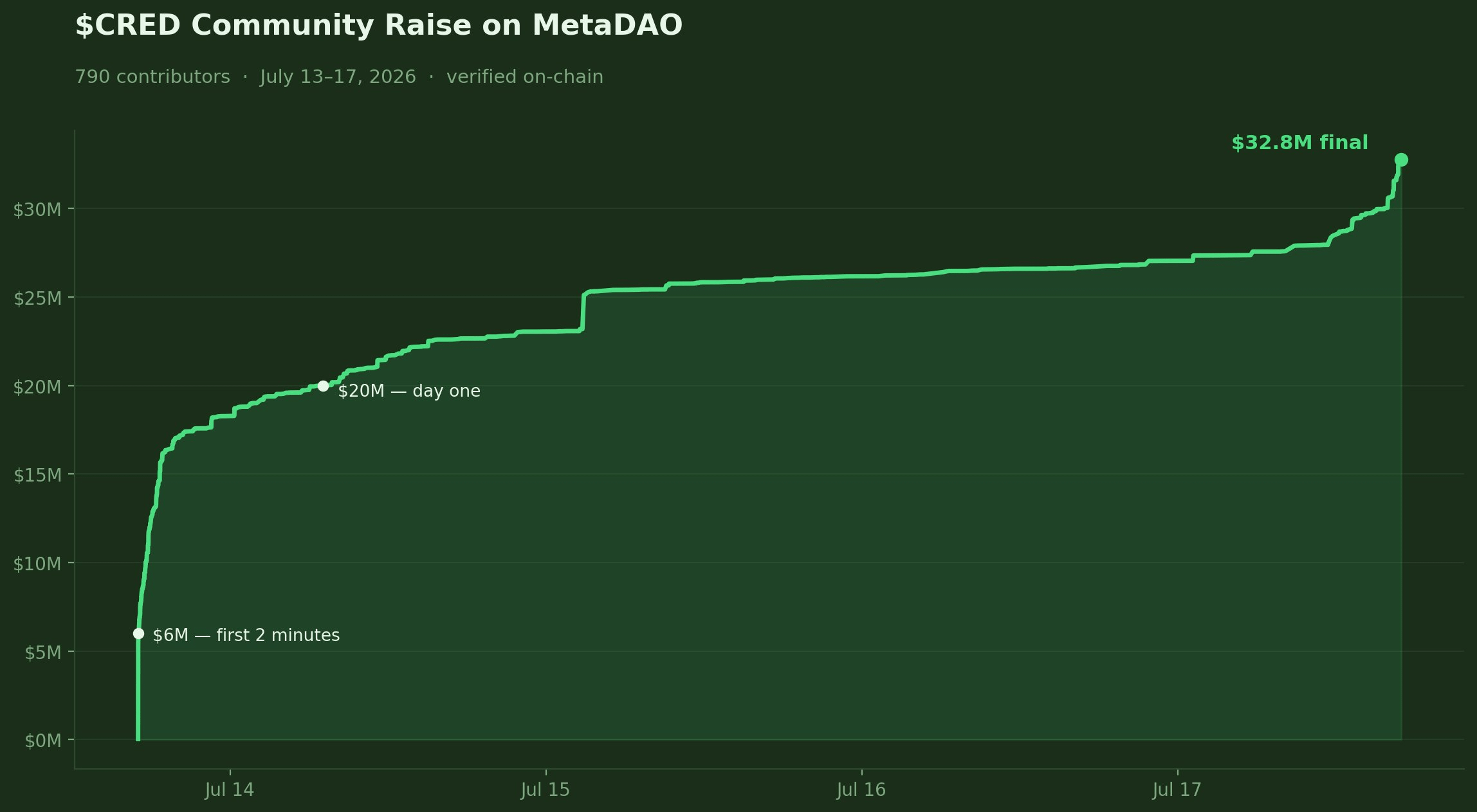
Credible Finance: The stablecoin payments business recently completed its $CRED launch with $32.8 million committed and $4 million ultimately raised, placing its IP inside a segregated legal portfolio governed through the ownership coin structure
Avici Money: The onchain banking and payments project attracted $34.2 million in commitments through its MetaDAO launch, providing an earlier example of a functioning business using public capital formation and tokenholder-controlled treasury governance. The protocol has now passed a million transactions:


3) MetaLeX
MetaLeX’s tagline is:
“we turn startups into robots”
The protocol connects onchain governance to offchain legal enforcement through BORGs, or cyBernetic ORGanizations. Fantastic explainer here:

Smart contracts can control a treasury, but they cannot independently control trademarks, employment agreements, bank accounts or commercial contracts.
A BORG places these assets inside a recognised legal entity whose governing documents embed specific smart-contract controls.
Without this bridge, token governance often stops exactly where the most valuable assets begin.
4) Token Transparency Framework
The Blockworks Token Transparency Framework standardises disclosures covering entity structures, insider allocations, vesting, market makers, liquidity, funding and governance control.
The long-term opportunity is turning these disclosures into an API for autonomous capital:


An agent could reject projects where the development company retains the intellectual property, reduce exposure before major insider unlocks or flag treasury activity that contradicts the issuer’s disclosures.
Transparency does not create ownership, but it makes the absence of ownership visible.
Key Takeaways
Three things matter:
Permissionless capital needs programmable rights: agents can already purchase tokens, but they still cannot reliably determine what those tokens represent
Governance is not automatically ownership: voting over a treasury means little if founders or equity investors retain the revenue, intellectual property and contract controls
Disclosure needs to become machine-readable: entity structures, insider wallets, unlocks, revenue flows and governance powers must be available in a format agents can continuously verify
Crypto has already made capital formation permissionless. The next phase is making ownership explicit.
MetaDAO, Umia and MetaLeX are experimenting with enforceable tokenholder control, while the Token Transparency Framework is turning fragmented information into something machines can process.
This matters now because agents will eventually fund projects, manage treasuries and trade ownership claims with other agents at a speed no human market can match.
Before trillions of agents begin allocating capital onchain, crypto needs a clear answer to its most basic question:
What does the tokenholder actually own?
That’s a wrap for this issue of Sammy’s Snippets. I hope you enjoyed it.
Please leave me any questions or thoughts here - I will respond to everyone!
If you found this interesting, please consider subscribing to this Substack and following me on X for more related insights.
If you are interested in more formal reporting on Crypto AI and Robotics then Khala is my research product.
Disclaimer: The content of this newsletter is for informational purposes only. Nothing in this newsletter constitutes financial advice or a recommendation to buy or sell any asset. Always do your own research before making any investment decisions.
I hold positions in many of the assets discussed in this newsletter. Valuations are approximate snapshots and move quickly. Verify all market data independently before acting.
Follow me on X | Khala Research