


This Crypto AI & Robotics newsletter consists of the following:
Snippet Partner: Umia’s $6.1M raise + the investors behind it
Uniswap explained + what v4 hooks actually change
v4 projects to watch, grouped by hook mechanism
Where I think the value goes next
If you have any questions feel free to reach out to me on X or message my business X account ‘Khala Research’



Umia has announced the investors behind its $6.1M public token auction, including Galaxy Ventures, DCG, Draper Associates, RenGen, Alpha EV, Maven 11 + Eon Capital. Ten funds participated alongside nearly 700 individual bidders (same auction terms):


Umia gives projects the tools to launch a token, raise capital + govern the business around it. The operating team, intellectual property and treasury sit within a shared legal structure, while decision markets let participants put capital behind the outcomes they expect to create value
That tackles a familiar problem: a successful business doesn’t automatically make its token valuable if the assets and economics sit elsewhere
As I wrote in my quote-post, the interesting part is giving tokenholders a say in how the money gets used:


External projects launching through Umia are the next milestone I’m watching
This newsletter goes out weekly to 7.4k+ subscribers.
Please don’t hesitate to message me directly for sponsorship or partnership enquiries.

The Market Around the Token Is Becoming Programmable
We’ve spent the past few weeks following memes that accumulate stocks, fund treasuries & distribute assets to holders (aka “reflections”)
Uniswap v4 hooks help explain why the experiments keep getting more specific, and why this will lay the foundations for the next leg up in innovative onchain mechanisms with tokens
My thesis is that the strongest hook projects will make their markets useful enough for other people to build around them
A mechanism that improves execution, funds development or gives users a reason to return has a better chance of surviving after the launch excitement fades
Some of these experiments will be short-lived… but the ability to change what happens when someone trades opens up a much bigger design space than another token with a different fee split
MCG Live has covered a useful cross-section of this market. Seven of the ten projects below have appeared on the show, with the interviews linked alongside their current product material… so if you haven’t already I’d recommend tuning into their show!
The v4 Hook Origin: Uniswap (UNI)
Uniswap is a decentralised exchange protocol (“DEX”): people swap tokens through smart contracts, using liquidity supplied by other users. Those liquidity providers, or “LPs” deposit assets into pools and can earn fees when traders use them
The pool’s pricing rules do the work of an automated market maker (aka “AMM”). There doesn’t need to be another person submitting the opposite order at the exact moment you trade
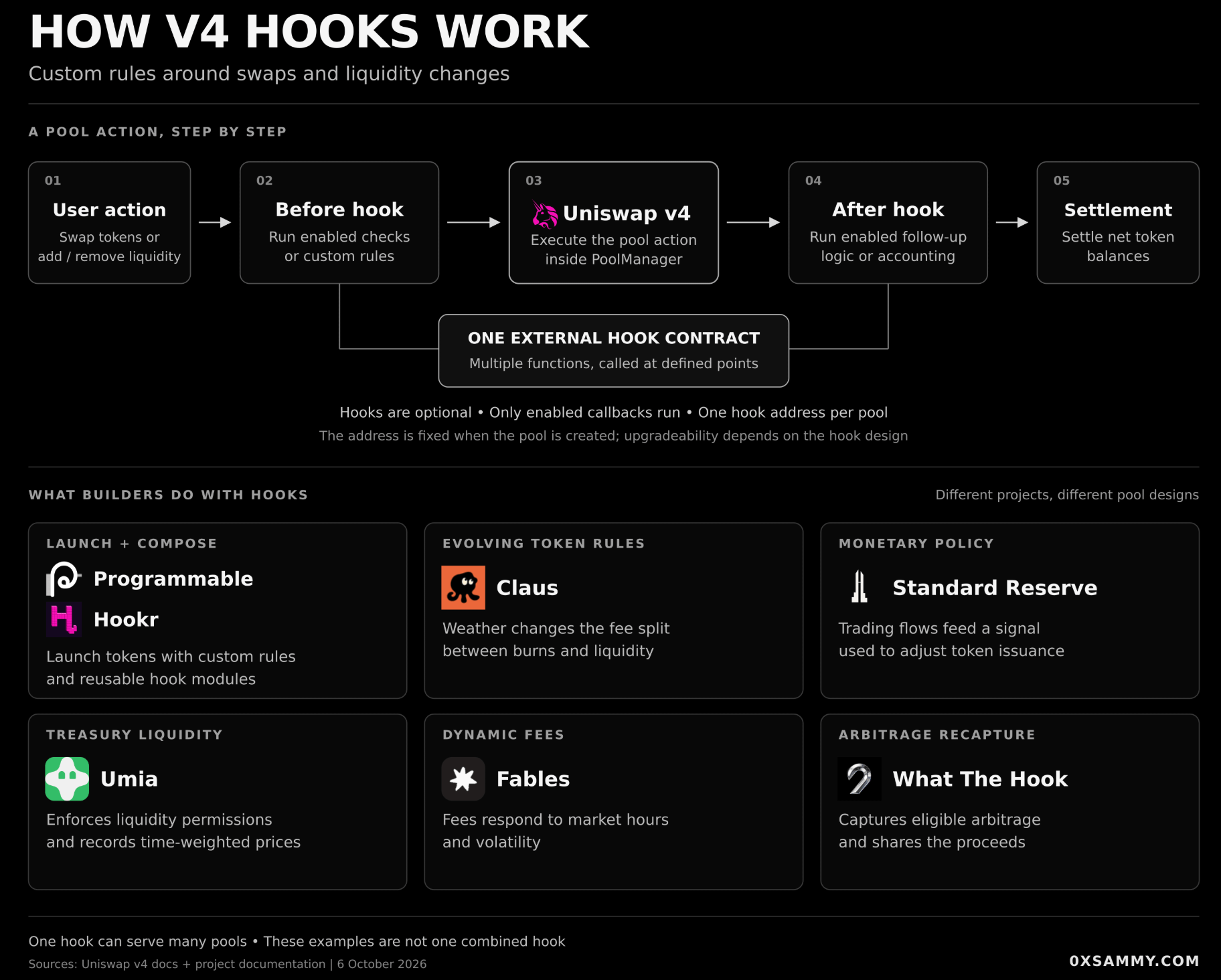
Uniswap v4 makes those markets much more programmable; Its hooks let builders add custom behaviour around a pool’s normal actions, without building an entirely separate exchange for each idea
Think of Uniswap as the trading infra; a hook adds rules for what happens when that infrastructure gets used
So what is a v4 hook?
It’s a smart contract attached to a Uniswap v4 liquidity pool, with functions that can run at defined points before or after actions such as a swap or a liquidity change
That lets a pool adjust fees, distribute rewards or coordinate with another protocol as part of trading. The hook belongs to the pool, so the same token can trade in different pools with different rules
Each pool specifies one hook contract when it is created. That contract can coordinate several functions, but v4 does not make every hook upgradeable. Whether its behaviour can change depends on how that particular system was built
This matters when a team adds hooks to an existing token: it may be opening a new market for that asset. The old pool doesn’t automatically acquire the new rules


A recent announcement that Hayden (Uniswap founder) highlighted was with TSV:


Projects to Watch
I’ve grouped these by what their hooks enable. Some span several categories, and the launch platforms support multiple kinds of hook:
A) Launch Platforms + Modular Hooks
Tools for choosing, deploying and distributing custom market rules.
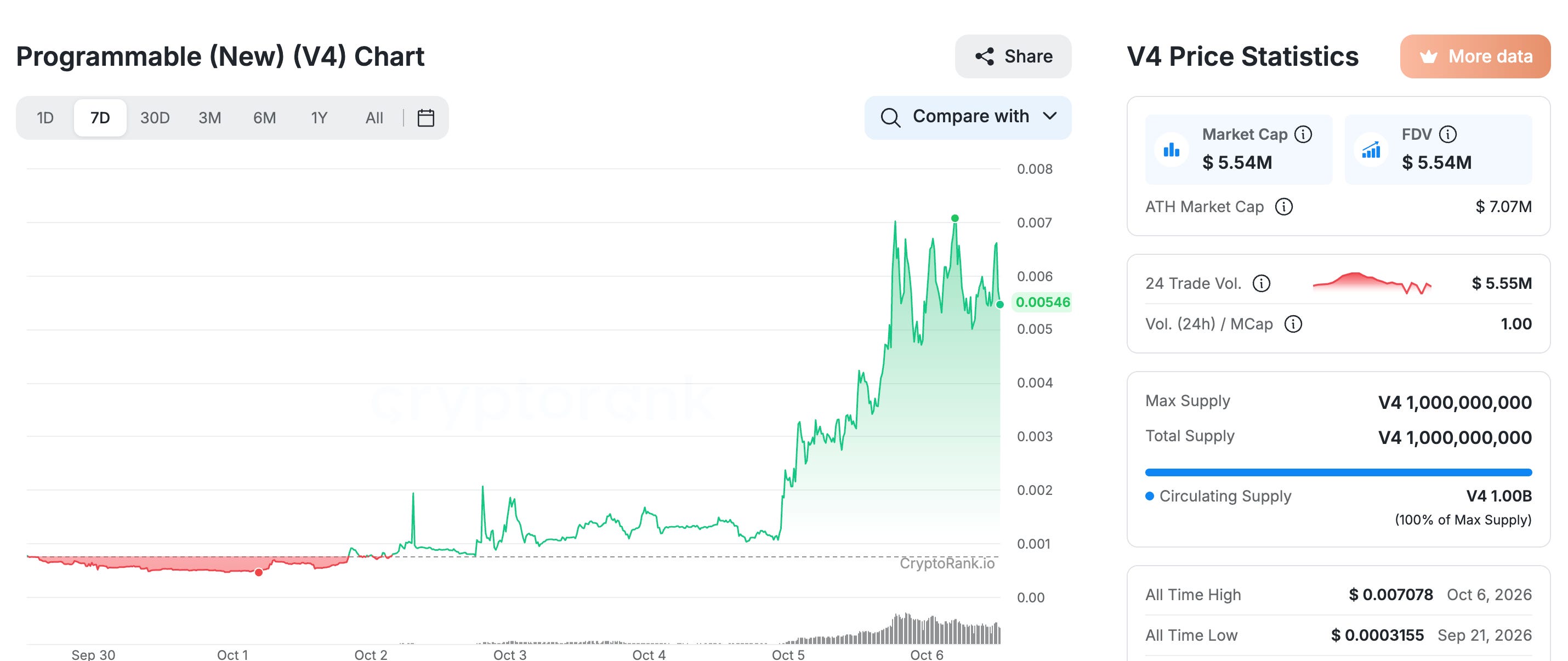
1. Programmable (V4) | ~$5.54M market cap
Custom token mechanics become easier to launch.
Valuation shown is for V4 on Robinhood Chain, not an older Ethereum token with the same name.
Programmable is building the tools for teams to choose how their token’s market behaves
Its current documentation describes two routes: Module Mode, where creators select compatible building blocks without coding, and Custom Launch, where developers bring their own token, hook or supporting contracts. Public launch records identify the contracts so other applications can discover and display the projects.
The important detail is that existing module-based coins keep the versions selected at launch. Adding a new module to the platform doesn’t silently change every existing market.
I like the distribution opportunity here. If more builders start experimenting with hooks, they need somewhere to assemble their ideas, launch them and make the results understandable to traders.
The test for Programmable is whether independent teams keep choosing it and whether their projects sustain activity. A growing list of modules only becomes valuable when people use them

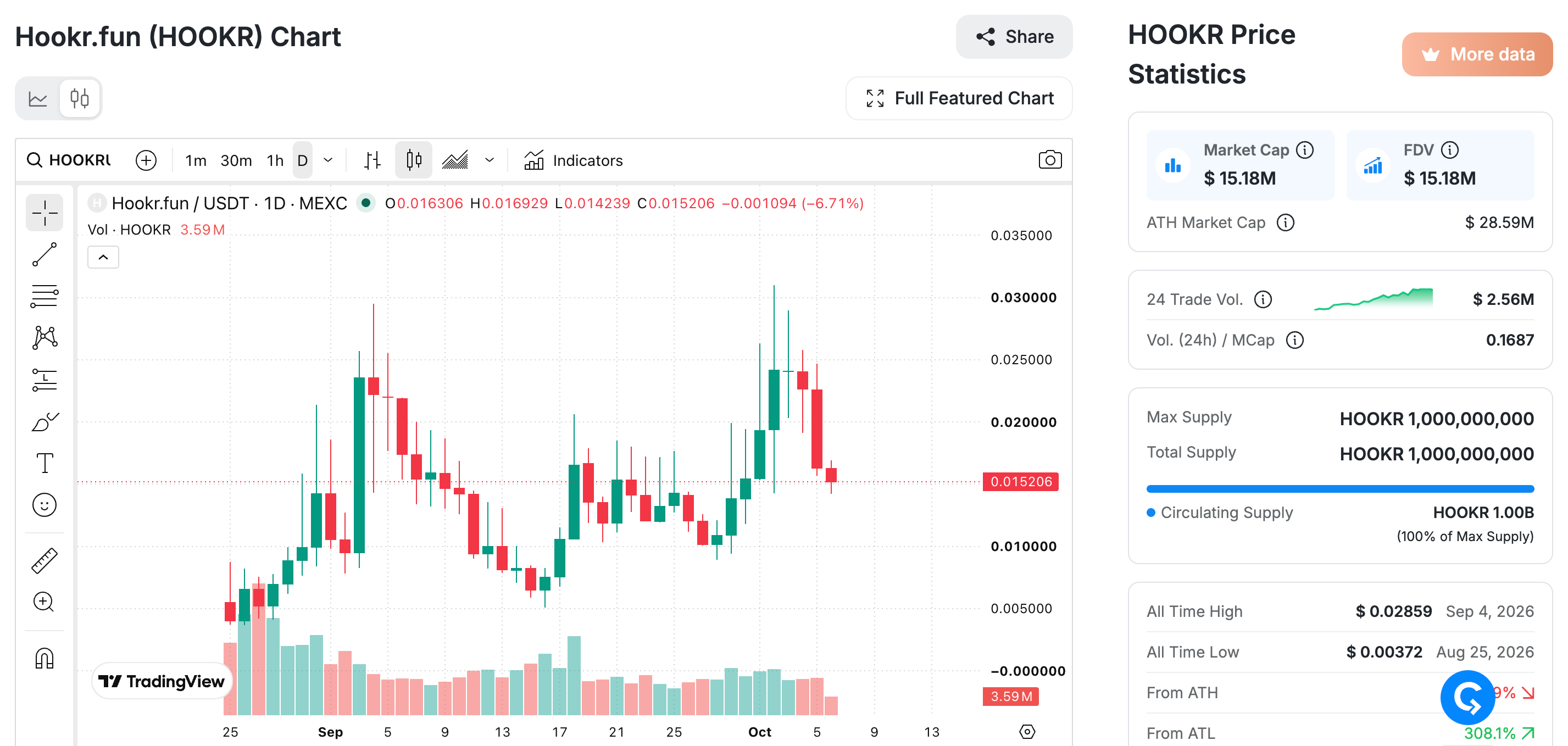
2. Hookr (HOOKR) | ~$15.12M market cap
A market for reusable hooks.
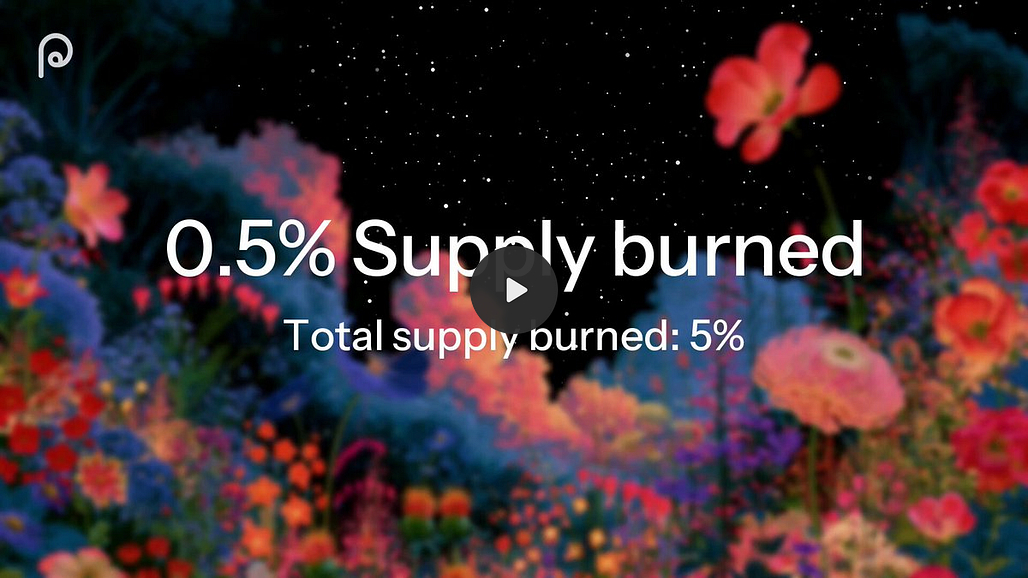
Hookr gives builders a way to compose and reuse market rules:
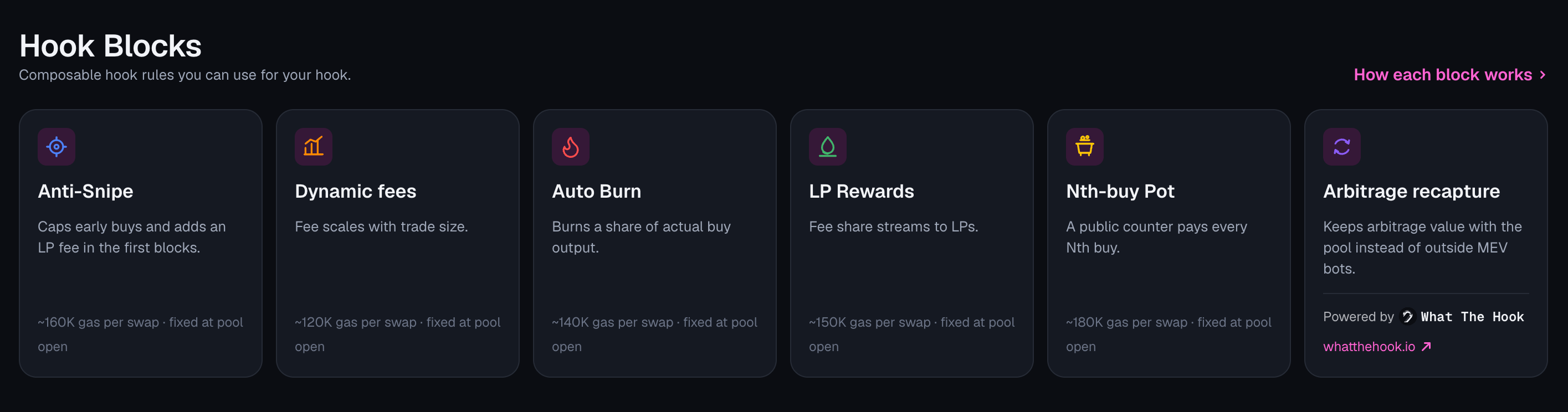
That last mechanism is a public counter; traders can inspect the rules before participating
Hookr also offers pools for existing assets and an integration with What The Hook for arbitrage recapture. Its own leverage hooks remain labelled in audit, which is worth separating from the features already offered in the app
For me, the larger opportunity is developers distributing their work across multiple projects and earning royalties when it gets used. A useful hook could reach traders through launchpads and applications they already use
I’ll be watching how much activity comes from outside teams adopting the infrastructure. That is a better measure of demand than trading in HOOKR alone.

Dynamic Fees, Arbitrage + Liquidity Support
Hooks that change the economics of a trade and where its value goes
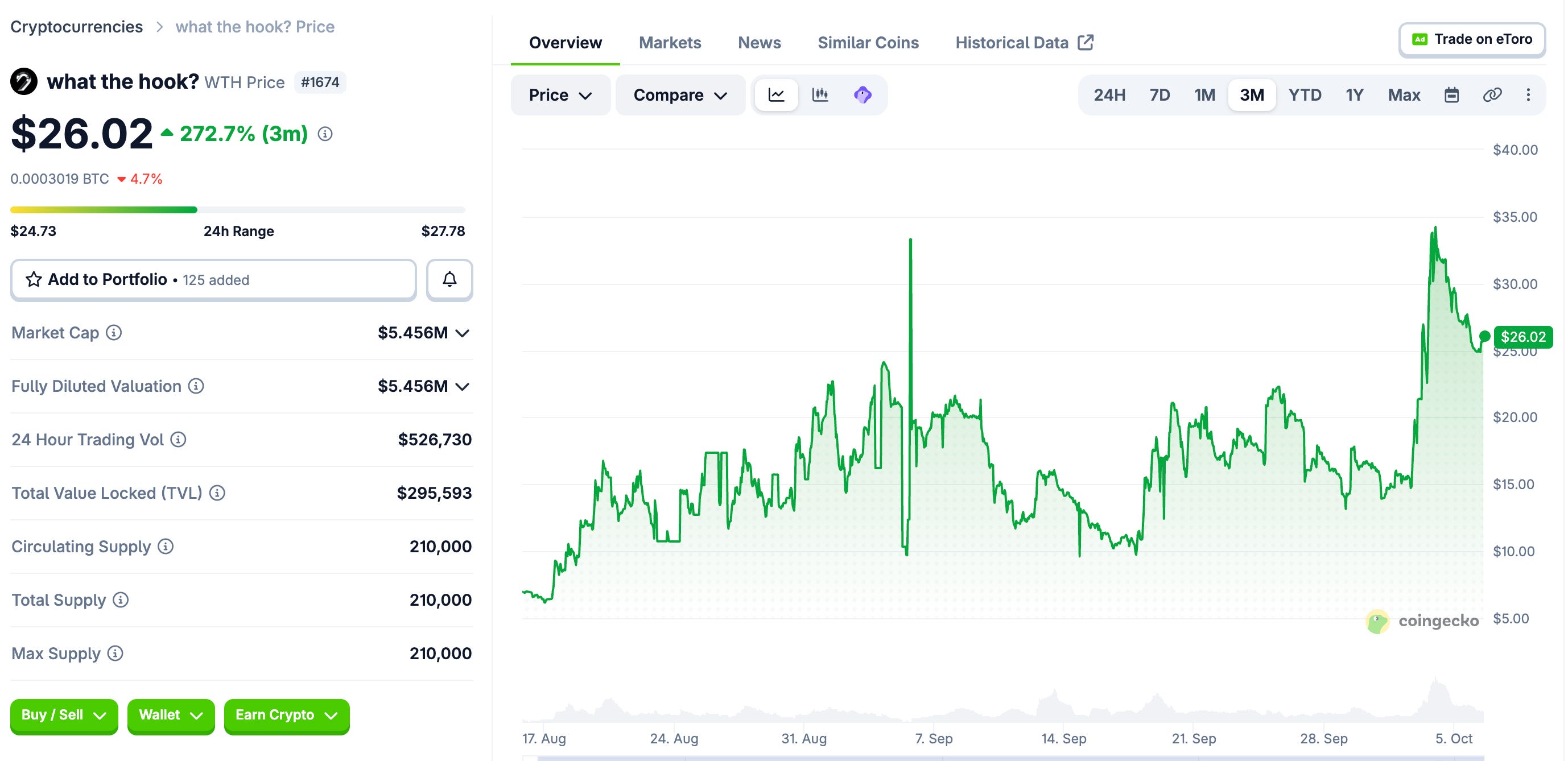
3. What The Hook (WTH) | ~$5.79M market cap
Return arbitrage value to the market.
When a swap creates a price gap between venues, an arbitrageur can trade the difference; it’s essentially where WTH fits in with the protocol token now trading just shy of $6m:

This is one of the clearest economic use cases in the group: change who receives value from a trading opportunity that already exists
Its current published split allocates 40% to the pool’s designated creator, 20% to the authenticated trader, 20% to active LPs, 10% to WTH + 10% to Hookr. Through other routes, the trader allocation goes to LPs instead. Metrics are currentyl as follows:
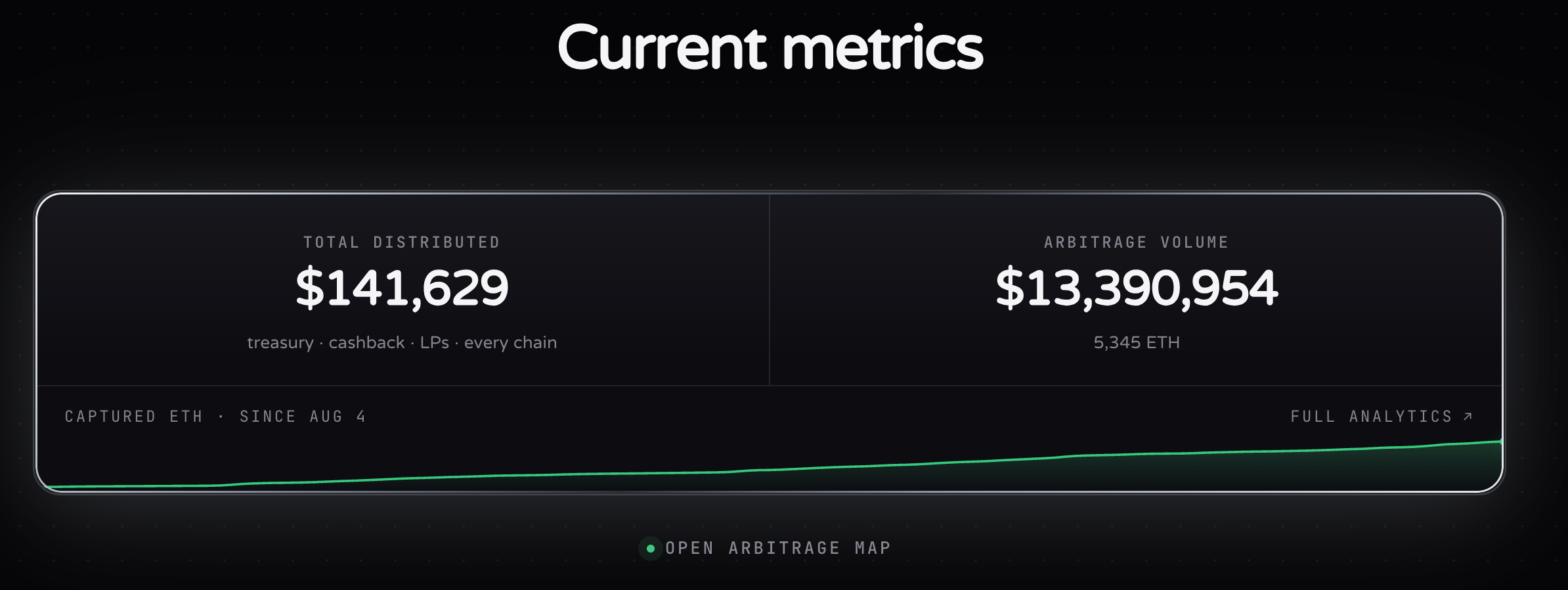
Those percentages apply to captured profit, not the value of the swap. An eligible second venue and a profitable gap are needed; there is no automatic payout on every trade
I’d track net execution for traders and total returns for LPs. A cashback headline is only useful if the complete trade is competitive.
4. Fables (PROLOGUE) | ~$5.61M market cap
Fees that respond to the asset being traded.
Valuation shown is for PROLOGUE, the pre-launch claim token. It is not the total valuation of the forthcoming FABLES token.
Fables applies hooks to an issue familiar from our Robinhood Chain coverage: tokenized equities trade around an underlying market with opening hours, closing hours and scheduled events. Currently just below $6m:
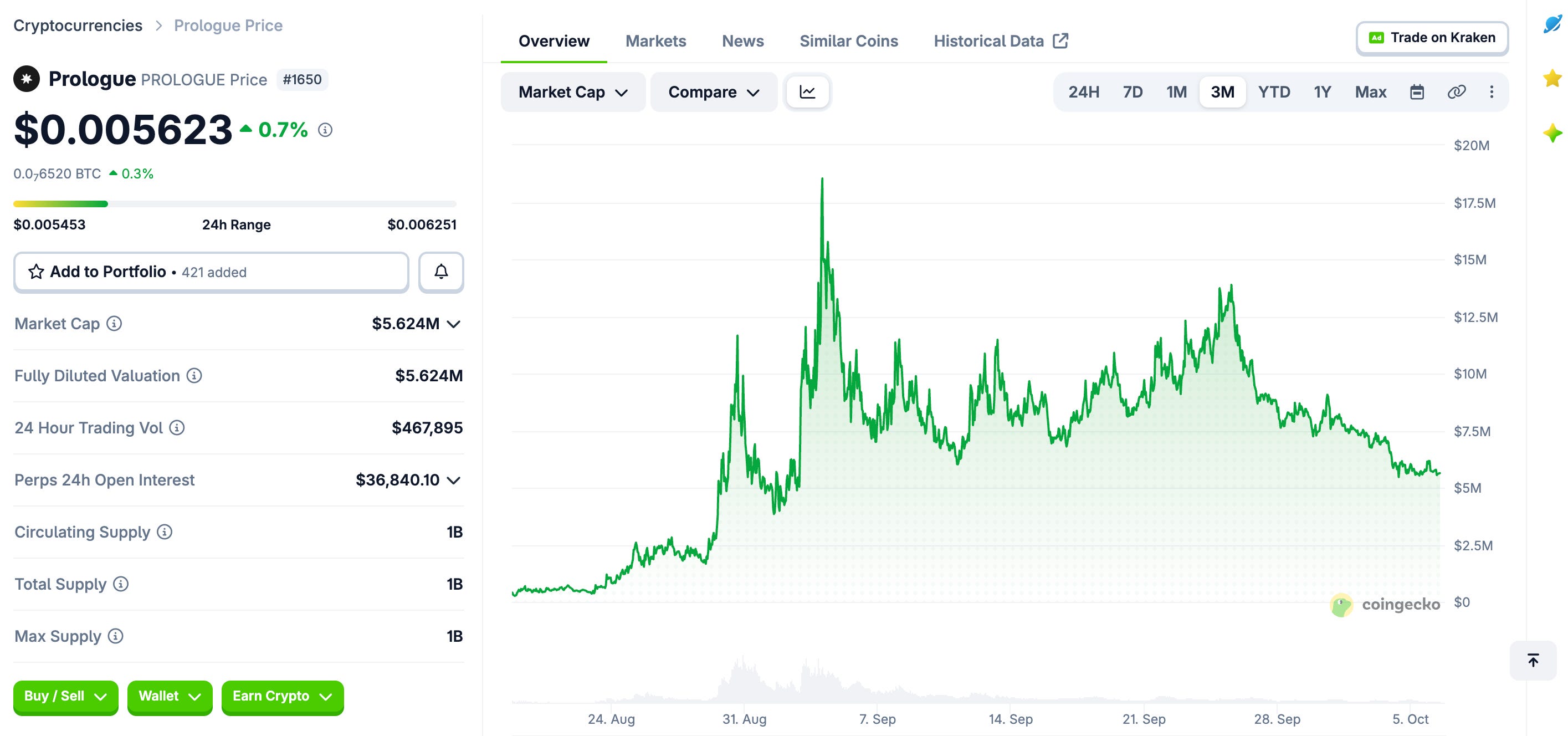
With TVL up to $44m:
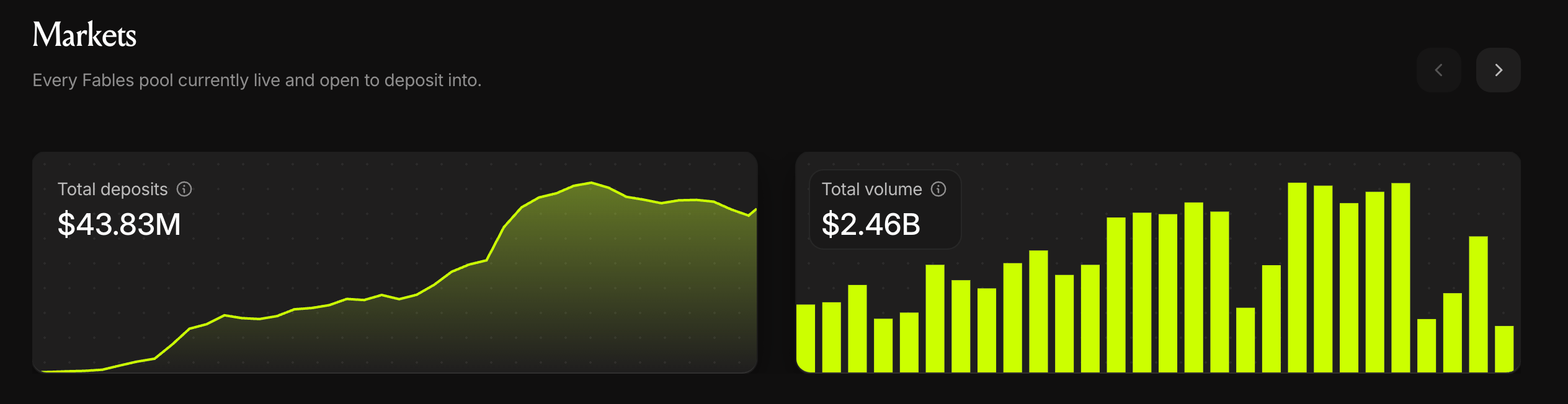
That is a practical reason to customise a pool. A liquidity provider faces different conditions during the US trading session and over a weekend, when the underlying stock market is closed.
The thesis is that fees which respond to those conditions can make providing liquidity more attractive. Whether that works depends on the balance between compensation for LPs and execution costs for traders.
This is a useful counterweight to the more speculative experiments. Better market design can be valuable even when the end user never needs to know what a hook is.
They dropped their roadmap, with the FABLE token transition taking place on October 20th:

B) Treasury Liquidity + Market Governance
5. Umia Finance (UMIA) I $20M
Connect a token’s market to the business around it.
Umia’s auctions seed treasury-owned Uniswap v4 pools. Its deployed UmiaHook restricts liquidity additions and removals to each pool’s registered operator, requires full-range positions and records prices for a time-weighted oracle
That gives the protocol control over its canonical liquidity and a history of market prices. Separate decision-market contracts let traders back competing proposals, with the winning outcome directing actions by the venture’s treasury
Why it makes the list: the hook supports a broader system for raising capital, maintaining liquidity and governing a business. Its function is concrete, even if it is less eye-catching than a weather-driven burn


What could drive momentum: outside ventures launching through Umia and repeatedly using its decision markets. The fundraising announcement has brought attention; the next test is whether teams use the infrastructure after their auction closes
The v4 hook handles pool rules and price observations. Governance runs in separate contracts, and Umia’s auction eligibility hook is a different component again
C) Monetary Policy + Reserve Liquidity
6. The Standard Reserve (STANDARD) | ~$18M market cap
Use market flows to guide monetary policy.
Standard’s ETH/STANDARD pool uses a Uniswap v4 hook to record ETH entering through buys and leaving through sells. The liquid token is trading at $18m
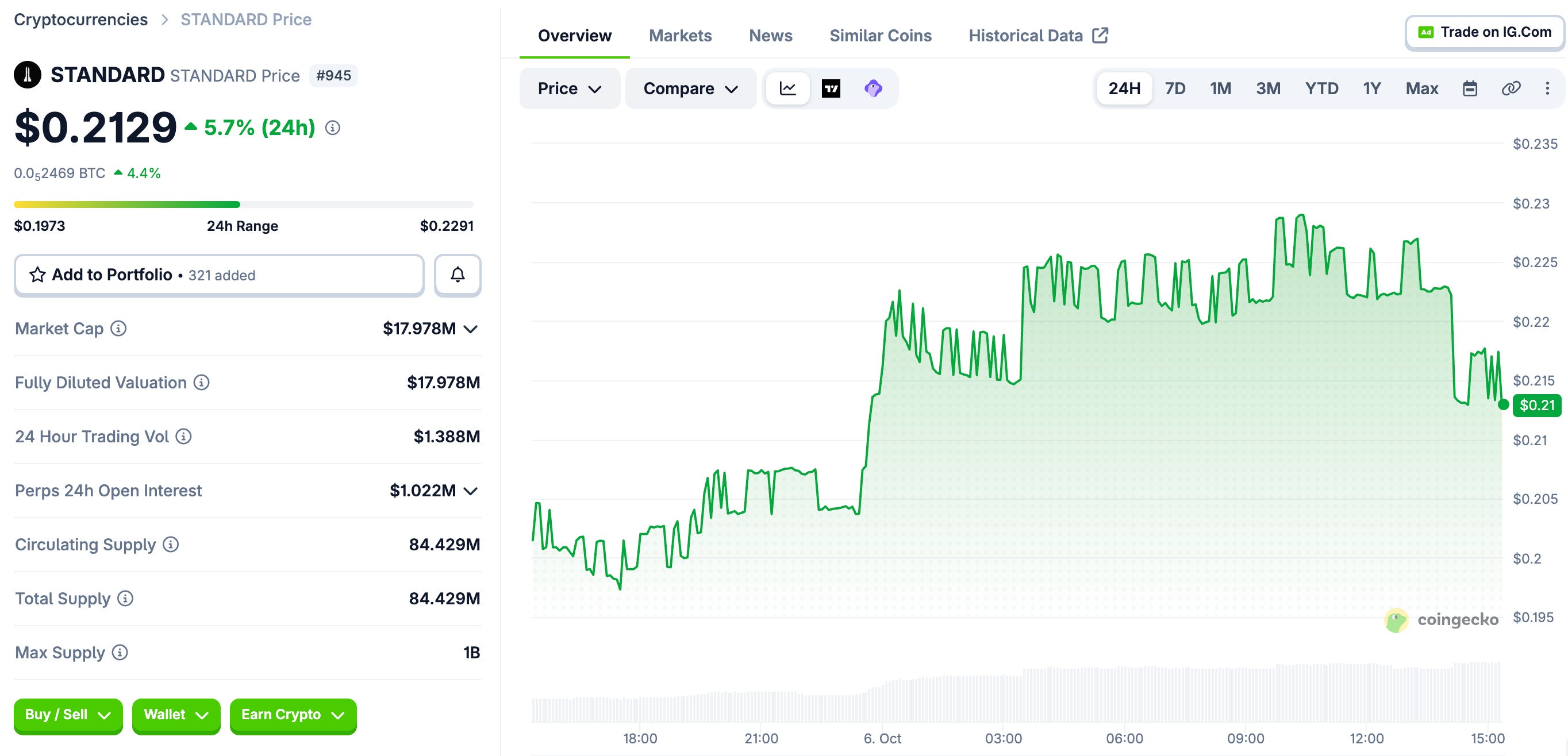
Its central bank contracts use that signal to adjust issuance, with sustained inflows supporting expansion and outflows prompting contraction. Charter NFTs and their branches determine participants’ shares of issuance:
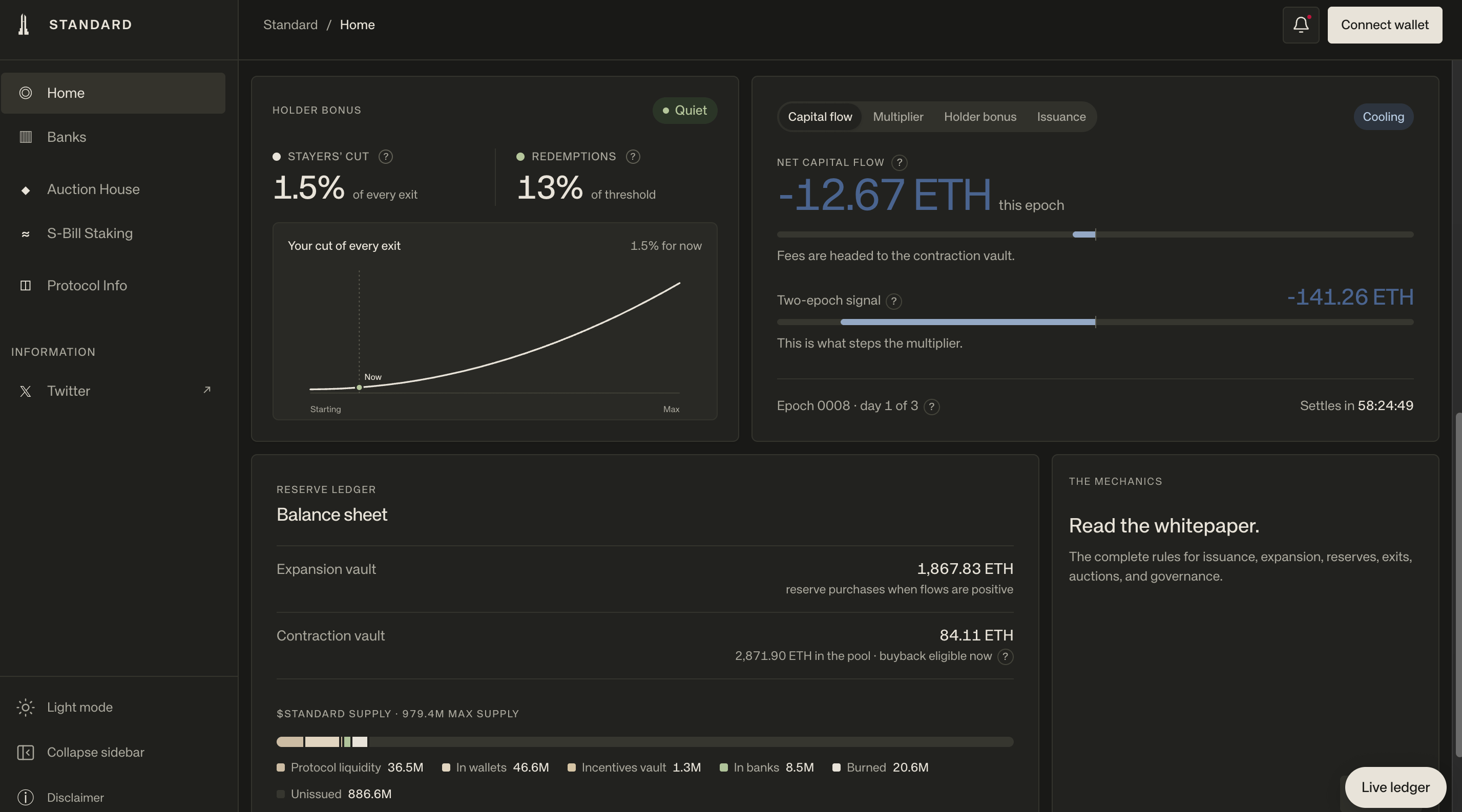
Why it makes the list: the hook does more than redistribute a trading fee. It supplies an input to the protocol’s monetary policy, connecting the market to how the wider system behaves
The new Liquid Launchpad announcement extends that idea. Standard describes the launchpad as the first use of its Reserve, directing liquidity and trading into Reserve-owned pools:

What could drive momentum: outside projects using that liquidity would give Standard a source of activity beyond speculation in STANDARD itself. A working rollout, repeat launches and fees earned on deployed reserve capital are the milestones I’d watch.
Reserve deployment also exposes the protocol to the assets traders sell into its pools. Fee income needs to compensate for that exposure. And non-upgradeable core contracts don’t mean every parameter is fixed: the whitepaper permits owner adjustments within stated bounds, without an enforced notice delay.
The launchpad is an announced development; the pool’s use of a v4 hook is already documented… but the “liquidity engine for tokenized stocks” is a strategially smart angle:


D) Game Theory + Evolving Token Rules
Hooks that connect a changing product mechanic
7. Claus (SAME, formerly CLAUS) | ~$5.38M indexed market cap
The same coin can keep evolving.
Claus is the more unusual end of the experiment: a token on Ethereum (launched via Programmable, mentioned previously) whose hook can be rewritten after launch, allowing new functions around the same asset:
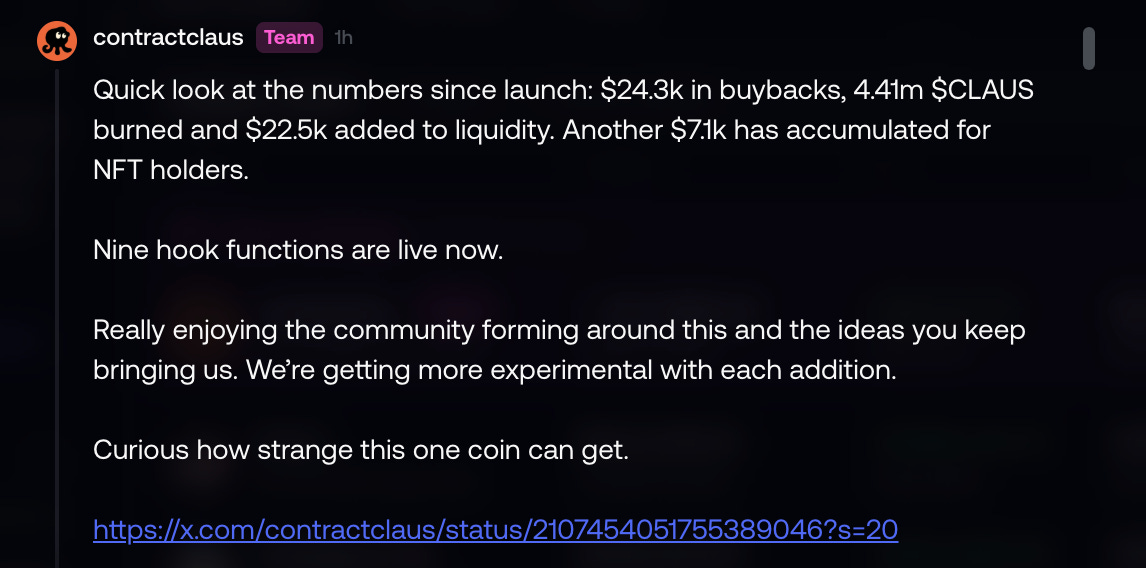
Its published mechanics include buybacks, burns, automatic liquidity additions, NFT rewards + a game where trades create waves. A 2% project fee helps fund the system… there’s been a reference to being “GOAT + hooks” essentially the AI Agent catalyst of the December 2024 AI Agetnt boom/cycle:


The “weather switch” function is particularly bizarre:
Signed reports using London Heathrow observations alter the split between burns and liquidity. Rain favours burns, dry weather favours liquidity, and stale reports fall back to an equal split
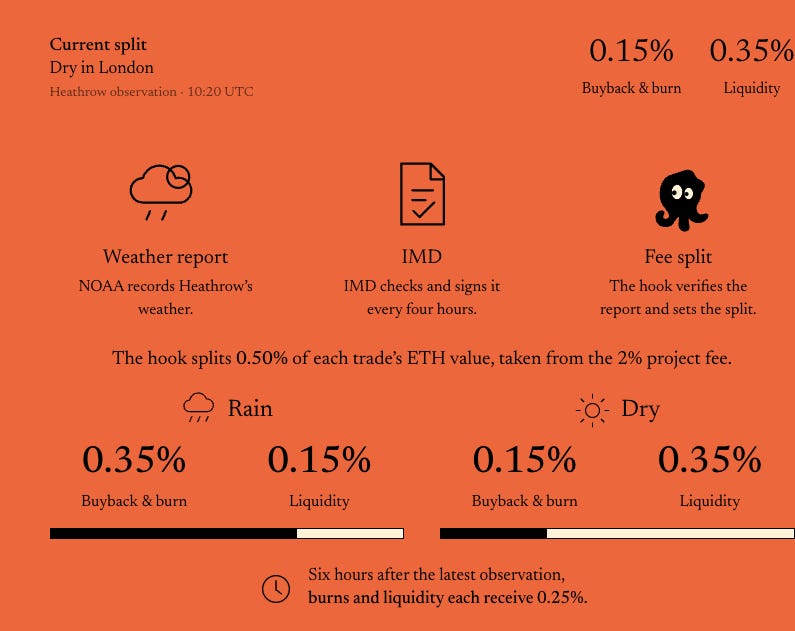
Apparently the British weather now needs a tokenomics section.
Claus also announced on 6 October that its ticker changed from CLAUS to SAME, with the contract address and balances unchanged. The character remains Claus.
The idea worth following is whether one token can retain its community while the product develops around it. Whoever controls changes to the hook also becomes central to the risk: holders are exposed to future rules as well as today’s
There’s also an NFT collection that accumulates value by distributing the 2% trading fee to holders + also can be burned for 50k of the fungible token:
Where I Think the Value Goes
Three opportunities stand out to me:
tools that help developers launch useful hooks,
mechanisms that improve the economics of trading, and
applications that give people a reason to return
Applying the above mentioned protocols to these opportunities:
Programmable + Hookr address the first
WTH + Fables address the second
Claus, Umia + STANDARD shows how widely the third could vary
The potential connection to AI agents is interesting too. An agent could compare markets by execution cost, rewards and permitted actions, then route activity through the pool that best fits its task
But that only works if the rules are readable, the integrations are reliable and the agent can enforce its spending limits
For now, my focus is simpler:
Repeated usage: are people still using the mechanism once the initial attention fades?
Value distribution: how much reaches users, LPs, developers, treasuries and tokenholders?
Outside adoption: are other projects choosing to build with it?
Control: who can change the rules, and which steps depend on a server, keeper or administrator?
Hooks make it easier to design an economy around a token. They don’t create demand by themselves, and trading fees paid by speculators can disappear quickly when those traders move on
I’m looking for the projects whose mechanism earns continued usage. That could be a better trade, a useful financing tool or a game people want to play. If the activity lasts, there is something meaningful to value
That’s a wrap for this issue of Sammy’s Snippets. I hope you enjoyed it
Please leave me any questions or thoughts here - I will respond to everyone!
If you found this interesting, please consider subscribing to this Substack and following me on X for more related insights
Disclaimer: The content of this newsletter is for informational purposes only. I am commenting on the underlying activity of what I am observing in the market to keep my audience updated and informed.
Nothing in this newsletter constitutes financial advice or a recommendation to buy or sell any asset. Always do your own research before making any investment decisions.
I hold positions in many of the assets discussed in this newsletter. Valuations are approximate snapshots and move quickly. Verify all market data independently before acting