


This Crypto AI & Robotics newsletter consists of the following:
Snippet Partner: Nansen (New App Launching)
Jensen returns, which tokens pumped?
FLOCK, GRASS, TAO + NEAR
What I checked with Nansen
The overnight update + what I’m watching
If you have any questions feel free to reach out to me on X or message my business X account ‘Khala Research’


Nansen is launching its new mobile app, with an expanded suite of research + trading tools on the way. I’ve had the privilege of testing it early and sharing feedback with the team
I used Token Screener, Token God Mode + Profiler to check the buying behind the AI bounce. There’s a worked example below in section 3 of this newsletter
The launch campaign, Stock Drop, offers tokenised stock rewards for eligible app trading so will be worth playing around with when this goes live:

The top 100 valid referrers by 29 November get early access from 30 November to 6 December, before the wider eligible launch on 7 December
Explore the launch + join through my referral link: Link
This newsletter goes out weekly to 7.4k+ subscribers.
Please don’t hesitate to message me directly for sponsorship or partnership enquiries.

Jensen returns; which Tokens Pumped?
Jensen is back at NVIDIA + crypto AI also caught a bid (momentarily?)
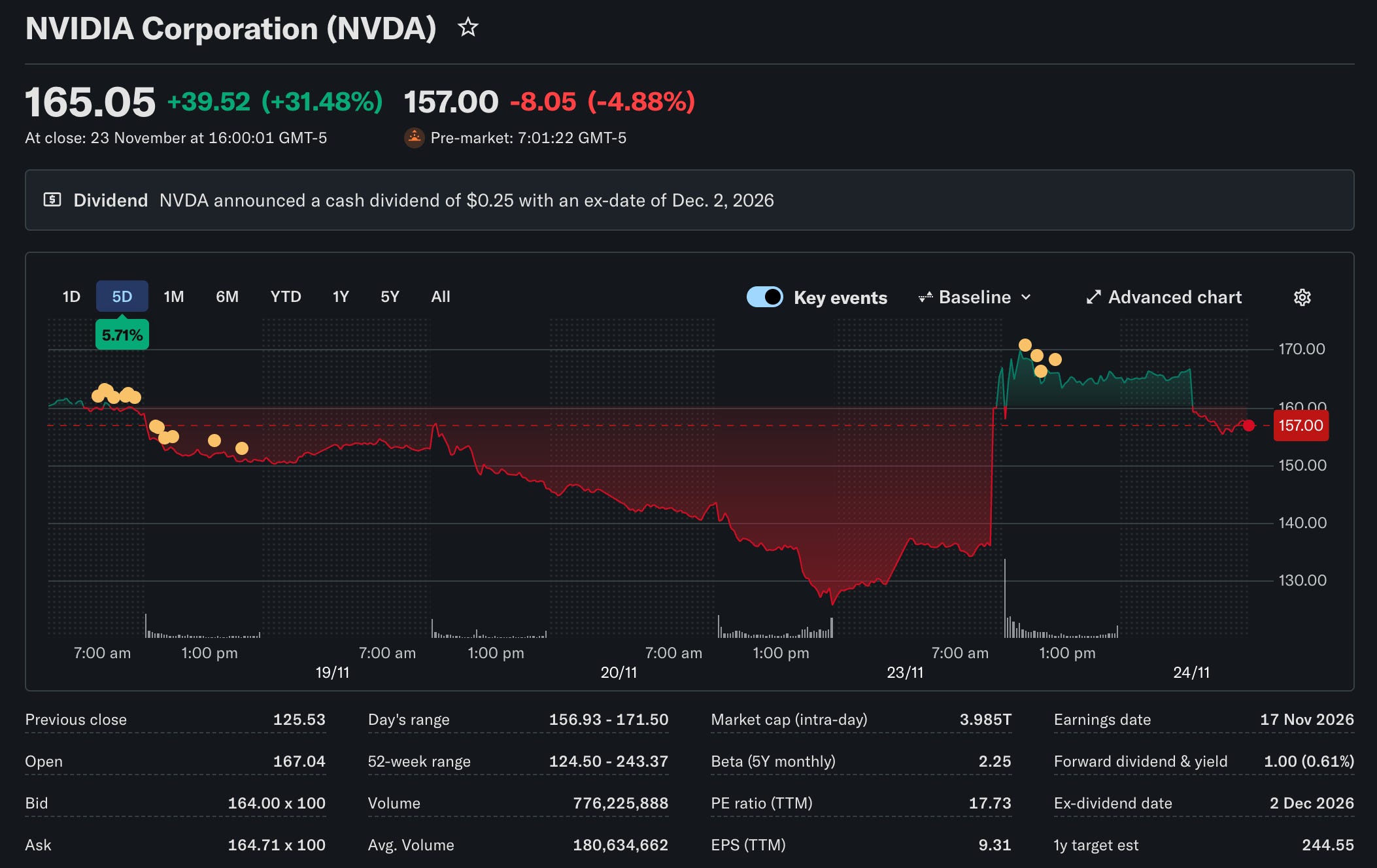
NVIDIA’s announcement reinstated Jensen as president, CEO + board director on 23 November creating a “god candle” on its own stock as the market appeared not to have priced this news in:


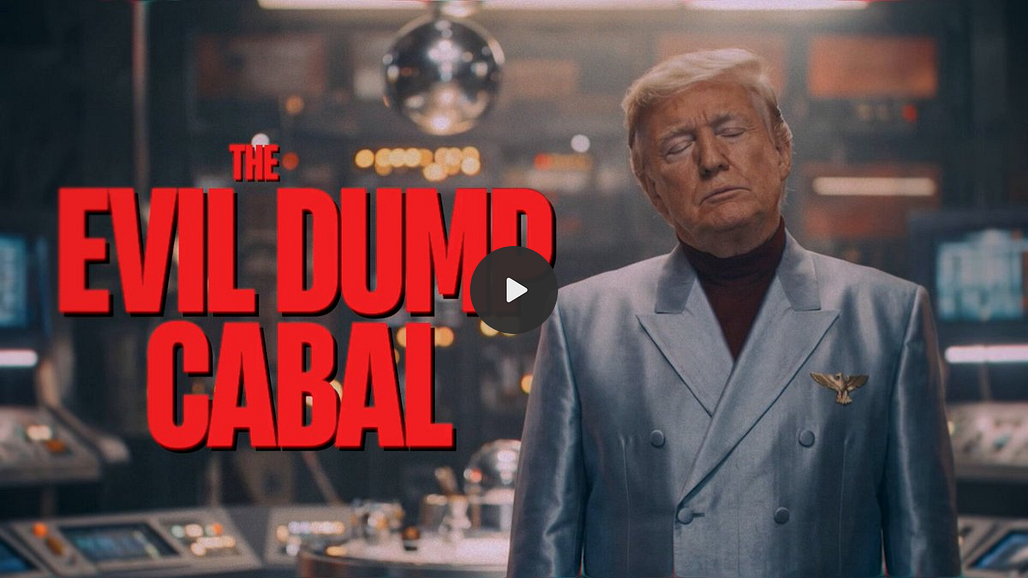
Once again prediction markets enabled nimble, savvy traders plugged into the news to profit from reinstatement of Huang as CEO:


Nonetheless, the SEC investigation continues, so his return doesn’t resolve every issue facing the company but it’s pretty clear Jensen has motion and his return appeared not to be priced in with several assets hitting double digit returns upon the news breaking
Which assets outperformed the Majors?
FLOCK led my initial AI sample, while GRASS, TAO + NEAR all finished the first window ahead of Bitcoin. By this morning, the distinction between a sharp bounce & a any sustained positive ROI became pretty apparent!
BTC gained 2.56%, ETH 3.07% + SOL 3.95% over the same window. The whole market was recovering; these are returns around the announcement, not a calculation of how much Jensen caused:
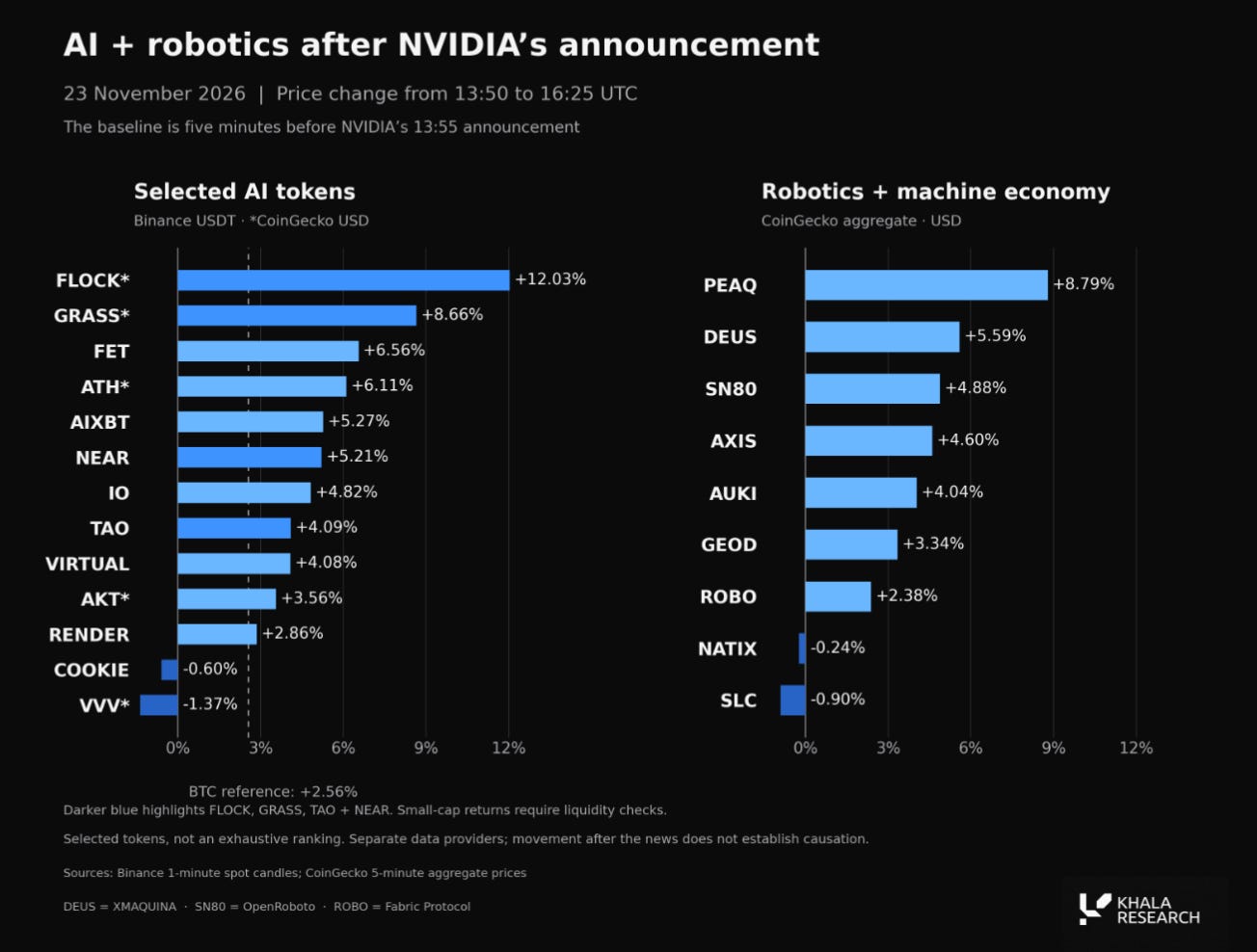
Figure 1. The same 13:50–16:25 UTC window for each token. Binance spot USDT + CoinGecko aggregate USD
series are identified in the chart. Selected tokens, not an exhaustive market ranking
2. FLOCK, GRASS, TAO + NEAR
a) FLOCK: the biggest AI move, with the greatest liquidity caveat
FLOCK gained 12.03% in the initial window, but its roughly $17.7m market cap puts that move in context. I’d want to check executable depth before putting much weight on a return from a market this small
Its sampled gain briefly reached 21.69% before falling back. I also excluded a misleading exchange comparison where the pre-news price hadn’t traded for over two hours. That would have made the bounce look stronger simply because the starting price was stale
FLOCK is worth following for renewed buying that survives beyond the headline. I’d want to see independent wallets adding, meaningful depth + gains that can be traded at realistic size. The percentage move alone isn’t enough
b) GRASS: a more consistent initial reaction
GRASS gained 8.66% and was still close to its strongest sampled price at the first cutoff. It retained around 89% of its peak percentage gain, compared with FLOCK’s 55%, using the same five-minute CoinGecko observations
Its approximately $293m market cap was also materially larger than FLOCK’s at that snapshot. That doesn’t prove the buying was organic, but it helps explain why I wouldn’t treat the two percentage moves as equivalent evidence of demand
GRASS also had modest net buying in the Solana DEX market checked through Nansen. That is useful supporting evidence, provided we keep the scale and coverage in view
c) TAO (Bittensor): connect the price reaction to last week’s Gamma piece
TAO gained 4.09%, with Binance quote turnover rising to 12.79 times the preceding window of equal length. It outperformed BTC, although the return was only slightly ahead of SOL
Last week I looked at Gamma, Bittensor’s mechanism for buying service credits by burning subnet alpha:

Customers can supply TAO, which buys + burns alpha, or use alpha they already hold. The token being burned is alpha, not TAO
That gives us a separate reason to follow the network beyond an NVIDIA headline. I’m interested in customers returning to pay for useful services, how much spending comes from outside the emissions system + whether operators can cover their costs
Those checks take longer than an afternoon price move. Gamma doesn’t establish why TAO rallied on Monday, and higher token turnover doesn’t establish more demand for subnet services
d) NEAR: stronger than BTC, with a retracementt to account for
NEAR gained 5.21%, putting it 2.65 percentage points ahead of BTC on the same exchange and quote currency. That was stronger relative performance than TAO in the initial window
It also finished well below its intraday high. NEAR retained around 54% of its peak gain, with TAO at 57%. Both attracted trading interest, but neither held close to the strongest prices reached that afternoon
These are the larger markets I’d keep on screen when judging a recovery in crypto AI. I’d still want persistent outperformance + evidence of buyers adding through a pullback before reading too much into the initial reaction
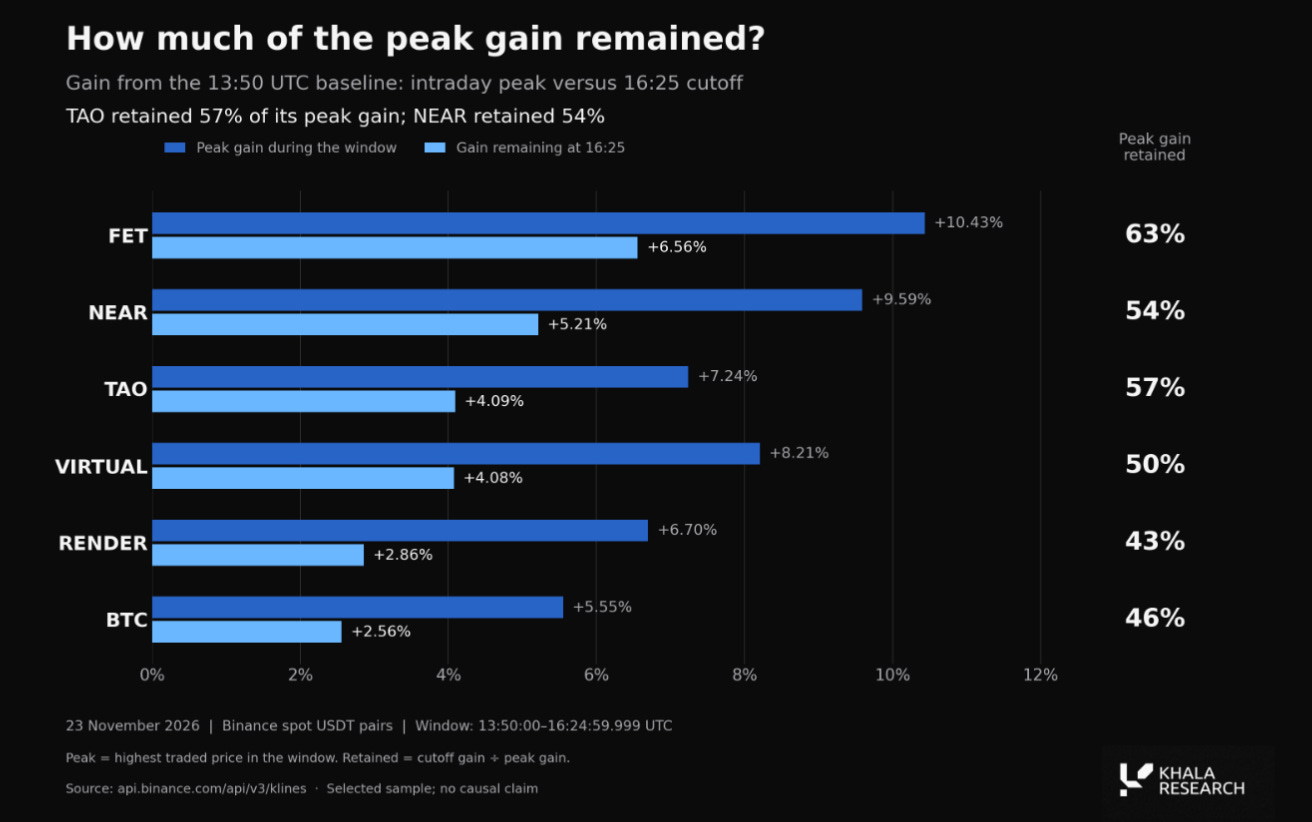
Figure 2. Binance one-minute candles, 13:50–16:25 UTC. Peak gain versus gain remaining at the cutoff. The
retention percentage measures price performance, not how many holders kept their tokens
The wider sample is still useful context:
PEAQ gained 9% and led the measured robotics/machine-economy group excluding the separately flagged microcap ROKO.
DEUS gained 6%, OpenRoboto’s SN80 5% + AUKI 4%.
To note that these businesses have different economics, so a shared reaction to an AI headline is only a starting point for research
To caveat: lower-cap tokens can look strong against BTC without attracting much organic demand
Thin markets are easier to move. A market maker or a few coordinated wallets can push the price + reported turnover high enough to look like interest is returning, while independent buyers remain scarce… the Gotbit guilty plea is a documented example of a firm manufacturing token volume and prices for clients
To be clear, this is a risk to check for, not an allegation about any token in this issue; a sharp rally or a reversal does not establish manipulation
It does mean I give more weight to strength across larger, liquid markets. Moving a token with deep order books across several venues generally requires more capital than moving a thin pair. For judging whether interest is returning to the sector, I’d put more weight on TAO + NEAR than on a small-cap percentage leaderboard, while still checking the actual liquidity and who is buying
3. What I checked with Nansen
I used:
Token Screener to compare DEX buying + selling,
Token God Mode: Buyers & Sellers to find the wallets behind it
The price rankings come from Binance + CoinGecko & the Nansen observations cover the named chain-specific DEX markets below; this dataset does not give us native TAO or NEAR wallet flows:
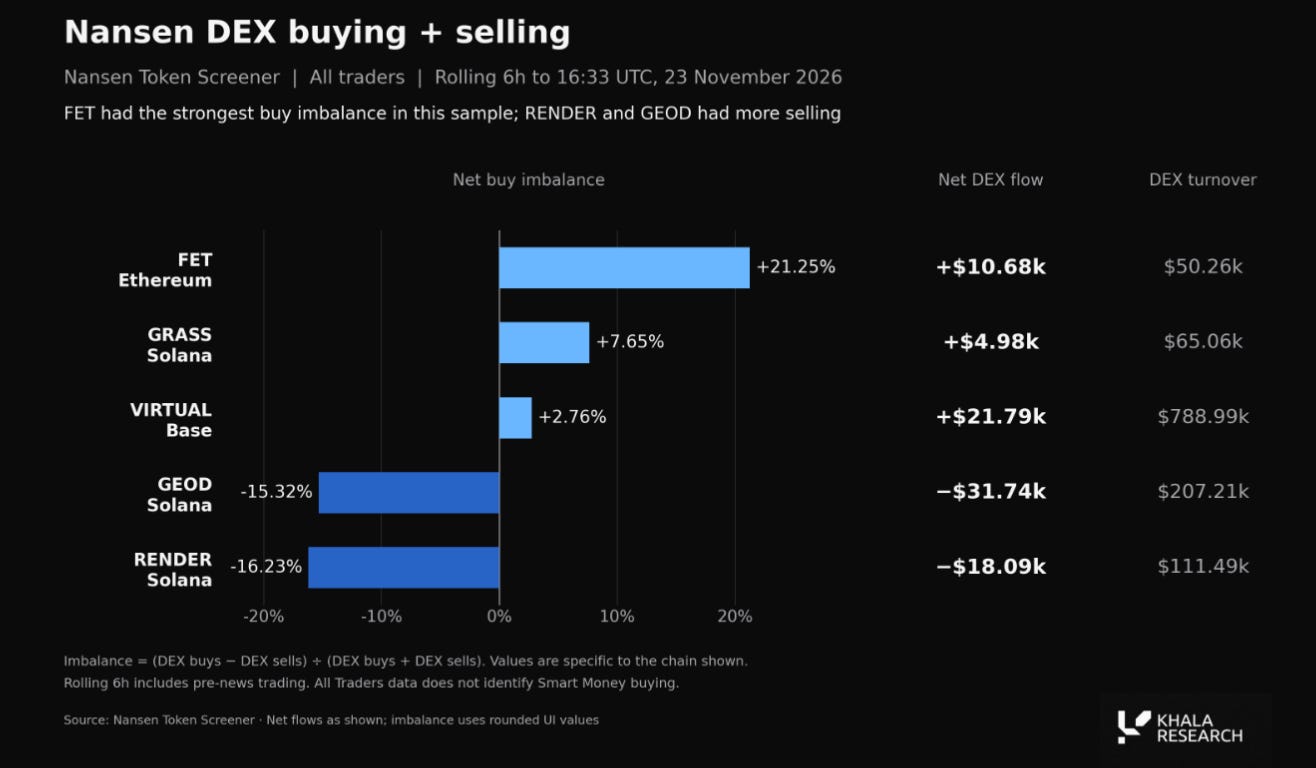
Figure 3. Nansen Token Screener, All Traders, rolling six hours to approximately 16:33 UTC on 23 November.
This includes pre-announcement trading and uses a different window from the price comparison
GRASS recorded roughly $5k more buying than selling on Solana. That supports a limited claim: buyers outweighed sellers in that DEX view. It is too small and too narrow a sample to establish broad accumulation across the token’s markets
FET provided a useful comparison. Its Ethereum market showed about $30k of buys against $20k of sells, leaving $10k net buying.
VIRTUAL had more absolute net buying, but against much larger turnover; FET had the greater buying imbalance as a proportion of activity
RENDER’s Solana market showed net selling despite its positive price reaction. A token can rise while one of its onchain markets has more selling than buying, particularly when centralised exchanges account for much of the trading
4. The overnight update*
*24 November, 08:10 UTC | 15 hours 45 minutes after the first snapshot
TLDR: Most tokens gave back what they’d gained from the “Jensen Pump”
a) FLOCK’s early lead did not last.
By the morning cutoff it had fallen below its pre-news price, having given back the entire initial gain. That makes me less inclined to use its first move as evidence of lasting interest. It does not, by itself, tell us whether the buying was artificial
b) GRASS held up better over the full period.
It also sold off overnight, but remained above its pre-news level. Of these four, it had retained the strongest cumulative return. I’d now look for fresh buying to see whether that relative strength persists; yesterday’s modest DEX imbalance cannot answer that
c) TAO + NEAR were more stable overnight than FLOCK, but both fell more than BTC.
Their larger markets make them more useful gauges of sector interest; the follow-up still gives us no reason to call this a broad, sustained AI recovery. The chart separates the overnight loss from the return since before the announcement
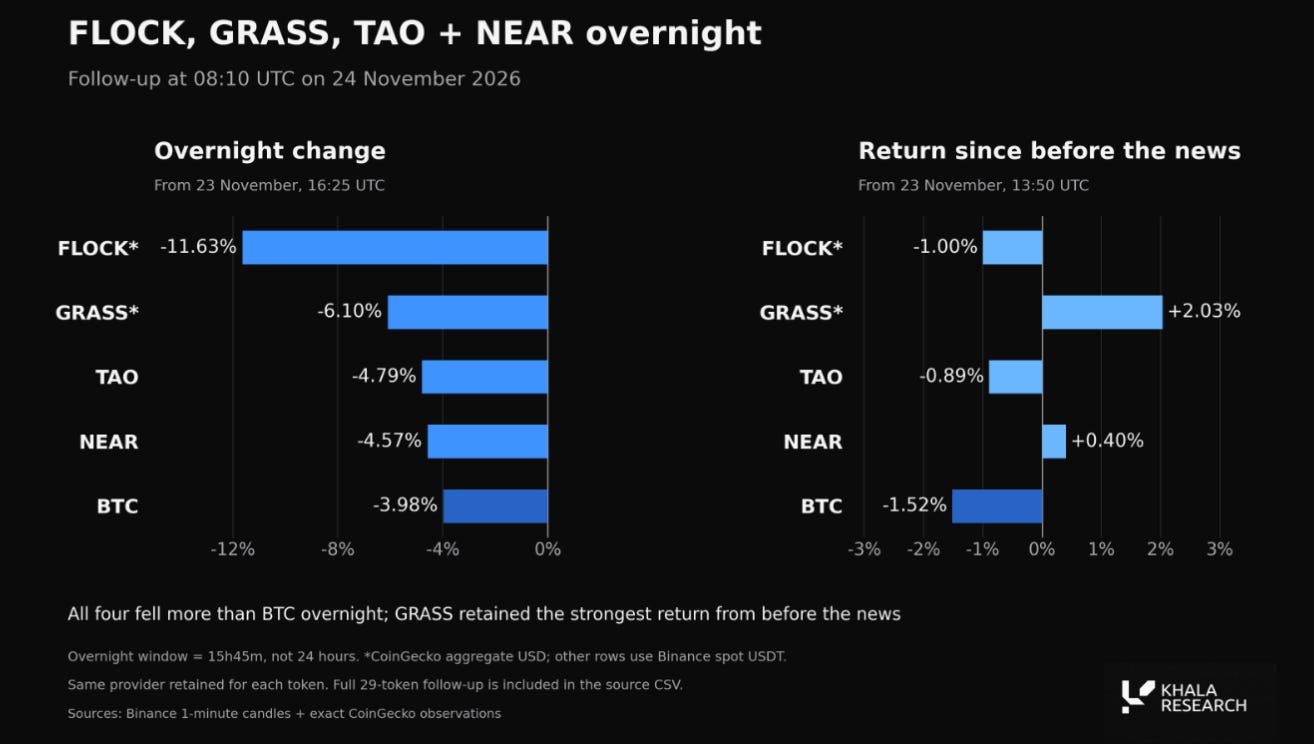
Figure 4. Left: change from 23 November 16:25 to 24 November 08:10 UTC. Right: cumulative change from the
original 13:50 pre-news baseline. Same provider for each token across both comparisons. The accompanying
CSV retains all 29 tracked tokens
How much trading took place on CEXs?
I used CoinGecko’s market-level data for this comparison, adding up 24-hour spot
turnover on each side:
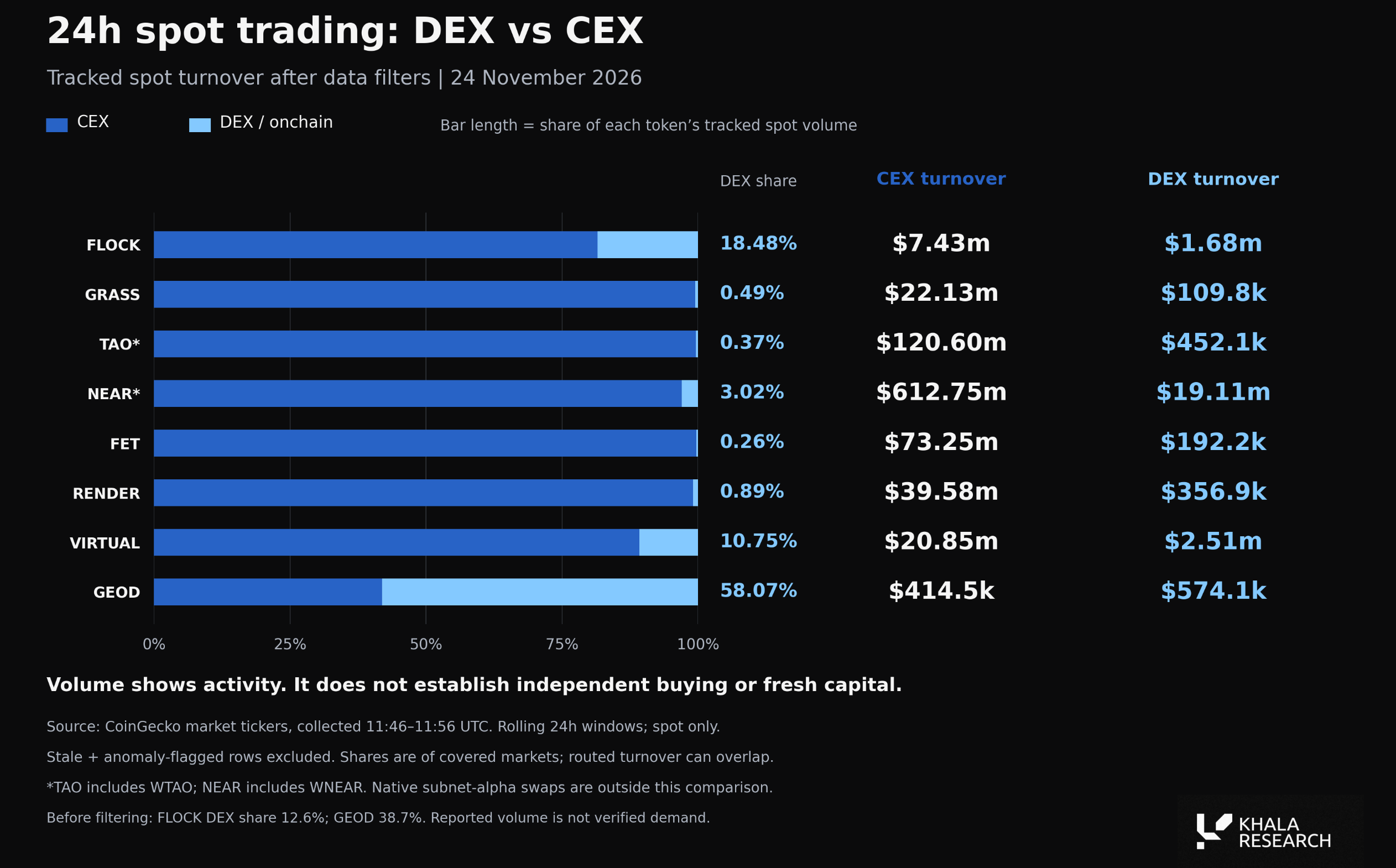
Figure 5. CoinGecko reported spot turnover, collected 24 November between 11:46 + 11:56 UTC. Rolling
windows update by venue. Stale + anomaly-flagged rows excluded; TAO includes WTAO and NEAR includes
WNEAR. Shares cover tracked markets, not every trade globally. Bittensor subnet-alpha swaps are excluded
CEXs account for almost all tracked GRASS + TAO spot turnover. That explains
why small onchain prints can sit alongside much larger price moves. I’d check exchange turnover + order-book depth alongside Nansen’s wallet data before treating either token’s DEX activity as representative of its whole market
What I’m watching next
GRASS is the one I’d revisit for retained price strength
FLOCK needs more convincing evidence of sustained, independent buying
For TAO + NEAR, I’d watch whether relative performance improves over several sessions and is supported across their more liquid markets
With TAO, I’ll also keep following the Gamma activity covered last week. Repeat customers spending their own money would give me more confidence in the underlying demand than a short burst of turnover after a corporate announcement
Jensen’s return gives traders a reason to revisit AI. Whether these tokens deserve a higher valuation still depends on what the projects deliver, who pays for it + how that value reaches token holders
That’s a wrap for this issue of Sammy’s Snippets. I hope you enjoyed it
Please leave me any questions or thoughts here - I will respond to everyone!
If you found this interesting, please consider subscribing to this Substack and following me on X for more related insights
Disclaimer: The content of this newsletter is for informational purposes only. I am commenting on the underlying activity of what I am observing in the market to keep my audience updated and informed.
Nothing in this newsletter constitutes financial advice or a recommendation to buy or sell any asset. Always do your own research before making any investment decisions.
I hold positions in many of the assets discussed in this newsletter. Valuations are approximate snapshots and move quickly. Verify all market data independently before acting